Describe your air conditioner job, and a local pro who handles it gets in touch.
Closing vents to push cold air somewhere else seems like it should work. It doesn't help the way people think, and on some systems it makes the air conditioner work harder for a worse result.
A central air conditioner is sized to move a certain amount of air through the whole duct system. Shut several vents and that air has nowhere to go. Pressure builds in the ducts, and the system has to push against it. The blower runs the same, the compressor runs the same, but less air gets where you wanted it.
In a dry Wyoming summer that matters more than it might in a damp climate. Dry heat already makes your AC's job easier in some ways, since it isn't fighting humidity too. Closing vents takes that advantage and works against it by restricting airflow the system needs to do its job right.
If one room runs warmer than the rest of the house, that's worth a look, but not through the vents. It could be a duct run that's undersized for that room, a return that's blocked, or a system that was never balanced right for the house it's in. A contractor can check static pressure and airflow room by room and tell you what's actually going on, rather than guessing with the vents closed and hoping for the best.
That's the kind of thing maintenance visits catch before it turns into a bigger problem. Instead of spending an afternoon looking up HVAC companies, reading reviews, calling a few, and explaining the same thing about your warm bedroom three separate times, you can get matched with a contractor who works on systems like yours and let them reach out to you directly. No repeating yourself to five different people, no guessing which company is worth the call.
Wyoming summers put real hours on your system. Worth knowing what's actually happening inside the ducts before the next hot stretch, not just which vents are open.
Closing vents does not help your air conditioner in Wyoming, and on most systems it makes things worse. Your AC is built to move a set amount of air. Shut several vents and that air has nowhere to go. Pressure builds in the ducts, and that pressure pushes air out through seams and joints before it ever reaches a room. Some of it can force its way around the coil instead of through it, which makes the coil colder than it should get and raises the risk of it icing over. Wyoming summers are hot and dry, so the system is already running long hours to keep up. Closing vents to try to cool one room faster just adds strain on top of that, and the rooms with open vents still won't cool any better. The fix for an uneven house is balancing the dampers or checking the ductwork, not shutting registers.
All vents open, air moving through the system the way it was designed to.
With every vent open, the blower moves air at the pressure it was built for, and the coil stays free of the ice that uneven airflow can cause.
Why does a closed-off room still feel warm
Walk through your house with the vents closed in rooms you don't use and the ones left open probably aren't blowing as cold as you'd expect. That's the pressure building in the ducts instead of air reaching the room it's meant for. You might notice the air conditioner running longer to hit the temperature on the thermostat, or a room that used to cool down fine now stays warm. Check the coil if you can get to it. A layer of ice on it means the system is struggling to breathe, and that's not something that fixes itself by opening the vents back up once it's started.
Vents open, system balanced
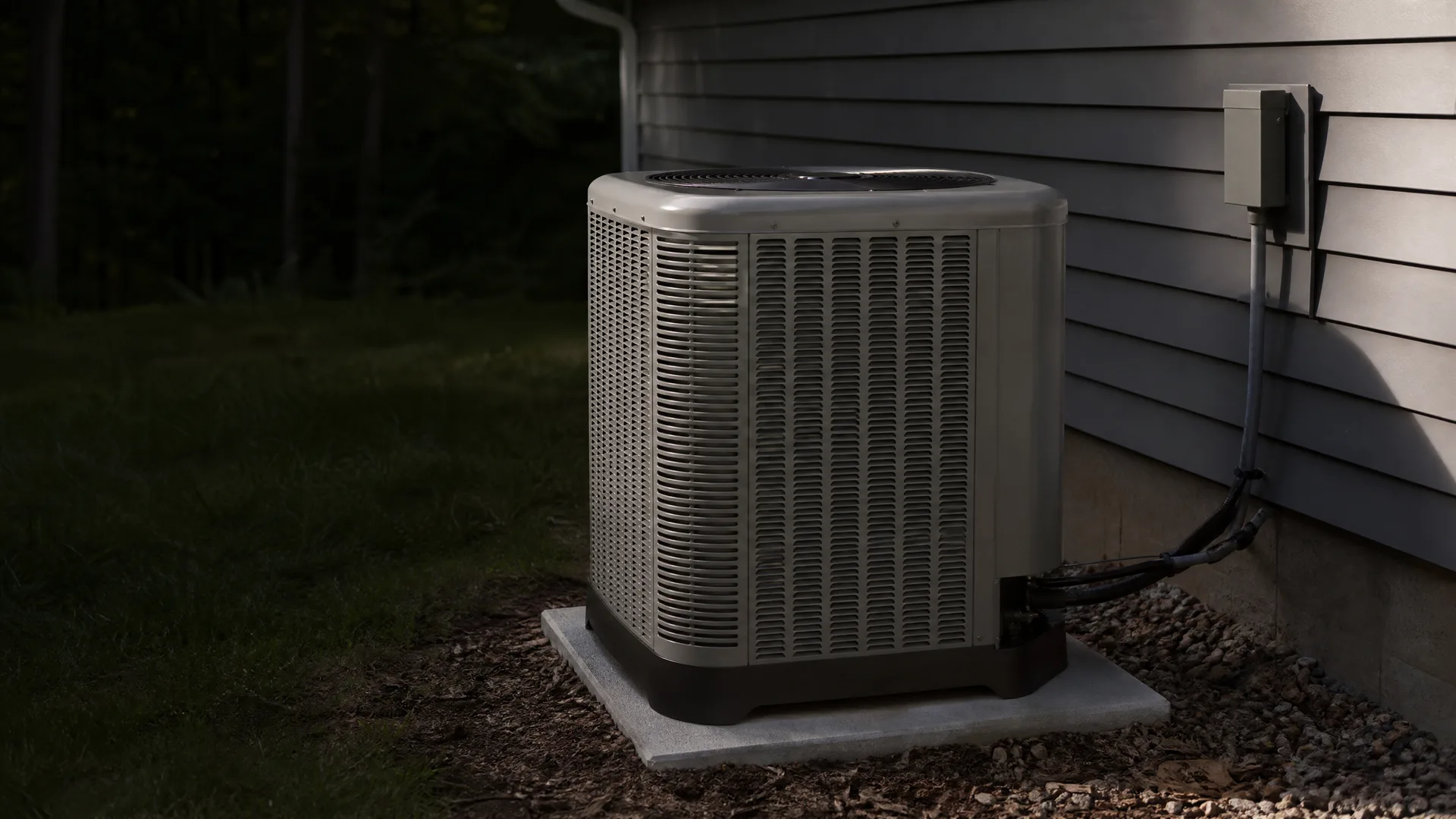
This is what your air conditioner expects to see. Every vent open, air moving at the pressure the blower was built for. The condenser outside runs the way it's supposed to, and the coils behind that grille stay clear. Nothing in the system is working against itself.
Vents closed, coil fighting dirt and pressure
Close vents and the strain shows up here first. Dirt and debris build up on the coil grilles faster when airflow through the system is uneven. A dirty coil can't shed heat the way it should, so the compressor inside runs longer to do the same job.
Closing Vents vs Leaving Them Open
Closing vents
Air that would have gone to the closed room doesn't leave the system; it backs up into the ducts instead.
Dry summer heat means your AC already has to run long hours, and the extra strain from closed vents adds to that.
A duct joint that's a little loose will leak more air under higher pressure, and that leak is now colder air you paid to cool.
The coil can pull down to freezing when airflow across it drops, and once ice forms, the system cools even less.
Rooms with closed vents don't actually stay comfortable; the air just stops moving there instead of getting cooled.
Gas furnaces share the same ductwork, so pressure problems from closed vents in summer can carry into how air moves in winter too.
Leaving vents open
The blower moves air at the pressure it was engineered for, which is what keeps the coil from icing over.
Every room gets the airflow the duct system was designed to deliver to it, even rooms you're not using much.
The condenser outside runs under a normal load instead of fighting backed-up pressure inside.
Rooms stay at a more even temperature because air is actually reaching them and cycling back out.
With power cheap where you live, running the system as designed doesn't carry the penalty it would somewhere with higher rates.
A duct system under normal pressure holds up better over time than one pushed past what its joints and seals were built for.
1
The blower pushes out the same volume of air either way.
2
Closed vents block that air from reaching the room.
3
Pressure rises inside the ducts instead of easing.
4
Trapped air forces its way out through duct seams.
Wyoming summers are dry, but they're hot enough that your AC runs long stretches most afternoons. A system already working that hard doesn't have room for the extra strain closed vents put on it, the higher pressure, the harder-working blower, the coil that ices up when airflow gets uneven. Letting a tech look at the ductwork and the vents in your own house settles whether your setup is losing air somewhere it shouldn't, or whether the system just needs to run the way it was built to run, all vents open. Finding that tech yourself means calling around, explaining the same thing more than once, and weighing quotes against each other with no easy way to compare them. Handing that off means one contractor who works on systems like yours gets in touch and looks at what's actually happening in your house, instead of you guessing from room to room which vents to leave open and which ones to close.
A dew point of 42°F is dry, and it's the reason Wyoming summers don't feel as heavy as the thermometer suggests. That's National Weather Service data for an average June through August here. It matters for this because dry air lets your AC pull heat out of a room faster than it could in a humid state, so the system should have an easier time than most. Closed vents work against that advantage. The pressure they build makes the blower strain even on a dry-air day, and a coil already running colder than it should from blocked airflow can ice over no matter how dry the air feels.
NASA POWER T2MDEW county cells weighted by homes
Will closing vents in rooms I don't use lower my electric bill?
Power is cheap in Wyoming, but a reader who deals with small problems before they grow still wants to know if shutting vents in a spare room or basement is worth doing before the next bill comes. It sounds like a reasonable trade: less cooled space, less cost. The logic makes sense for a space heater. It doesn't hold for a central air conditioner, and the reason comes down to how the system is built to run.
No, closing vents does not lower your bill, and it can raise it
Your air conditioner's blower moves the same volume of air whether a vent is open or shut. Closing vents doesn't reduce what the system has to do. It just blocks the path that air was supposed to take, so the blower works against higher pressure to move the same amount of air through fewer openings. That takes more electricity, not less, even with power priced as low as it is here. The energy you'd save by cooling less space gets spent instead on a system straining against its own ductwork. If the goal is a lower bill, a cleaned coil and a clear filter do more for that than shutting a single vent ever will.
Before you get your air conditioner maintenanceAfter you get your air conditioner maintenance
Power costs 13.37 cents per kilowatt-hour statewide
At 13.37 cents a kilowatt-hour, running your AC longer than it needs to still shows up on the bill. Closing vents doesn't cut that runtime. It just makes the blower push against more resistance to move the same air, so you pay for the strain without cooling the house any faster.
EIA-861 2025 statewide residential average
Every vent open, nothing forcing the air
This condenser sits outside doing what it was built to do. Air moves through the ducts at the pressure the blower was designed for, out through every vent, and back to the return. No seam is under strain and no coil is icing up behind the scenes.
Grime and strain add up the same way
This older unit has caked buildup on its fins from years of running, and closed vents push it the same direction. Blocked airflow at the vents makes the blower work harder, and a coil that runs colder than it should is more likely to ice over.
Leave the vents open
Every vent in your house should stay open, all of them, all summer. That's the whole answer. Your air conditioner was built to move air through a fixed set of ducts to a fixed set of rooms, and closing any of them just works against what it's already built to do.
If you've been chasing a hot room or a high bill, the fix isn't at the vent. It's in the system itself, the airflow, the charge, the parts that wear with hard summer use. A contractor who looks at your specific setup can tell you what's actually going on, instead of you guessing room by room. That's a different conversation than closing vents and hoping, and it's the one worth having before the next hot stretch.