
What to do when the AC goes out in Wyoming

RepairCentral ACWyoming
Step 1 of 2

What ZIP code is the job in?

What do I do when my AC stops working in Wyoming?

Wyoming summers are hot and dry, and when the AC quits in the middle of July, the house heats up fast. You need to know what's worth checking yourself before you decide this is a repair call, especially since most homes here rely on that system to keep things livable through the worst of the afternoon heat.

Check the thermostat and breaker first, then call for repair

Before anything else, check that the thermostat is set to cool and below room temperature, and look at the breaker panel for a tripped switch. Those two things cause a surprising number of no-cool calls. If the breaker keeps tripping, stop resetting it. That usually means the compressor or a capacitor is drawing too much power, and a technician needs to find out which one. If the thermostat and breaker check out and the air still isn't cold, the problem is inside the system itself, likely the compressor, the capacitor, or the refrigerant charge. With Wyoming's dry heat and low humidity, a struggling AC shows itself fast. The house warms quickly once cooling stops, so getting a repair scheduled sooner rather than later matters more here than in a milder climate.

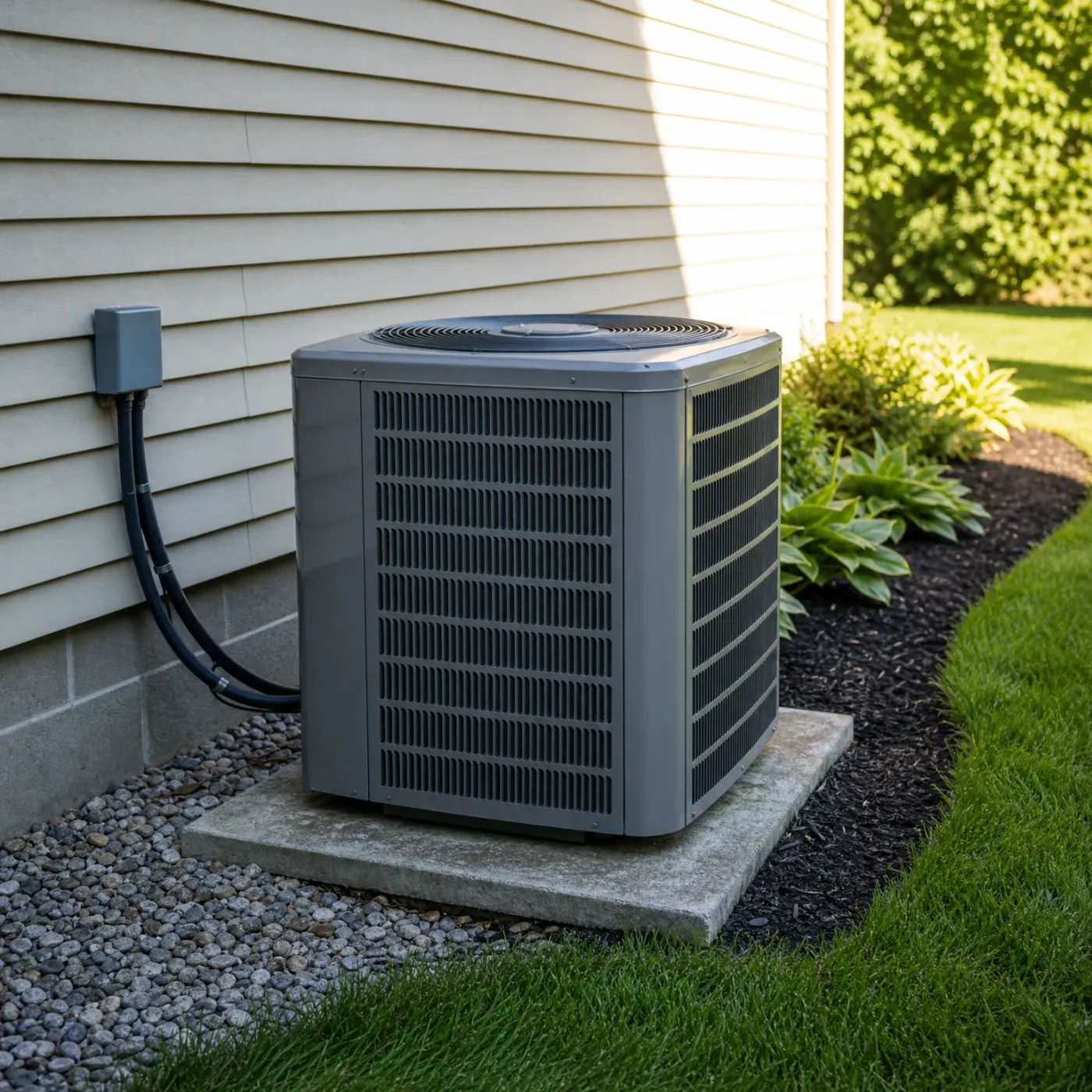
An outdoor air conditioning condenser unit on a concrete pad beside a house with horizontal lap siding, with a gray electrical disconnect box and conduit on the wall, mulch bed and shrub to the right, and mown grass in the foreground.

Running Normally

Air moves steadily out of the vents and the house holds its temperature through the heat of the day. The condenser outside cycles on and off without straining, and the coil guards stay clear. This is what lets the system keep up when it's hot and dry outside.


An outdoor air conditioning condenser unit on a concrete pad beside a house with light blue horizontal siding, with a shrub to the left and a conduit and disconnect box on the wall to the right.

In Trouble

Dust and debris have packed into the coil guards, and the unit can't shed heat the way it needs to. It may run longer than it should, or the air coming inside turns weak and warm. Left alone, this is the kind of strain that ends in a repair call.

Is the air just not keeping up anymore

You might notice the air out of the vents feels warm instead of cool, or it's blowing but the house still climbs past 80 by afternoon. Maybe the condenser outside is running longer than it used to, or it's cycling on and off every few minutes instead of settling into a steady rhythm. Some homes hear it before they feel it: a rattle from the outdoor unit, a hum that wasn't there last summer, or the system going quiet altogether. In a dry Wyoming heat, a system that's struggling won't just cost you comfort. It runs harder to do less, and that strain is usually what turns a small repair into a bigger one.

A gray outdoor air conditioner condenser unit on a concrete pad beside a house with horizontal siding and a light stucco wall, with a disconnect box and refrigerant lines on the wall and a shrub and mulch bed at left.

Why the dry heat matters

Dry air pulls moisture out of everything, including the dirt and pollen that collect on a condenser coil. In a humid state that grime stays damp and clings. Here it bakes onto the fins in a hard layer that blocks airflow. A condenser working to push heat out through a caked coil draws harder and runs longer, and that strain is what burns out a capacitor or a compressor before its time.

A gray outdoor air conditioning condenser unit on a concrete pad surrounded by gravel, next to a white horizontal-lap-sided house wall with an electrical box and conduit, against a blank white background on the left.

What the thermostat can tell you

Set the thermostat a few degrees below room temperature and listen for the condenser outside to kick on within a minute or so. If it doesn't start, the problem may be electrical rather than mechanical, a tripped breaker or a bad thermostat signal rather than a failing part. If it starts but the air inside never cools, the trouble is likely in the refrigerant charge or the indoor coil, which is a repair, not a setting you can fix yourself.

Call for Help or Check It Yourself

Call Now

  • If the house is already climbing past 80 and there's someone home who can't handle the heat, waiting a day costs comfort you don't get back.
  • A condenser that's stopped running entirely, or one that trips the breaker every time it starts, usually means a part failed and needs a tech's hands on it.
  • If you smell anything burning near the outdoor unit or the indoor air handler, that's not a wait-and-see problem.
  • Warm air blowing steadily, rather than no air at all, often points to a refrigerant or compressor issue that only gets worse the longer the system runs like that.
  • A system short-cycling, turning on and off every few minutes, can damage the compressor further the more it's allowed to keep doing it.

Check First

  • A dirty filter can choke airflow enough to make the house feel like the AC quit, and it's a five-minute swap you can do yourself.
  • If the outdoor unit is caked with dust or grass clippings, clearing it off sometimes gets a struggling system back to normal.
  • A thermostat with dead batteries or a wrong setting looks exactly like a dead AC from inside the house.
  • Check the breaker before anything else. A tripped breaker on the outdoor unit is common in Wyoming's dry heat when the condenser works hard on the hottest afternoons.
  • If the coil guards or vents around the condenser are blocked, clearing the space around the unit might solve it without a call at all.
A woman in a knitted shawl sits in a living room with a fireplace, shelves, a sofa with cushions, and a lamp by a bright window, looking off to the side.
A woman with long brown wavy hair in a green shirt over a white top stands in a living room with built-in white shelves, a ceiling fan, a potted plant and a sliding glass door.
A woman with shoulder-length gray-streaked hair in a light gray knit sweater stands smiling and looking off to the side in a living room with a sofa, houseplant, framed picture, and sunlit sliding glass door.
A woman with shoulder-length curly gray hair wearing a gray knit sweater stands near a window with a sheer curtain, looking to the side, with a blurred interior room behind her.
A gray outdoor air conditioner condenser unit on a concrete pad beside a house with horizontal siding and a stone veneer foundation, surrounded by mulch, ornamental grasses, and shrubs, with a conduit and disconnect box on the wall.

Hand off the air conditioner problem

Only one pro gets your request, so you hear from one company.

After this form, you can stop searching for an air conditioner pro.

Find a licensed pro

There's no charge for the request.

A gray outdoor air conditioning condenser unit on a concrete pad beside a house with horizontal siding and a stone veneer base, with refrigerant line and electrical disconnect box on the wall and flowering shrubs to the left.
The condenser cycles on and off at a normal pace and the fins stay clean, which is what keeps a Wyoming house holding steady through a hot afternoon.
An outdoor air conditioner condenser unit on a concrete pad beside a house with light gray horizontal siding, with mulch and green shrubs on either side and a concrete walkway in the foreground.
Dirt-caked fins and a unit that runs nonstop or won't start at all mean the coil can't shed heat anymore, and the house will climb with it.

The thermostat is just the switch. Once it calls for cooling, the condenser outside and the blower inside both start at the same moment, run by that one signal. Inside the condenser, the compressor squeezes the refrigerant and sends it through the coil, and that's where the heat your house picked up during the day gets dumped outside. The fan on top of the condenser is what carries that heat away, pulling air across the coil, and it can only do that if the fins are clean. A capacitor handles the start-up jolt for the compressor and fan motor. When it weakens, you get a unit that hums but never kicks on, or one that trips the breaker trying. Refrigerant itself doesn't wear out or get used up. If a system is low, it's leaking somewhere in that closed loop, not burning it off. And back inside, the coil your blower pushes air across needs steady airflow to stay above freezing. Choke that off and it ices over, and once it's iced, it stops cooling no matter what the condenser outside is doing.

How your AC actually cools

  • The thermostat calls for cooling and sends a low-voltage signal to the condenser outside and the blower in the furnace at the same time.
  • The compressor inside the condenser pressurizes refrigerant and pushes it through the coil, where it releases the heat it picked up from your house.
  • The condenser fan pulls outside air across those coils to carry that heat away, and if the fins are packed with dirt the heat has nowhere to go.
  • A capacitor gives the compressor and fan motor the jolt they need to start, and a weak one leaves the unit humming without starting or tripping the breaker.
  • Refrigerant runs in a closed loop and never gets used up, so a system low on charge almost always has a leak somewhere in that loop.
  • The indoor coil cools the air your blower pushes through it, and if airflow across that coil is choked off, it can ice over and stop cooling altogether.
A weathered outdoor air conditioning condenser unit on a concrete pad beside a house with light horizontal siding, an electrical disconnect box and conduit on the wall, and mulched soil on either side.
Before you get your air conditioner repair
A gray outdoor air conditioner condenser unit on a concrete pad beside a house with horizontal vinyl siding, surrounded by mulch, flowering shrubs, and lawn.
After you get your air conditioner repair

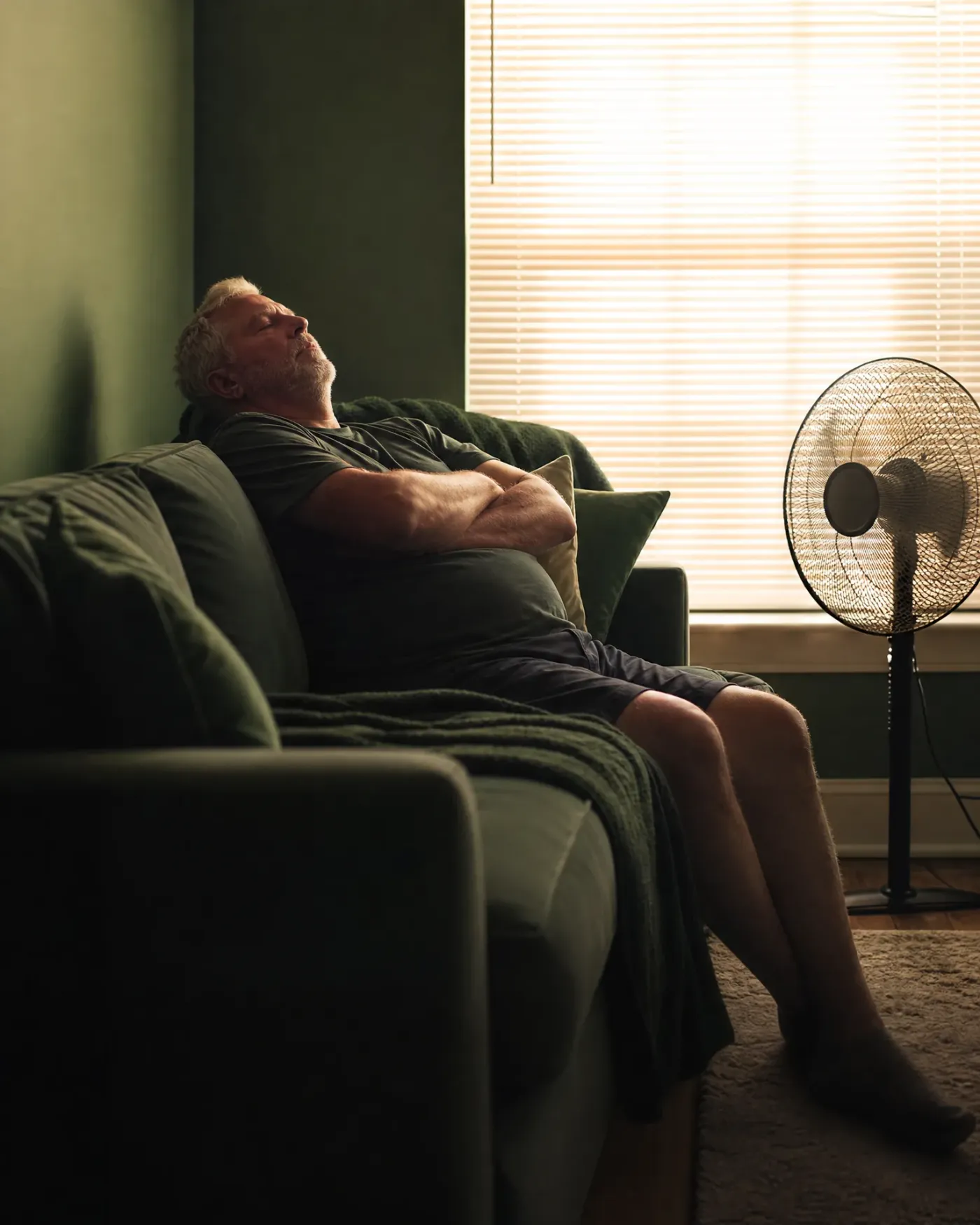
The house sits at 85 degrees and stays there no matter how long the system runs, and whoever's home is sweating it out with a fan pointed at them hoping it helps.

The house settles back into the mid-70s within a few hours of the repair, and nobody in it has to think about the thermostat again until next summer.

Power costs 13.37 cents per kilowatt-hour statewide

Power here runs 13.37 cents a kilowatt-hour, cheap next to most of the country. A condenser that's clogged or low on refrigerant has to run longer to do the same job, and that shows up on the bill. But with rates this low, the bigger cost of a dead AC in July is still the heat itself, not the power it draws trying to keep up.

EIA-861 2025 statewide residential average

Waiting to see if it clears up

Some AC trouble does pass on its own. A tripped breaker you reset once and it holds, a thermostat that needed fresh batteries, a dirty filter you swap out and the airflow comes right back. If that's what's going on, you've fixed it without spending a dime on a service call. But if the condenser trips the breaker again, or the air stays warm after you've checked the easy stuff, waiting just means more hours in a hot house hoping it sorts itself out, and in a Wyoming July that adds up fast.

Getting a contractor out

A local contractor who works on these systems all summer has seen the same failures over and over in houses like yours, and knows what usually causes a condenser to trip a breaker or a house to sit at 85 no matter how long it runs. Once you send the request, finding that person stops being on you. You're matched with one licensed contractor, not a handful of companies competing for your callback, so your phone isn't ringing off the hook while you're just trying to cool the house back down.

A woman and a sleeping child wrapped together in a cream knitted blanket on a couch, with a potted plant, framed photo and lit lamp in the background.
An older woman with gray hair in a bun and glasses, wearing a beige knit sweater, smiles while looking to the side in a warmly lit kitchen, with a loaf of bread on the counter in the foreground and a snowy scene outside the window.
Single-story house with gray horizontal lap siding, dark shingled gable roof, a small covered front porch with a dark door, and windows, set behind a patchy green and brown lawn under a clear blue sky.

Wyoming air is dry, but summer mornings still carry a dew point around 42°F, an average kept by NOAA across June, July and August. That's low enough that sweat evaporates fast and the house feels bearable even on a hot afternoon, as long as the air is moving. It's also why a failed AC here doesn't feel like it would in a humid state. The heat still climbs past 80 indoors, but it's a dry heat, and a fan in a doorway can take the edge off while you wait on a repair. Once the condenser is running again, the house drops back fast because the air was never heavy to begin with.

NASA POWER T2MDEW county cells weighted by homes

A dead condenser or a coil caked with dry Wyoming dirt isn't something that clears up on its own, and the longer it sits the longer the house stays hot. The fix is a straightforward call once you know what's actually wrong, and from here it isn't on you to track down who can take the job. You'll be matched with one contractor, not a handful calling and texting all afternoon, and that contractor works on air conditioners in this state every summer, so they've already seen what dry heat and blowing dirt do to a condenser coil over a few years. That's someone who knows what to check first and what tends to fail out here before they even look at your unit. The house doesn't have to sit at 85 while you sort out who to call. Send the request, and finding the right person for it stops being something you have to manage yourself.

A gray outdoor air conditioning condenser unit on a concrete pad beside a house with light horizontal siding, with gravel, dark mulch, shrubs and lawn nearby and a conduit box on the wall.

Send one request and you're done looking

Find a local pro

Your request stays with one local pro.

You only hire the pro if you want to.