Wyoming HVAC Match
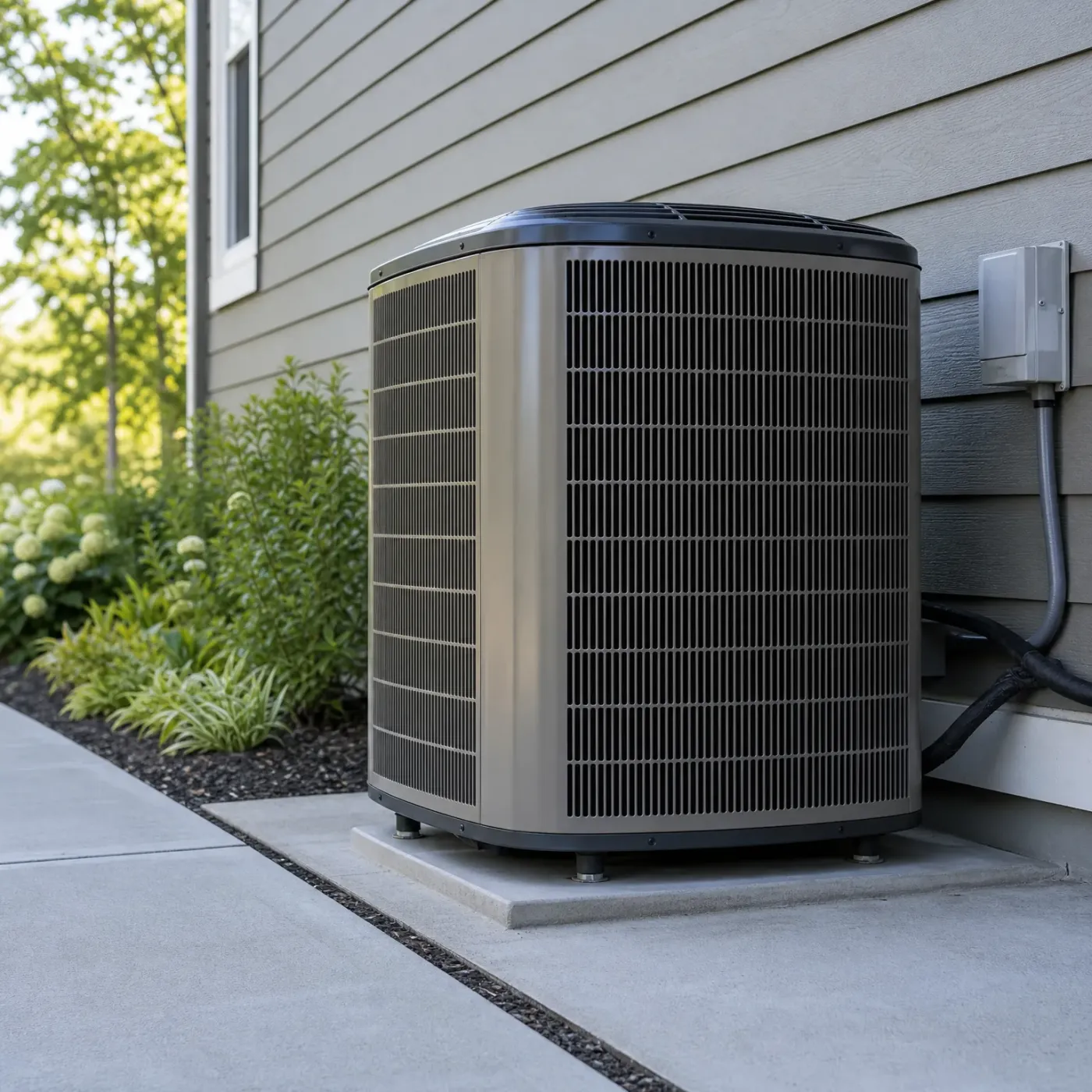
An outdoor air conditioning condenser unit on a concrete pad beside a house with horizontal siding, with an electrical disconnect box on the wall and shrubs to the right in low evening light.

Done looking for an air conditioner pro

Why your AC vents are sweating in Wyoming

Dry Wyoming air doesn't usually leave water on a vent cover, so when it shows up, something about the airflow or the ductwork isn't right. This page gets into what causes it and what it means for your AC. Once you send the form, finding a contractor to look at it is off your plate.

Send it today

A sweating vent means warm, humid air is hitting a cold surface, usually the metal around a supply register or the duct right behind it. The duct or the register itself has gotten colder than the air around it can handle, so moisture condenses right on the metal, the same way a cold glass sweats on a summer day. In Wyoming's dry air this normally doesn't happen, since there isn't much moisture to begin with. When it does, it usually points to a duct that isn't sealed or insulated where it passes through a hot attic or crawlspace, or a filter and coil so dirty that airflow has dropped and the supply air is running colder than it should. Thermostat set too low for long stretches can also drive it. None of this is something to watch and wait on. Water sitting on a vent or running into the ceiling around it can soak insulation and stain or rot drywall, and it keeps happening until the airflow or the duct itself gets fixed.

  1. Cold air inside the duct chills the metal register below room temperature.

  2. Warm air from the room passes over that cold metal surface.

  3. Moisture in the air condenses on the register the same way a glass sweats.

  4. Water beads and runs down the vent cover onto the ceiling or wall.

Is water dripping from your vents really a problem?

You might have noticed a drip onto the ceiling tile below, a dark ring spreading around the register, or a damp patch on the drywall that keeps coming back no matter how many times you wipe it. Sometimes it's just a cold vent cover that's wet to the touch. In dry Wyoming air, that water has to be coming from somewhere specific in your system, and it won't stop on its own. Left alone, that moisture soaks into drywall and ceiling material, and a vent that only sweats in one room points to something local, like a bent duct or a register that's running colder than the rest.

A man with grey hair and stubble in a dark sweater sits on a grey sofa indoors, looking off to the side, with a potted plant and a sunlit window behind him.
A man with gray hair, a beard and glasses, wearing a dark green sweater, sits on a gray sofa in a sunlit living room with a potted plant, table lamp and wooden sideboard behind him.
A middle-aged man with graying hair and a short beard sits on a blue sofa in a living room, looking toward a window, with a bookshelf, lamp and framed picture in the background.
A man with graying curly hair and a dark green sweater sits on a gray sofa in a sunlit living room, looking off to the side, with a framed picture, shelving, an armchair and a window with sheer curtains behind him.
A gray outdoor air conditioning condenser unit on a concrete pad beside a house with horizontal lap siding, with a wall-mounted disconnect box and conduit, and shrubs to the left.
A clean condenser like this moves enough air across the coil to keep the line and ducts from running colder than the room around them.
An outdoor air conditioning condenser unit on a concrete pad beside a house with horizontal siding and a concrete foundation, with dry brown leaves on the ground to either side.
A dirty, leaf-covered unit like this struggles to shed heat, and that strain is a common reason ducts get cold enough to sweat.
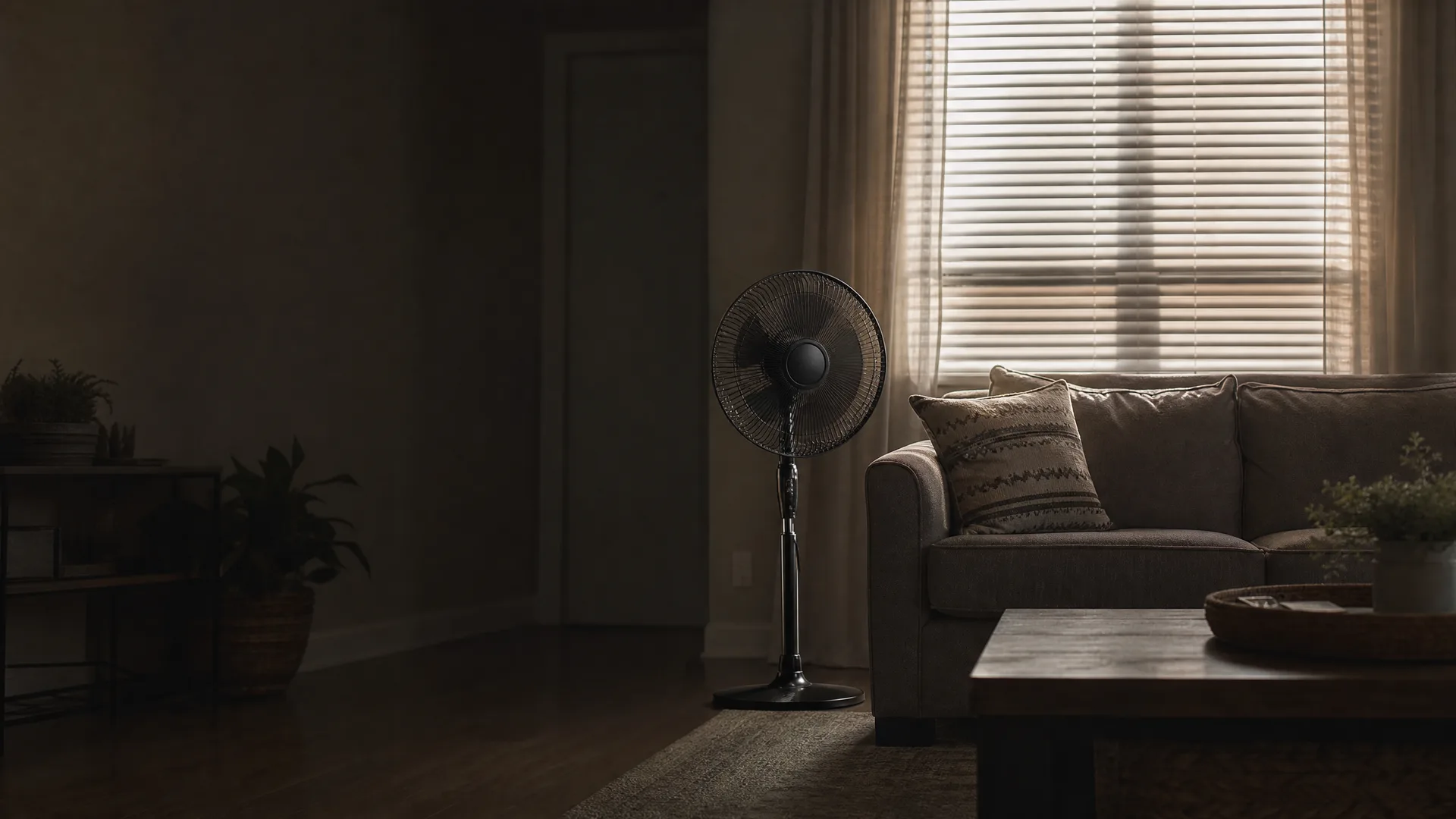
A dimly lit living room with a black pedestal fan on a wood floor beside a gray sofa with a patterned pillow, a wooden coffee table in the foreground, potted plants at left, and a curtained window with blinds behind.

The blinds have been down since noon. Outside the sun is flat and hard, the kind of July glare that bleaches the gravel in the yard, but the room is dim, lit by the gray light coming around the edges of the shades. The floor fan next to the couch turns slow and steady, pushing the cooled air around rather than cutting the heat on its own. You're sitting there when you notice it: a dark spot forming on the ceiling tile above the vent, right at the corner where the register meets the drywall. It wasn't there yesterday. You get up and touch the metal grille and it's cold and wet under your fingers, water sitting on the slats like the outside of a glass left out too long.

Wipe It Clean or Call Someone

Leave It

  • A little moisture that wipes away and doesn't come back usually means the duct ran cold for a short stretch, like after the thermostat was bumped down a few degrees.
  • If it only happens on the worst afternoons, when the AC runs longest to keep up, the duct may just be colder than usual for a few hours.
  • A single register sweating once, with no stain forming on the ceiling or wall around it, is worth watching before anyone touches it.
  • If the airflow out of that vent feels strong and steady, the duct behind it is less likely to be the kind of cold spot that keeps sweating.
  • No mold smell, no soft drywall, no recurring ring on the ceiling tile means the water hasn't been sitting there long enough to do damage yet.

Get It Looked At

  • A stain that keeps showing up in the same spot on the ceiling or wall means the register is sweating on a regular basis, not just once.
  • Weak airflow at the vent alongside the moisture points to a duct or coil problem that won't clear up on its own.
  • If more than one register is sweating, the cold air isn't reaching the rooms the way the system was built to move it.
  • Soft or discolored drywall around a vent means water has been collecting there long enough to start damaging the material underneath.
  • A technician who works on Wyoming systems every summer knows which ducts and registers tend to run cold first and can check those before the rest.
  • Once the airflow or insulation issue behind the sweating is fixed, the register stops collecting water instead of just getting wiped dry.
An outdoor air conditioner condenser unit on a concrete pad beside a house with beige horizontal siding and a stone-veneer base, with refrigerant lines running to a gray wall-mounted electrical box, surrounded by dark mulch, a flowering shrub and an evergreen on the left.

Running Clean

This condenser has room to breathe, with the pad clear and the shrubs trimmed back from the cabinet. Airflow across the coil stays steady, so the line set and the ducts it feeds don't drop below the dew point of the air around them. No sweating vents, no wet drywall to track down.

An outdoor air conditioning condenser unit on a concrete pad beside a house with light vinyl siding, an electrical disconnect box and conduit on the wall, bare shrubs and mulch to the right, and a concrete walkway in the foreground.

Running Strained

Bare shrubs and a tight spot against the siding don't block airflow by themselves, but a unit crowded or caked with debris does, and the disconnect box here is the only clue something electrical even feeds this thing. When the coil can't shed heat, the duct behind your register runs colder than it should, and that's when the sweating starts.

A woman with shoulder-length brown hair wearing a beige knit cardigan sits in a gray upholstered armchair near a window, looking off to the side with a slight smile, with bookshelves blurred in the background.
A woman with her hair in a bun holds a sleeping young child against her chest, both wrapped in a textured beige knit blanket on a sofa in a dimly lit room with a lamp, framed picture, and bookshelf behind them.
An outdoor air conditioning condenser unit on a concrete pad beside a house with horizontal lap siding, with a gray electrical disconnect box and conduit on the wall and green shrubs and trees to the left.

It's off your list after this

Your request goes to one pro, not a list of companies.

After you send the request, you're done searching.

Reach a local pro

Asking costs nothing, and the choice to hire stays yours.

Why is only one of my vents sweating and not the others?

One vent dripping while the rest of the house stays dry is confusing, especially when every register is hooked to the same system. It makes you wonder if the problem is with that one room, or if it's something further back in the ductwork that just happens to show up in one spot first.

That one vent is probably fed by a run of duct with less insulation or more airflow trouble than the rest

Every vent pulls air through the same system, but not every run of duct is built the same. A section that passes through an uninsulated space, or one with a loose connection letting outside air mix in, runs colder than the others and hits the dew point first. A bent or pinched duct can also cut the airflow to one register, and less airflow means the metal around that vent has more time to cool before the air moves through. The other vents may be just as capable of sweating under the wrong conditions. They just have not gotten there yet.

A two-story gray horizontal-siding house with multiple gables, a covered front porch with white columns and railing, and a dark front door, fronted by a patchy green and brown lawn under a clear blue sky.

Wyoming summers feel dry, and they are, but the number that matters here is the dew point, and it averages 42°F across June, July and August according to NOAA climate data. That's low next to places that feel swampy in July, but your AC doesn't care what it's like outside the duct. It cares about the air sitting right against the metal. Run the system long enough on a hot afternoon and the supply duct can drop below even a mild dew point like 42°F. When that happens, moisture pulls out of the air at the register, same as it would anywhere else. Dry air lowers the odds. It doesn't take them to zero.

NASA POWER T2MDEW county cells weighted by homes

An outdoor air conditioner condenser unit on a concrete pad beside a house with light horizontal lap siding, with an electrical disconnect box and conduit on the wall behind it.
Before you get your air conditioner repair
An outdoor air conditioning condenser unit on a concrete pad beside a house with white horizontal lap siding, with an electrical disconnect box and insulated refrigerant line on the wall and a shrub over mulch to the right.
After you get your air conditioner repair

What insulation does on a duct

A supply duct wrapped in insulation stays close to the temperature of the air moving through it, not the air in the room around it. Strip that wrapping away, or leave a seam open where it was never sealed back down, and the bare metal takes on whatever the warm room throws at it. That's when the surface drops below the dew point and starts pulling moisture out of the air. A duct run through an attic or a crawlspace depends on that insulation more than one running a short, direct line, since it has more exposed length for the cold to show through.

Why a bigger system can make it worse

An air conditioner sized larger than the home needs cools the air fast and shuts off again before it pulls much moisture out of it. That short run leaves the room air just as humid as before, still loaded with water vapor, while the duct and register have already dropped to a cold supply temperature. The combination is what drives condensation on the vent cover. A system matched to the house runs longer, lower cycles that pull humidity down along with the temperature, which is part of why sizing is something a contractor checks, not just equipment make and model.

Power costs 13.37 cents per kilowatt-hour statewide

At 13.37 cents a kilowatt-hour, running your AC harder than it needs to doesn't wreck your bill the way it might somewhere else. That's worth knowing, because the fix for sweating vents is rarely to run the system less. It's getting the airflow or the duct sealing right so the cold stays where it belongs.

EIA-861 2025 statewide residential average

What the Sweating Comes Down To

  • Sweating vents in Wyoming trace back to airflow or duct trouble, not the dry air outside.
  • A clean condenser, sealed ductwork and insulation that's intact keep ducts from running colder than the room around them.
  • A contractor who works on AC systems in Wyoming every summer knows which of these usually turns out to be the cause.
  • Matching with one licensed local contractor means a single call back, not a string of competing bids.
  • Once the airflow or duct problem is found and fixed, the dripping stops because the register stops running cold.
  • Leaving it alone doesn't fix the underlying airflow or duct issue, even if the water wipes away for now.

Wyoming air is dry enough that a sweating vent almost always means the duct or register has gotten colder than the room air around it can handle. That happens because something is wrong with airflow across the condenser, a gap or tear in the duct insulation, or a seam that was never sealed. None of that has to do with the weather outside. It has to do with the equipment.

Finding which one it is takes someone who sees this kind of job often, not just someone who knows AC in general. A contractor working on Wyoming systems through the summer has already run into a dirty condenser that can't shed heat, a duct insulated wrong, and a register sweating only in the one room with a bad seam. That kind of experience is what narrows it down fast instead of guessing through every possible cause.

Once a contractor is matched to the job, it stays with that one contractor. No string of different companies calling about the same repair, no sorting through competing bids. Just the person who's going to look at the system and the register that's dripping.

The water on the vent cover isn't the problem by itself. It's a sign that a register or duct is running colder than it should, and that keeps happening until the airflow or the sealing gets fixed. Wiping it up gets rid of the puddle for the afternoon. It doesn't change the temperature of the metal behind the cover, and the next humid stretch brings the drip right back.

An outdoor air conditioner condenser unit sits on a concrete pad beside a house with horizontal siding and stone veneer, next to mulch, shrubs, and grass.

Hand off the search today

RepairCentral ACWyoming
Step 1 of 2

What ZIP code is the job in?