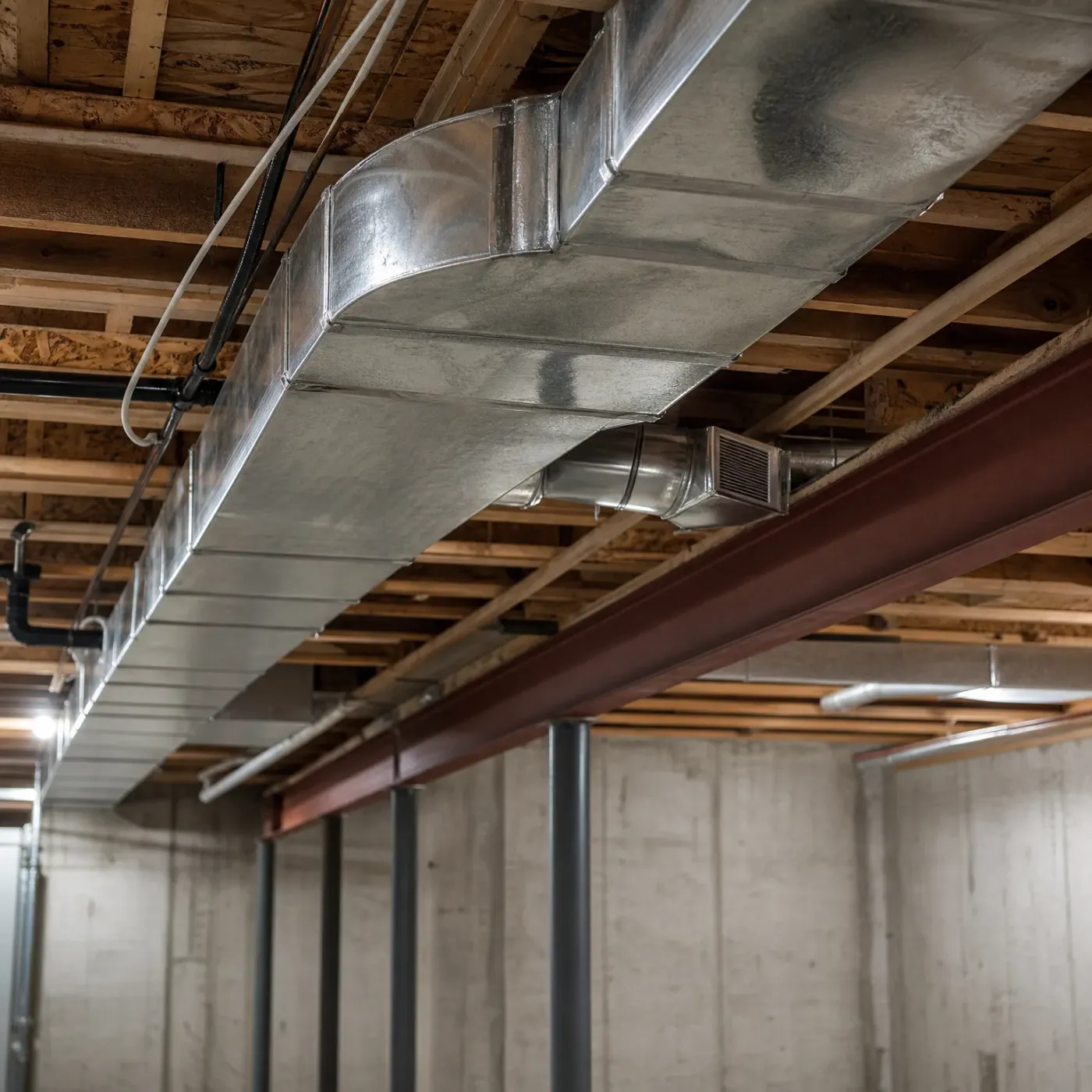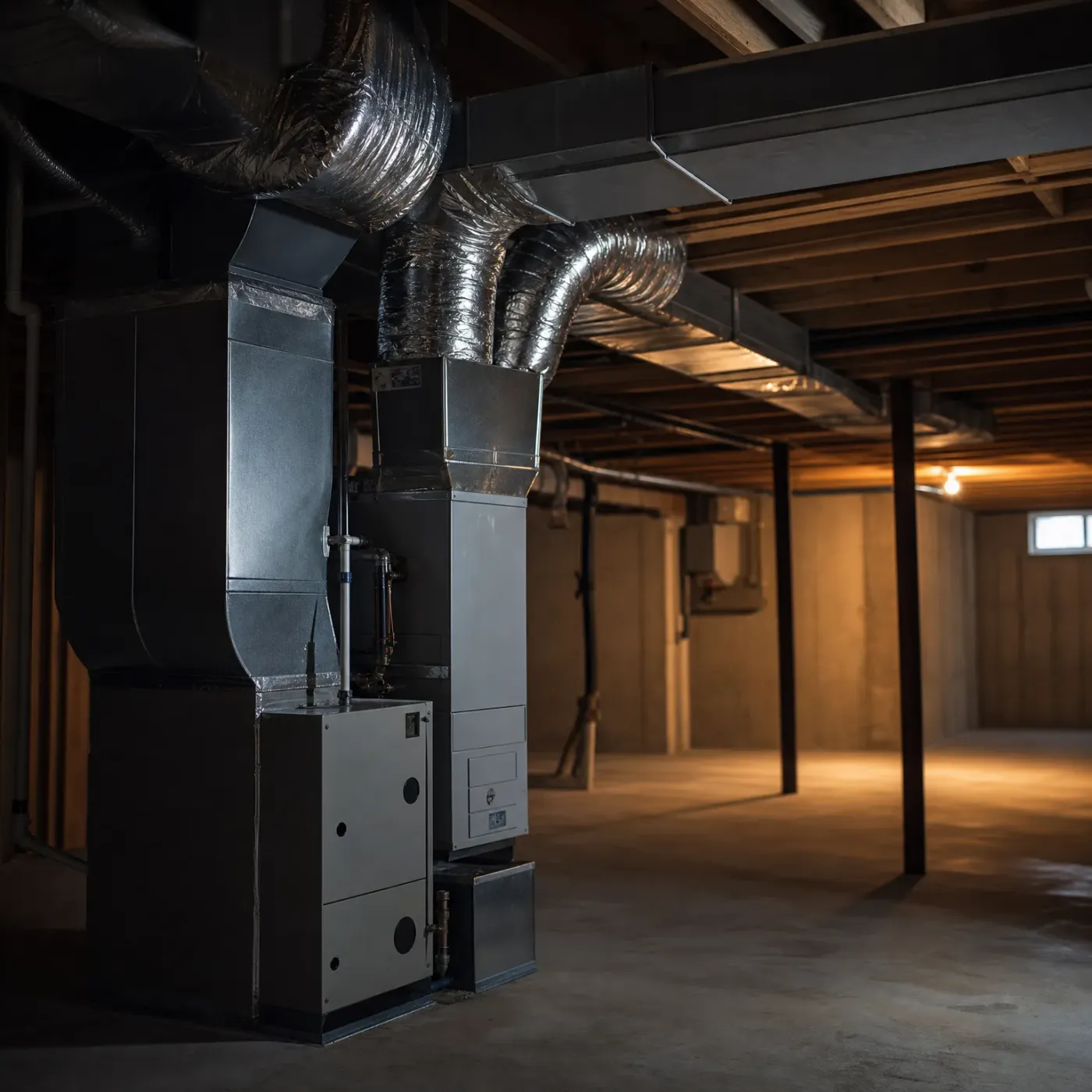

Unfinished basement with concrete floor and walls, exposed wood joists, steel support columns, and two furnace-type units connected to sheet-metal and flexible insulated ducts.

One request and it's handed off

How often to clean air ducts in Wyoming

Most homes here heat with gas and run the air conditioner hard through the dry summer stretch, and both pull air through the same ducts all year. That raises the real question: what actually builds up in there, and what's the right interval for your house, not a general rule. Below, what decides it and when a cleaning earns its keep. Skip the search for someone qualified to do it, that part's handled once you send the form.

I'm done searching

Most homes in Wyoming only need their ducts cleaned every three to five years. Dust and pollen get pulled in hard during the hot, dry summer stretch, and once the furnace takes over in fall, that same dust keeps circulating through the system all winter. Dry climates tend to move more fine dust than humid ones, since there's less moisture to settle it, so ducts here can build up a layer faster than you'd expect from how clean the house looks. If you've had recent duct work, a dusty attic, or pets shedding into the return vents, lean toward the three-year mark instead of five. Skip it too long and the system is just pushing that dust back into every room it heats or cools. Catching it on a normal interval, before anyone's coughing or the vents are visibly dirty, is the easier problem to solve.

Unfinished basement with concrete floor and walls, exposed wood joists, steel support posts, and large galvanized sheet-metal ductwork running to a furnace or air handler against the far wall.

Ducts doing their job

Air moves through clean metal, in and back out, without picking up much along the way. The furnace kicks on in the fall and pushes warm air through the same runs that carried cool air all summer, and the system just keeps working.


Galvanized sheet-metal ductwork and round pipes run along a wooden floor joist ceiling above a bare concrete wall and floor.

Ducts carrying more than air

Dust sits along the bottom of the runs and in the joints where sections meet. Every time the blower starts, some of it rides along into the rooms. A filter catches what passes through it, not what's already settled in the duct itself.

Clean Now or Wait

Clean now

  • Dust buildup is visible at the vent covers or you can feel reduced airflow at the registers farthest from the furnace.
  • Someone in the house has new or worsening allergy symptoms that ease up when they spend time away from home.
  • A rodent, bird, or insect problem has turned up in the attic, crawlspace, or anywhere the ductwork runs.
  • Work on the furnace, insulation, or remodeling in the house left visible debris or drywall dust near the vents.
  • It has been more than five years since the ducts were last cleaned, even if nothing looks obviously wrong.

Wait

  • The ducts were cleaned within the last three years and nothing has changed in the house since then.
  • Airflow at every vent feels about the same as it always has, with no new dead spots or weak rooms.
  • No one in the house has new breathing or allergy complaints that track with being indoors.
  • There has been no pest activity, water damage, or construction work near the ductwork recently.
  • The furnace filter is still catching dust at a normal rate and doesn't need changing more often than usual.
Unfinished basement interior with exposed wooden floor joists, galvanized rectangular and round sheet-metal ducts, a gray furnace unit at left, and a large blank light-colored wall at right.

What dry summer air carries in

Wyoming's summers run hot and dry, and that dry air moves more loose dust and dirt than humid air does. Every bit of it gets pulled through the return vents and across the coil before it reaches a room. Some settles in the duct runs instead of blowing back out. A little buildup there doesn't slow anything down. It only becomes a problem once it's thick enough to flake off and ride the airflow into the house.

Galvanized sheet metal ductwork with elbows and a vent grille running beneath an exposed wood joist and OSB ceiling, next to a blank white wall.

Why gas heat matters here

Once a gas furnace is running, it pushes a lot of air. Every cycle moves whatever is sitting in the ducts a little further along, and a furnace that runs most days from fall through spring does that a lot. Gas heat doesn't add moisture to the air the way some systems do, so dust in the ducts stays dry and light instead of clumping. Dry dust is the kind that gets lifted off the duct walls and carried straight into a room.

Power costs 13.37 cents per kilowatt-hour statewide

Cheap power at 13.37 cents a kilowatt-hour means running the blower longer costs you less here than it would elsewhere. That makes it easy to let the furnace fan run extra hours trying to clear dust instead of having the ducts cleaned, when the fan was never going to fix the buildup in the first place.

EIA-861 2025 statewide residential average

Unfinished basement with bare concrete floor and walls, exposed wood joists, metal ductwork, a furnace unit, steel support posts, and a small window.
Metal stays bare and the runs stay open, so the furnace and the AC both move full airflow to every room they're tied to.
Empty basement with bare concrete walls and floor beneath an exposed wood-joist ceiling carrying galvanized sheet-metal ductwork, round ducts and pipes.
Dust has built a layer on the bottom of the duct and the spiral pipe, and the blower is pushing air through a narrower path now.
A smiling bearded man in a green t-shirt sits on a gray sofa, looking down toward a device at the bottom of the frame, with a bookshelf and a green plant blurred behind him.
A bearded man in a plaid flannel shirt stands indoors beside a wood-framed, frost-covered window, looking outside, with a steaming brown mug on the sill and a wooden cabinet behind him.
Galvanized sheet metal trunk ductwork with a round branch and register running beneath wood floor joists in an unfinished basement, alongside pipes, wiring, a steel beam and concrete walls.

Done looking for a duct system pro

Describe your ductwork job once, to one pro.

Send the form and finding a duct cleaner is handled.

Hand it over

No fee to send it, and nothing to sign.

Is dust actually building up in your ducts

Walk up to a vent cover and look at the slats. A gray film there usually means more of the same sits further back in the run, out of sight. Check the registers farthest from the furnace too. If the air coming out feels weaker than the ones closest to it, that's dust narrowing the path, not a bad vent. Some households notice it another way: someone's allergies flare up at home and calm down when they're away for a few days. That points at what's circulating, not just what's visible. None of this means the system is failing, but a duct packed tight with dust makes the furnace and the air conditioner both work harder to move the same air, and that strain doesn't stay contained to the ducts for long.

Basement ceiling with galvanized sheet-metal ductwork, wooden joists and subfloor, black and white pipes, above a concrete wall and floor.
Before you get your ductwork cleaning
Unfinished basement with bare concrete walls and floor, exposed wood joists, and galvanized sheet-metal HVAC ductwork and pipes running across the ceiling.
After you get your ductwork cleaning

Where that leaves your ducts

  • Three to five years is the right interval for most Wyoming homes, based on how much dust the dry summer air pulls through the system.
  • A gray film on the vent slats or weak airflow at the farthest registers are signs cleaning is due sooner than that.
  • Skipping the problem doesn't fix it, the furnace fan just keeps pushing air through a narrower path at a higher cost.
  • A rodent, bird, or insect getting into the ductwork moves the timeline up regardless of how recently it was cleaned.
  • Once the ducts are clear, both the furnace and the air conditioner move full airflow to every room again.
  • Checking a vent cover takes a minute and tells you more than guessing at a calendar date.

Three to five years holds up for most homes in Wyoming. That's how long it usually takes the dust the summer air pulls in, and the dust the furnace keeps stirring through winter, to build into a layer worth paying attention to. You don't have to guess at where you are in that stretch. Look at a vent cover. A gray film on the slats tells you what's likely sitting further back in the run. Weak airflow at the registers farthest from the furnace tells you the same thing a different way. Neither takes more than a minute to check, and both beat waiting on a calendar.

None of this fixes itself by waiting. The dust doesn't thin out on its own, and the furnace fan running longer just pushes air through a narrower path instead of a clear one. That costs you more without solving anything. And the three to five year window only holds if nothing else gets in there first. A rodent, a bird, an insect finding its way into the ductwork changes the timeline regardless of when it was last cleaned.

Once it's done, the difference shows up the same way the problem did. Full airflow reaches every room again, the furnace and the air conditioner both move air the way they're supposed to, and you're back to watching the vent covers instead of the registers.

A smiling man in a dark green shirt over a white t-shirt sits at a kitchen counter with a dark mug, looking off to the side, with shelves, plants and a bright living area behind him.
A man in a gray long-sleeve waffle-knit shirt smiles and looks off to the side in a kitchen with open shelving, a refrigerator, a wooden sideboard with a potted plant, and a glass door to the right.
A man in a dark green ribbed sweater stands smiling and looking off to the side beside a stone kitchen counter with a ceramic mug, with a dining table, pendant lights, and large windows in the background.
A bearded man in a gray long-sleeve shirt stands smiling and looking off-camera beside a kitchen counter with a white mug, with a living room, fireplace and wall-mounted television behind him.

Ductwork Cleaning

It's off your list after this

Fill out one short form instead of calling around.

A black smartphone standing upright against a plain light gray background, its screen filled with solid green.
Duct and vent cleaningDucts or ventsWyoming
Step 1 of 2

What ZIP code is the job in?