




Is duct cleaning worth it in Casper, WY

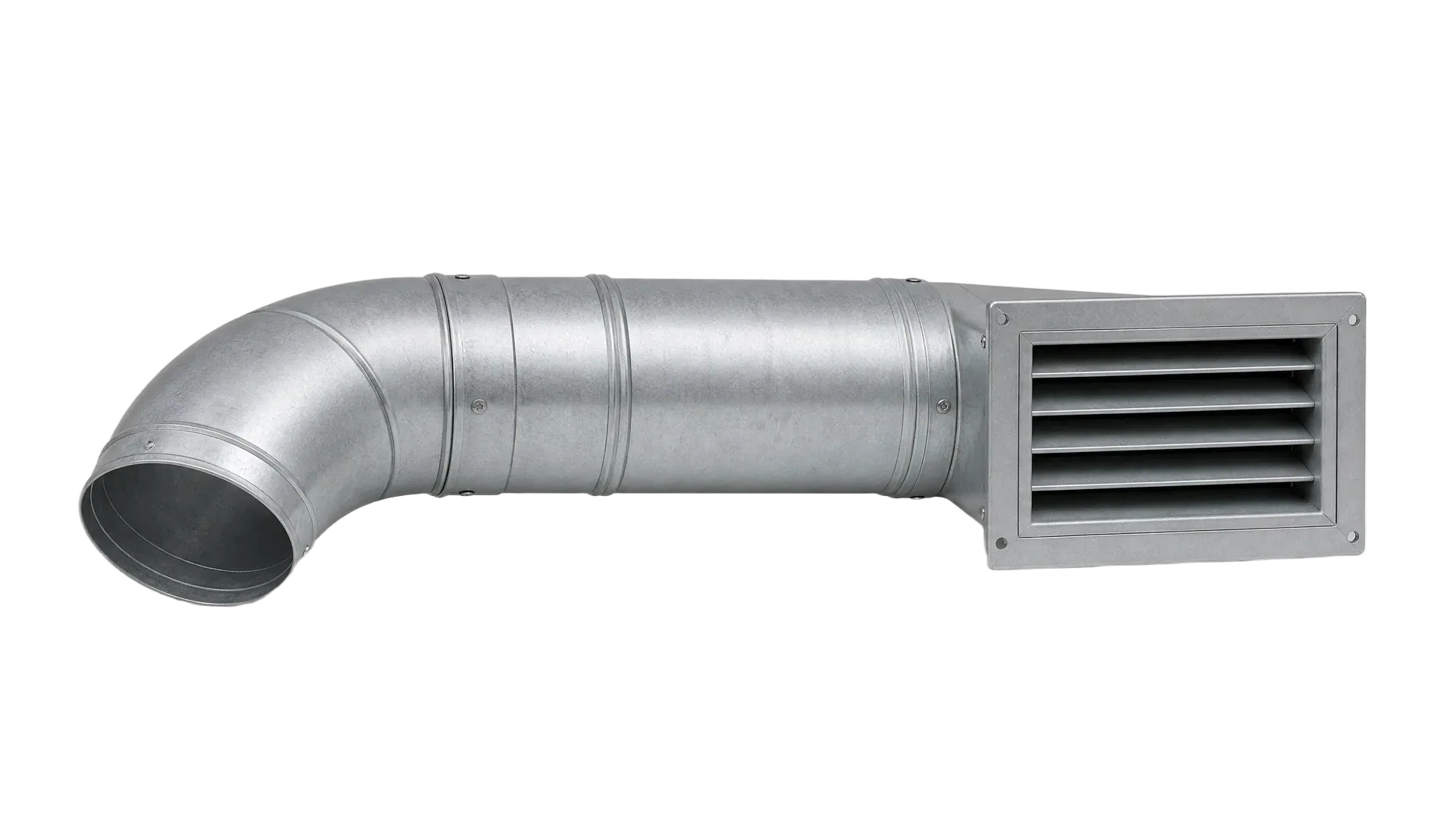
A galvanized metal round duct with a 90-degree elbow connected to a rectangular louvered vent grille, shown against a plain gray background.
Request a pro

Duct cleaning is worth it in Casper if your ducts have a real reason to need it, not on a fixed schedule. Dust and dry dirt blow through this area most of the year, and a lot of it settles in the return ducts and on the coil before it ever reaches a filter. If you've had work done on the house, if a filter was left out or ran too long, or if you can see dust kicking up from the vents when the furnace starts, that's dirt built up inside the system, and cleaning it out makes sense. If none of that describes your house and the air coming out looks clean, paying to clean ducts that aren't dirty doesn't buy you anything. The honest answer is to look at what's actually going on in your ducts first, since that tells you more than how many years it's been since the last cleaning.

An older man with gray hair and a beard, wearing a dark snow-dusted jacket and scarf, stands smiling in a warmly lit interior hallway with a lit table lamp, a vase of dried branches, and a framed picture in the background.
An older man in a dark snow-flecked overcoat and scarf stands smiling in a warmly lit home entryway, with a glass-paned door showing darkness outside and a lamp-lit room visible through a doorway behind him.
An older man with grey hair and a beard, wearing a dark coat dusted with snow, stands in a dimly lit entryway with a ceiling lamp, a side table with two shaded lamps, and a lit fireplace visible in a room beyond.
An older man with gray hair and a beard, wearing a dark coat dusted with snow, stands smiling in a doorway of a warmly lit home with a sofa, lamp and window visible behind him.

How much does your duct system actually work here?

  • Half the homes here were built by 1977

    Half the homes in Natrona County were built in 1977 or earlier, old enough that the ductwork has likely never been cleaned at all.

  • Heat runs September through June

    Heat runs September through June here, close to ten months a year, so ducts are moving air almost constantly and collecting dust while they do it.

  • Cooling runs July through August

    Cooling only runs July and August, so the ducts spend most of the year handling heat, not AC, when dry dirt gets pulled in.

ACS 2020-2024 · NOAA nClimDiv 1991-2020

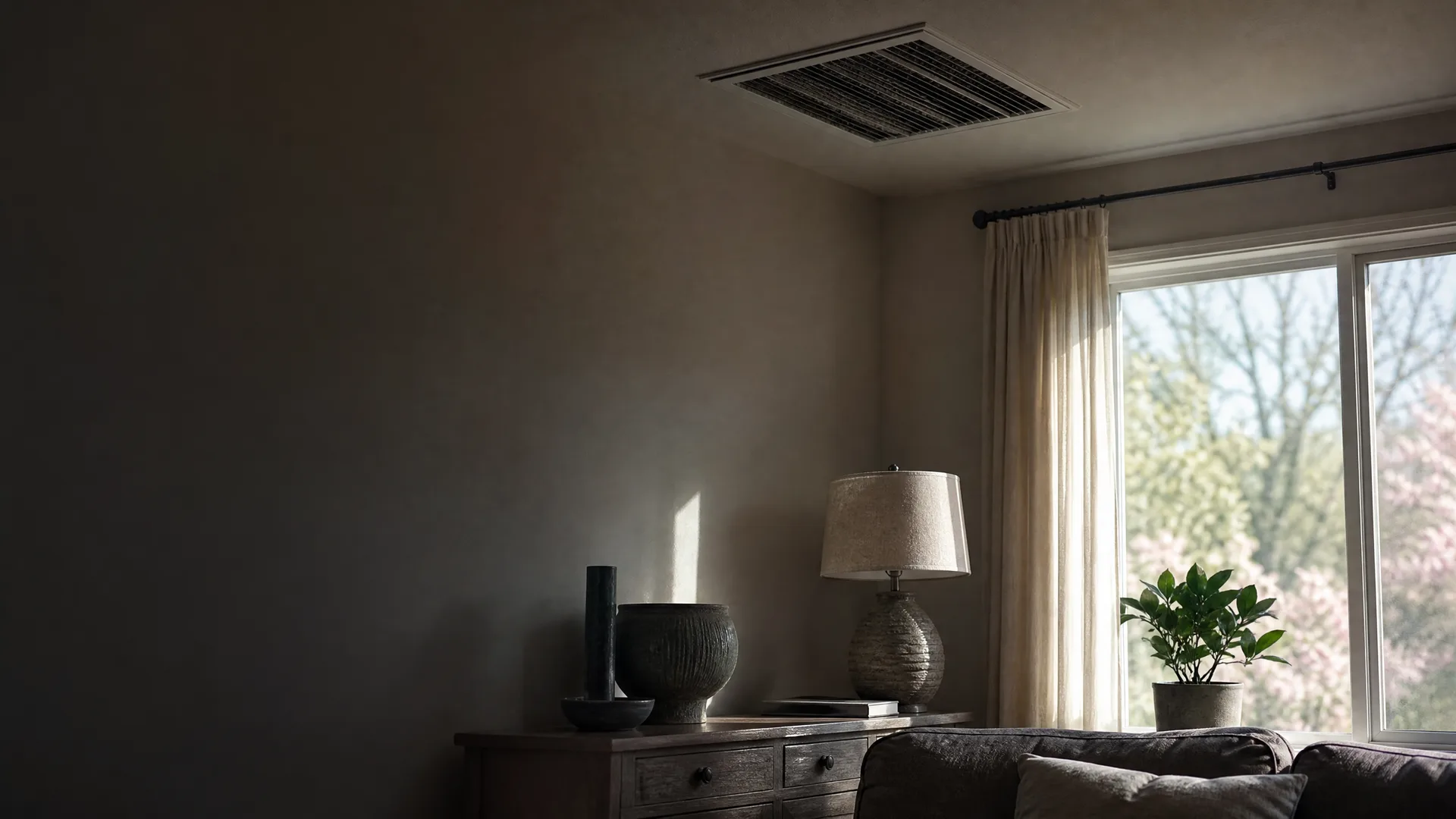
A dim living room corner with a ceiling air vent, a curtained window showing blossoming trees, a table lamp and dark ceramic vessels on a wooden dresser, a potted plant, and a sofa in the foreground.

Spring sun comes in low through the living room window, the kind of light that shows what's usually hidden. You're sitting there and you notice it: a gray film over the ceiling vent grille, thicker at the slats, and a fine layer of the same dust settled across the top of the bookshelf and the TV stand underneath it. The furnace kicked on a few minutes ago. You can feel the air moving if you hold your hand near the grille, and you can see it too, now, in the light, a little of that dust stirring loose and drifting down before it settles again on the same surfaces you just wiped last week.

Clean Your Ducts or Wait

Worth it now

  • Ceiling and floor vents have a visible gray film on the grille, not just a little dust you can wipe off in a week.
  • The ductwork came with a house built in 1977 or earlier and nobody has record of it ever being cleaned.
  • Someone in the house has allergies or breathing trouble that gets worse indoors, not just outside when the wind kicks up dust.
  • A register was closed off or disconnected for a while, and duct work or a remodel has gone on since without the system being checked.
  • You can see dirt or debris actually inside the duct when you pull a vent cover, not just dust sitting on top of it.

Skip it for now

  • The vents look clean when you check them and there is no film building up on the grilles.
  • The ductwork is newer, installed within the last several years, with no history of rodents, water, or construction dust getting into it.
  • Nobody in the house has new or worsening allergy symptoms since moving in or since the last heating season.
  • The filter gets changed on a regular schedule and still looks reasonably clean between changes, not caked gray within weeks.
  • There has been no recent remodel, roof work, or duct repair that could have let debris into the system.
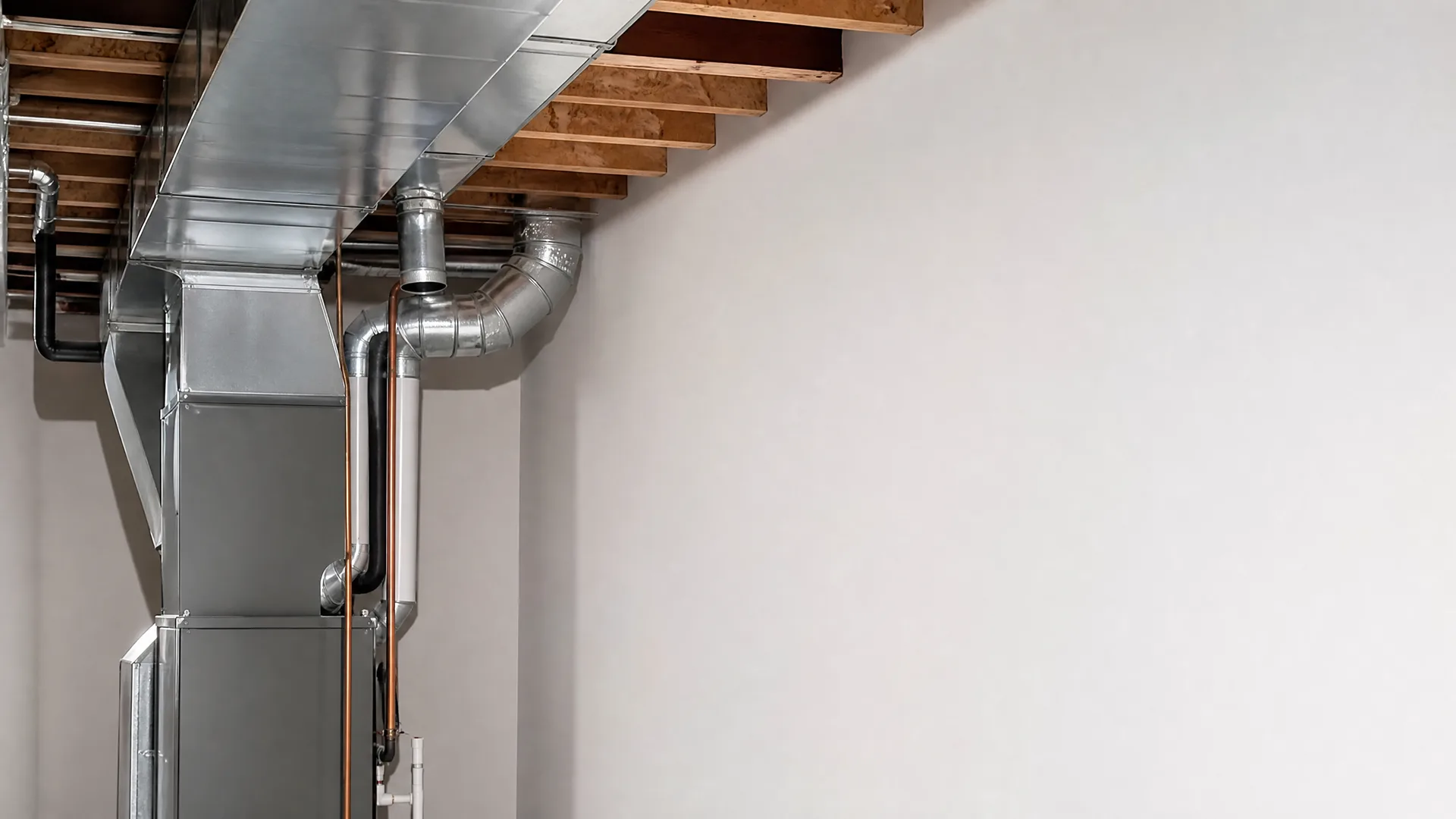
Basement interior showing a furnace with sheet-metal ductwork, a round flue pipe and copper lines running beneath exposed wooden floor joists next to a plain light-colored wall.

What a duct cleaning actually reaches

A duct cleaning clears the return runs, the supply trunk, and the coil surface, the places dust settles before the blower pushes air back out through the vents. A filter only catches what passes through it after the blower, not what's already sitting in the ducts. That's why a cleaner filter doesn't mean clean ducts. The gray film on a grille started further back, in duct runs a filter never touches.

Interior corner of a building with a large blank white wall beside an unfinished ceiling showing wood joists, galvanized sheet-metal ductwork, and white and copper pipes.

Why Casper dust gets in at all

Return ducts pull air from inside the house, but they also pull from attics, crawlspaces, and any gap where a duct seam has come loose. Dry, blowing dust finds those gaps more easily here than in damp climates, where dust tends to clump and settle outside instead of drifting in. Once dust is inside the duct run, the air moving through it ten months a year keeps stirring it rather than letting it settle out on its own.

Power here costs 14.99 cents per kilowatt-hour

At 14.99 cents a kilowatt-hour, running the blower longer than it needs to costs something every month. A blower working against dust-caked coils and clogged return runs moves air less efficiently, and it has to run longer to do the same job.

EIA-861 2025

Skip it for now

Your ducts were cleaned within the last few years, or the house is newer and this is the first time you've looked closely at the vents. The filter gets changed on a regular basis and the grilles look clean when you pull them off. Nobody in the house has had new allergy or breathing trouble. In this case a cleaning would be clearing out normal dust that hasn't had time to build up into anything worth paying to remove. Wait until you see the film on the grille or the furnace filter is loading up faster than it used to, then take another look.


Get it done soon

You pulled a vent cover and found a real layer of gray dust on the grille and inside the boot, not just surface dust. The house is older, the ductwork came with it, and nobody has a record of it ever being cleaned. Someone in the house has started coughing more or notices a musty smell when the furnace or AC kicks on. Heat runs most of the year in Casper, so ducts in that shape have been pushing that dust through the house on a near-daily basis. Getting it cleaned now means a contractor can look at the whole system while they're in there, not just the parts you can see.

A woman wrapped in a thick textured blanket sits on a sofa with an open book on her lap, beside a lit lamp and bookshelf, with a frost-patterned window behind her.
A smiling older woman with gray shoulder-length hair in a cream cable-knit turtleneck sweater stands behind a wooden board holding a round loaf of bread, in a warmly lit kitchen with a dark window and shelves behind her.
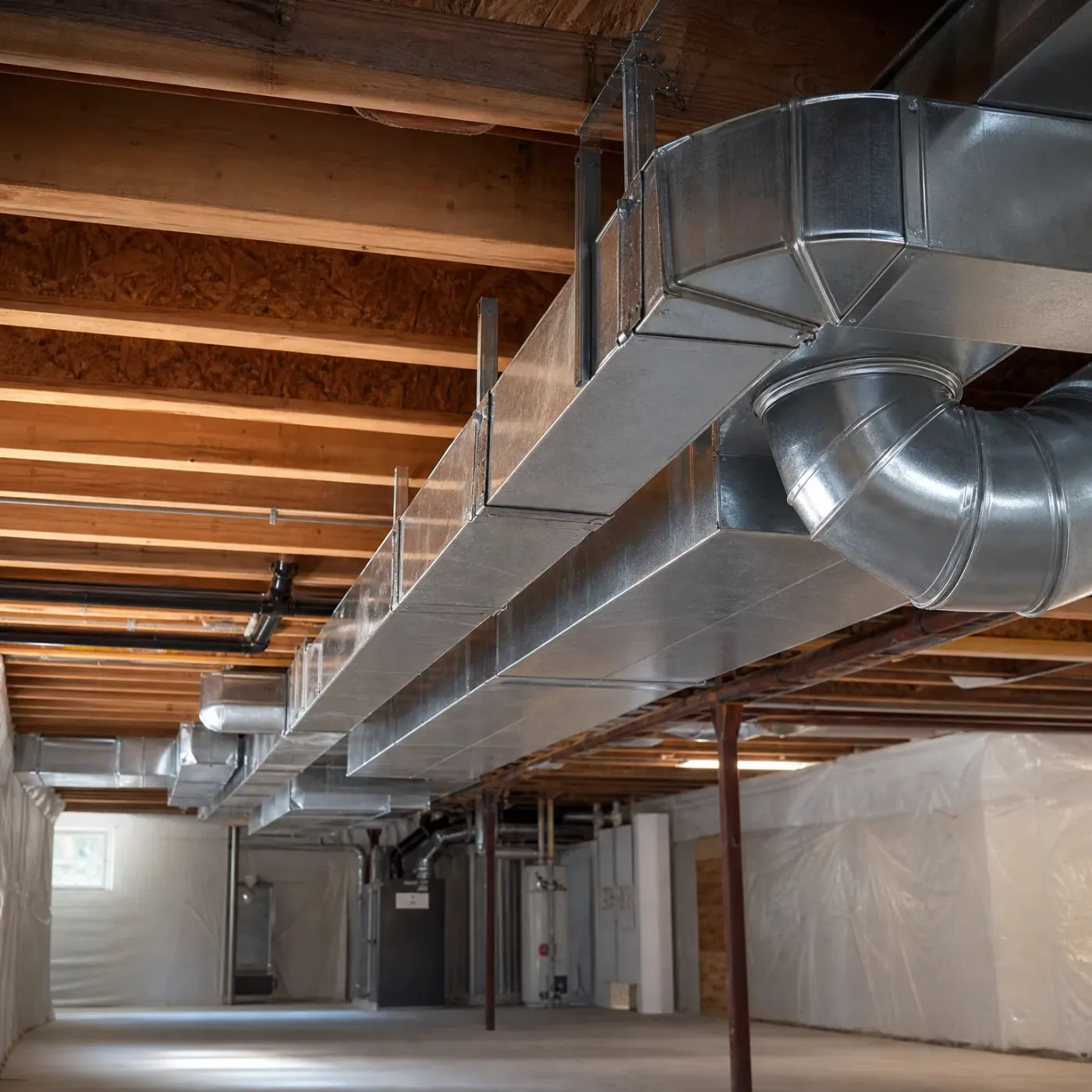
Unfinished basement with galvanized sheet-metal trunk ductwork and round branch ducts suspended beneath wood floor joists, with support posts, plastic sheeting on the walls, and a furnace and water heater along the far wall.

Get matched with a duct system pro in Natrona County

Skip searching for someone who cleans ducts in Natrona County.

Get matched with someone who does this kind of work in Natrona County.

Start one form

There's no charge for the request.

Why does the house feel dustier than it should?

You run a cloth over the TV stand and by the weekend it needs it again. Dust shows up on the windowsills faster than it should for a house that gets cleaned regularly. Someone sneezes more at home than anywhere else, or the air just feels heavier by late afternoon. Pull a vent cover off and look at the slats. If there's a gray buildup you can't wipe away in one pass, that's been collecting for a while, and the blower has been pushing some of it back into the rooms every time the heat or the AC kicks on. Left alone, it keeps recirculating, and anyone in the house sensitive to dust feels it first.

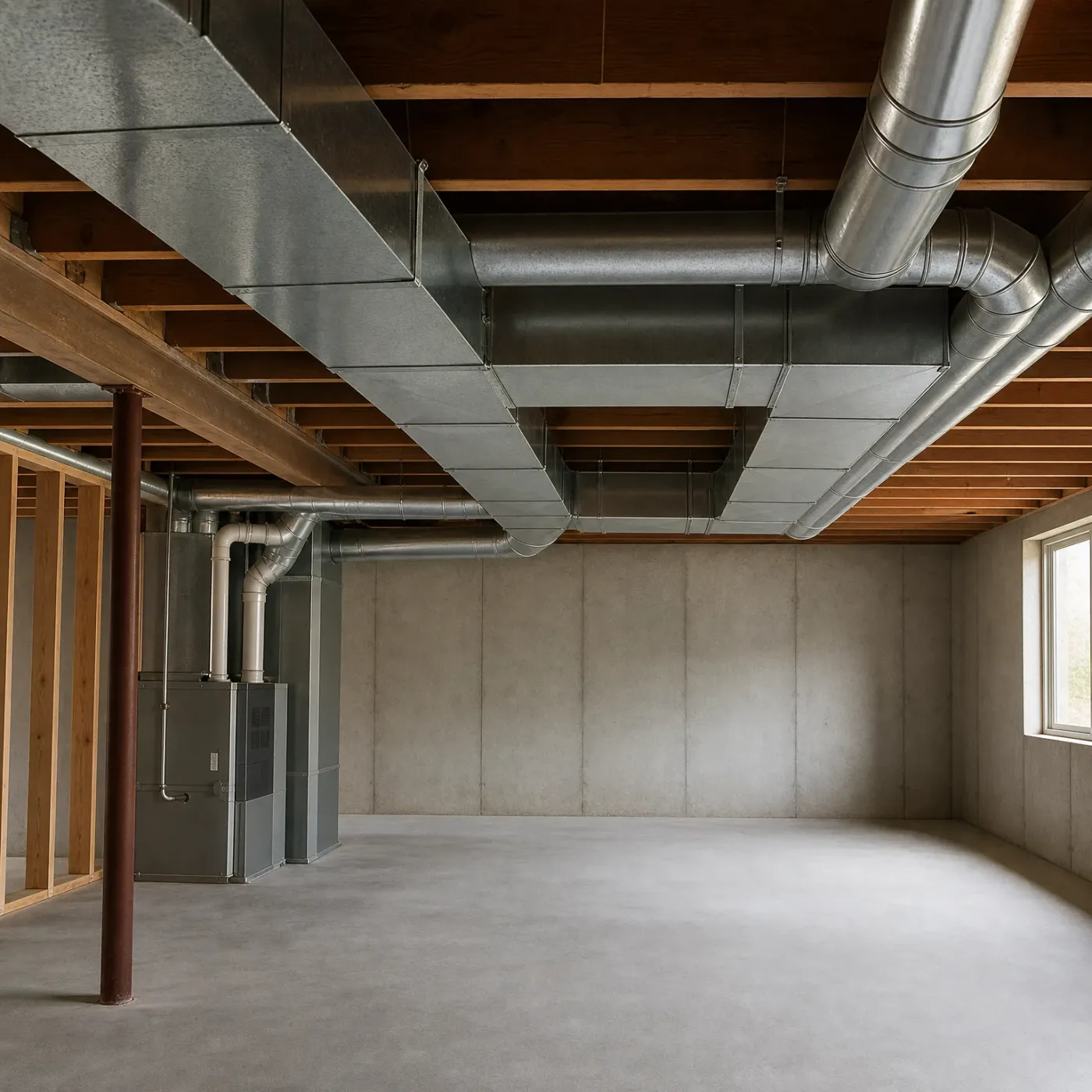
Unfinished basement with concrete floor and walls, exposed wood joists, galvanized sheet-metal ductwork, a furnace unit, a steel support column, and a small window.

Ductwork doing its job

This is what a normal setup looks like. Sheet metal trunk and a spiral run overhead, tied into the furnace against the wall, nothing hanging loose or crushed. Air moves through runs like this without a fight. If yours looks like this and the vents run clean, there's no reason to touch it yet.

Empty unfinished basement with bare concrete walls and floor, showing exposed wooden joists, galvanized sheet-metal ductwork, pipes, and a white vent grille overhead.

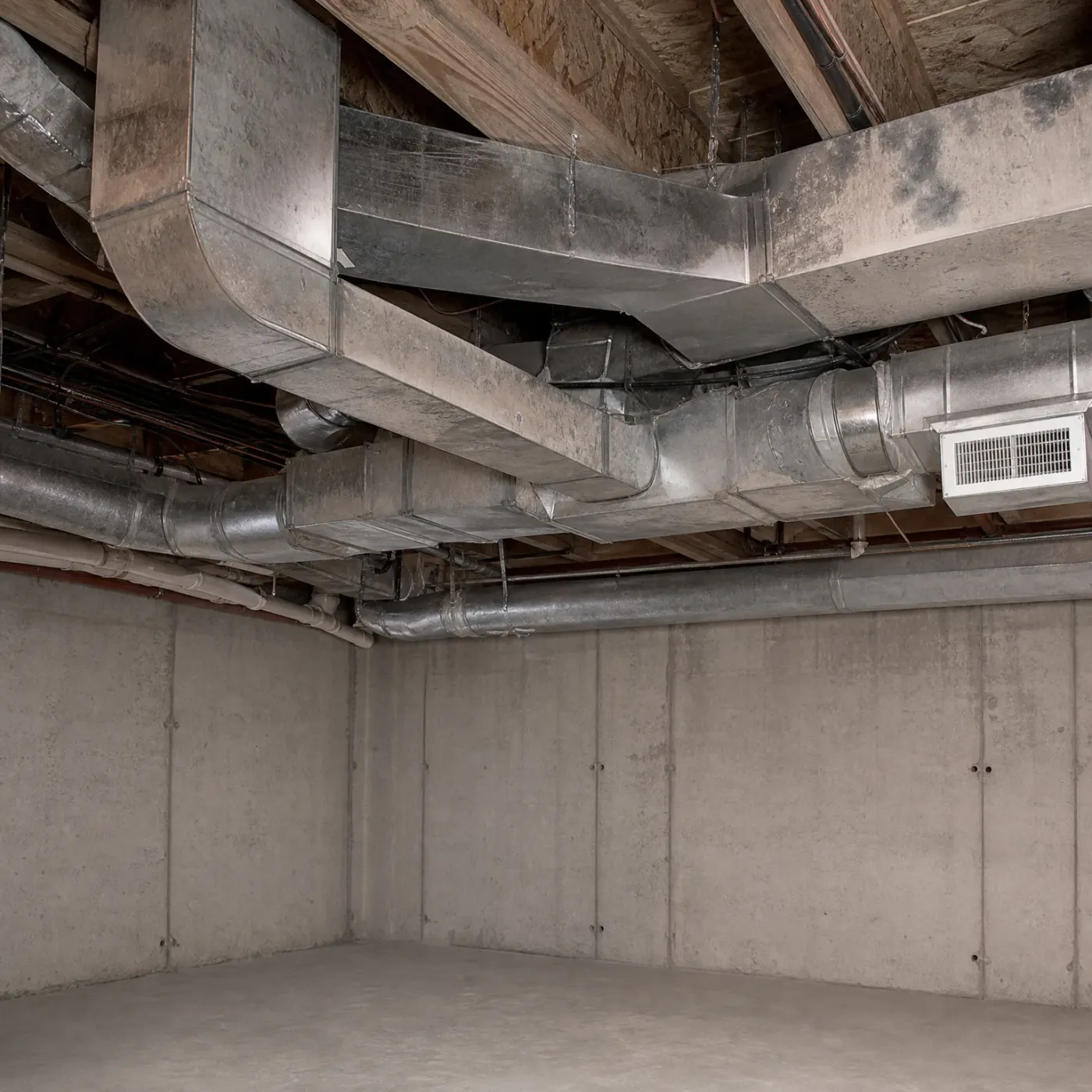
Ductwork under strain

Bare joists, galvanized trunk, flex duct snaking between them, one grille doing the work at the far end of the room. A layout like this has more places for dust to settle and farther for air to travel before it reaches that vent. If the grille shows gray film, this is the kind of system behind it.

How does a duct cleaning actually get done?

You're wondering what actually happens when someone comes out to clean your ducts, maybe because you've never had it done and the idea of someone running equipment through your walls sounds vague. You want to know if it's a quick vacuum of the vents or something more involved before you decide it's worth scheduling.

A contractor hooks a vacuum to the trunk line and brushes each run before pulling the dust out

A contractor seals the supply and return vents except for one, then connects a high-powered vacuum to the main trunk near the furnace. That vacuum pulls air through the whole system while a brush or air whip works loose what's stuck to the inside of each duct run, section by section. The coil gets cleaned separately, since that's where a lot of the dust settles before it ever reaches the blower. Once every run has been brushed and pulled, the vents go back on and get wiped down. The whole system gets checked afterward to make sure nothing was knocked loose or disconnected in the ductwork during the process, especially in older runs where the sheet metal joints aren't as tight as they used to be.

  1. Every supply and return vent gets opened and checked first.

  2. A vacuum collection unit connects to the main trunk line.

  3. A negative pressure seals the system while agitation tools loosen debris.

  4. Brushes and air whips knock dust loose inside each run.

A woman in a cream sweater and jeans stands in an open black front door of a white stucco house, viewed over the shoulder of a man in a navy jacket in the foreground.

So is it worth it for your house

The answer comes down to what you found when you looked. A gray film on the grilles, a system that's never been touched since the house was built in 1977 or earlier, someone in the house congested more at home than away from it. Any one of those is a real reason. A clean system that's been serviced in the last few years isn't.

If what you found puts you in the worth-it camp, the next step is getting someone out to look at the actual ducts, not just going by what's visible at the vent. Skip the trouble of sorting through contractors on your own, calling a few, explaining the gray film and the old ductwork over and over. Answer a few questions about your house and a contractor who handles duct cleaning in Natrona County will reach out directly.

Interior corner of a living room with a beige upholstered armchair holding a textured pillow and throw, a eucalyptus arrangement in a ceramic vase on a wooden table in the foreground, a blurred glass-front cabinet behind, and a potted plant on a sunlit window sill.
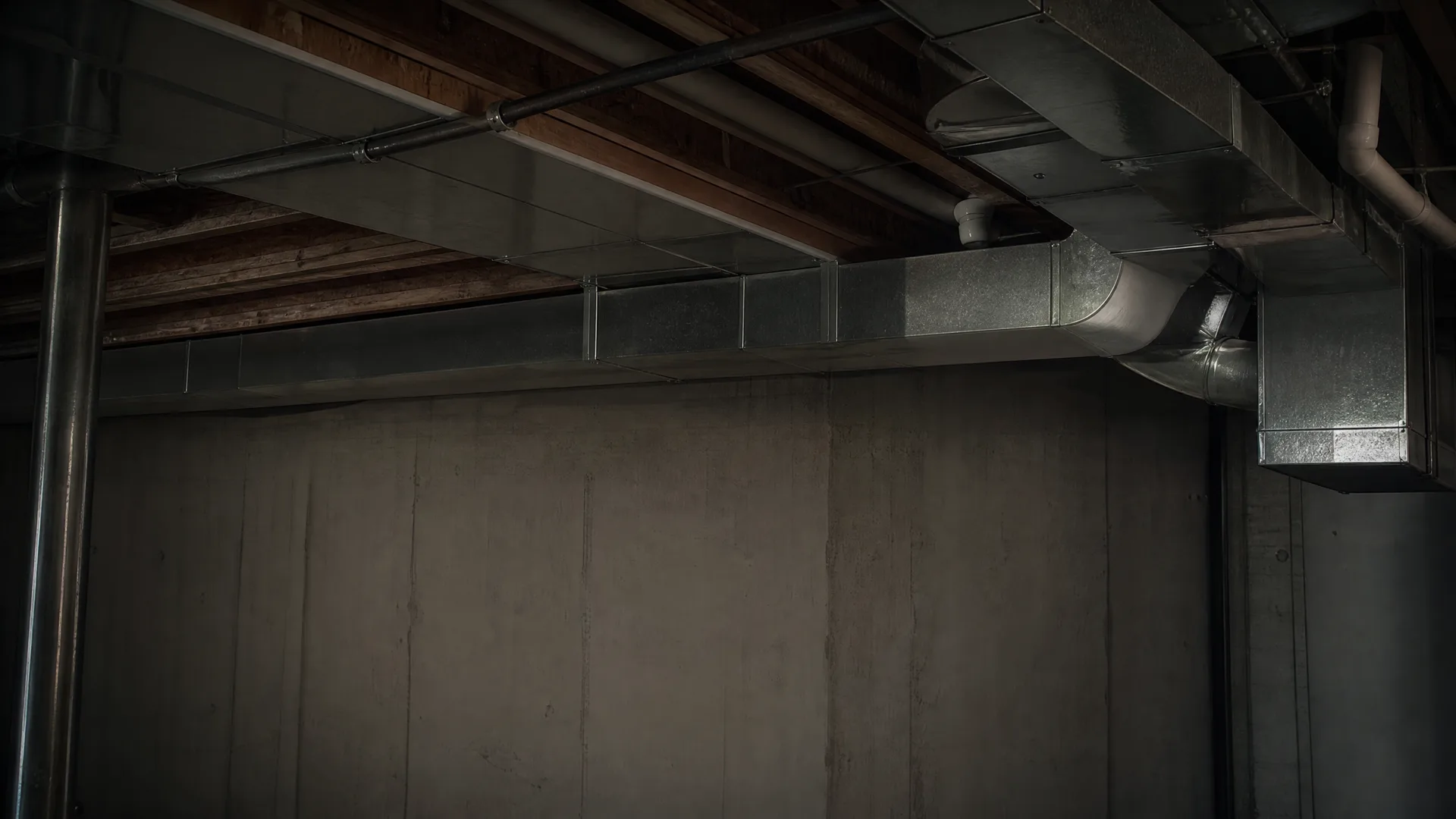
Dimly lit basement interior with galvanized sheet-metal ductwork and round pipes running along wooden floor joists above a bare concrete wall.

Find a duct system cleaning pro in Natrona County

Describe your ductwork job once, to one pro.

Duct and vent cleaningDucts or ventsNatrona County, WY
Step 1 of 2

What ZIP code is the job in?