
HVAC Installation in Kemmerer, WY
Tell us about the house, and a licensed contractor who covers Lincoln County will get in touch.
Tell us about the job
It takes about a minute.

Kemmerer asks a lot of a heating system
Winter nights here average 8°F from December through February, and homes need heat from August through June. That is 11 months a year the system is working, not just the deep winter stretch. A new furnace or heat pump has to hold up to cold starts night after night for most of the year, not just a few weeks of hard cold.
Summers stay mild, averaging 75°F in the afternoon, so cooling is not what drives the choice here. Almost half the homes in this area heat with electricity, and the record shows 307 winter storms over the past ten years in this area. Statewide, 8% of households lost power for at least 24 hours in 2024. A furnace that needs electricity to run its igniter and blower will not run when the power is out, which matters when winter is the season that puts the most strain on the system.
- 11 months
- August through June, your system heats
- 8°F
- the average winter night it heats against
- 75°F
- the average summer afternoon it cools against
- When should I replace my HVAC system?
- Replace it when repairs stop making sense or when it can't keep up anymore. A furnace here runs from August through June, nearly eleven months a year, so it puts in more hours than most and wears accordingly. If yours is struggling to hold a set temperature on the cold nights, or a contractor has been out more than once this year for the same problem, that's your sign. An older furnace working harder to do the same job a newer one does easily is also worth replacing before it fails outright.
- Should I replace my furnace and air conditioner at the same time?
- Homes here don't need cooling, so this usually isn't a choice you have to make. If your system does include an air conditioner, replacing both at once makes sense when they're roughly the same age, since a furnace that's failing next to a working AC often means both are near the end anyway. A contractor can look at what you have and tell you whether it makes sense to pair them or handle the furnace on its own.
- What happens during an HVAC installation?
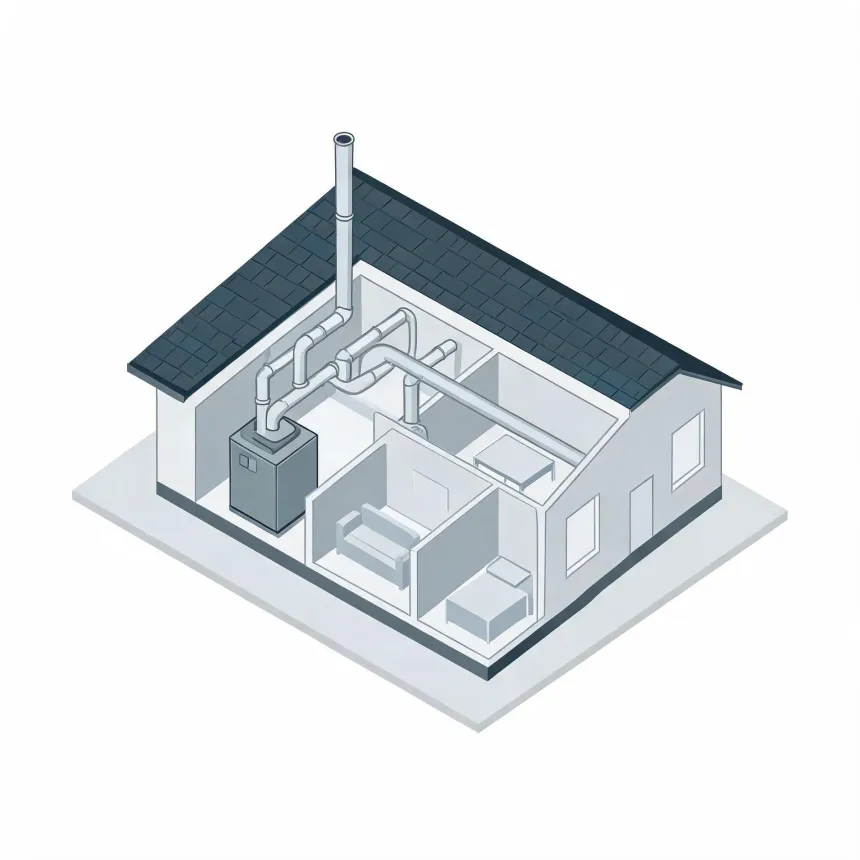
- A contractor first sizes the new equipment to your house, since a furnace that's too big or too small won't heat evenly. The old unit gets disconnected and removed, then the new one is set in place and connected to your ductwork, gas line or electrical circuit, and venting. After that, the system gets tested to confirm it's igniting properly, holding a steady temperature, and venting exhaust the way it should. With winter lows here averaging 8°F, that final check matters, since a furnace that isn't cycling right shows itself fast on the coldest nights.