
HVAC Installation in Evanston, WY
Tell us about the house, and a licensed contractor who covers Uinta County will get in touch.
Tell us about the job
It takes about a minute.

Ten months of heat a year, and winter nights near zero
Winter nights here average 10°F from December through February. That is the kind of cold a furnace has to answer every night for months, not just on the worst week of the year. Homes in Uinta County need heat from September through June, ten months of the year, so a new furnace is running most months, not just through the coldest stretch. It needs to be sized and installed for that kind of use.
Summer afternoons average 76°F, so cooling asks little of a system here. Most homes heat with gas, and whatever runs the furnace needs power to start it and move the air. This area has logged 10 winter storms and 50 damaging wind events over the past ten years, and 8% of Wyoming households went at least a day without power in 2024. That is worth weighing when a new system goes in.
- 10 months
- September through June, your system heats
- 10°F
- the average winter night it heats against
- 76°F
- the average summer afternoon it cools against
- When should I replace my HVAC system?
- Replace it when repairs stop making sense, either because the furnace or air conditioner is failing every year or because a contractor tells you a major part is going out. Age matters too. Homes here need heat from September through June, so a furnace is working almost the whole year and wears faster than one that gets long stretches of rest. If yours is already limping through the fall, that is the sign, not a specific birthday.
- Should I replace my furnace and air conditioner at the same time?
- If both are original to the house and near the end of their life, replacing them together often makes sense so a contractor can match the two and size the ductwork once. But it is not a rule. With winter lows here averaging 10°F and heat needed most of the year, your furnace is the system doing the real work, so if only one is failing, replace that one. A contractor can tell you whether the other is worth doing now or waiting.
- What happens during an HVAC installation?
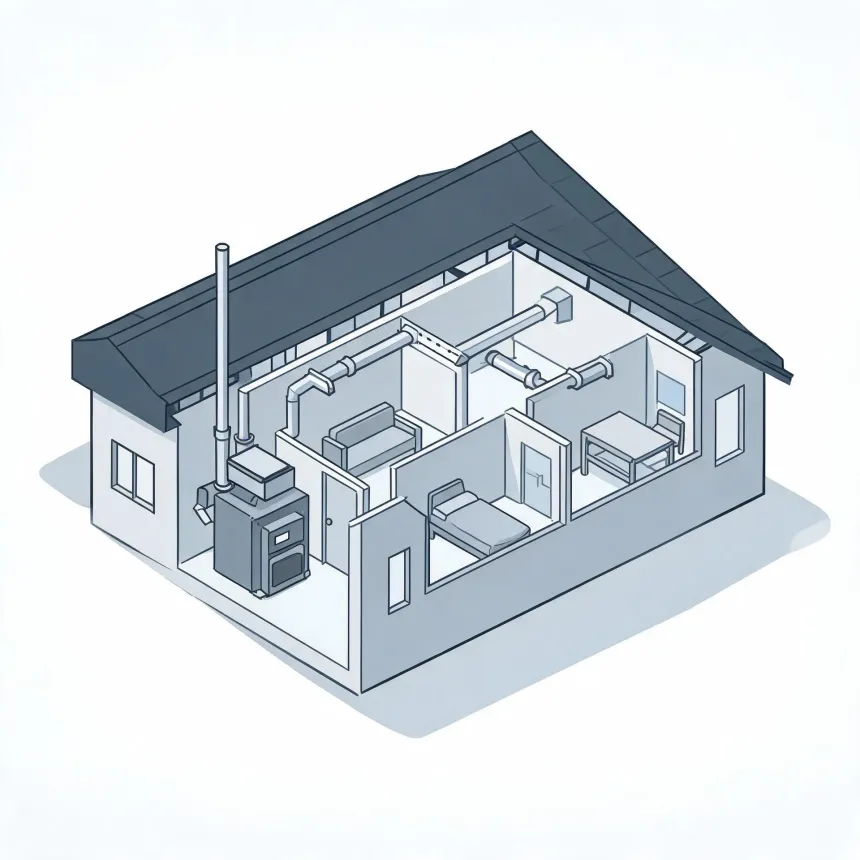
- A contractor first sizes the new equipment to the house, checking the ductwork, insulation, and the rooms it has to heat or cool rather than just swapping in the same tonnage as before. The old furnace or air conditioner comes out, and the new one goes in on its pad or in its closet, connected to the ducts, gas or electric line, and condensate drain. Once it is running, the contractor checks airflow, tests the thermostat, and confirms the system cycles properly before calling the job done. A contractor will walk you through the specifics and pricing for your house.