Mini Split Installation in Thermopolis, WY
A new system here will heat from September through June and cool from July through August every year. Tell us about the house, and a licensed contractor who covers Hot Springs County will get in touch.
Tell us about the job
It takes about a minute.
A Thermopolis mini-split works nearly the whole year
Your mini-split will run ten months out of twelve here, heating from September through June and cooling in July and August. Winter nights average 12°F, and that is cold for a heat pump to pull warmth from outside air. Summer afternoons only reach about 80°F, so the cooling side has an easier job than the heating side does.
Any new mini-split has to meet the federal minimum for a split system, 14.3 SEER2 for cooling and 7.5 HSPF2 for heating. With this many heating months, that heating number is the one that matters most for how the unit performs here. Hot Springs County also sees its share of winter storms, sixty-six of them over the last ten years. If the power goes out, a mini-split comes back on by itself once it's restored.
- 10 months
- September through June, your system heats
- 2 months
- July through August, it cools
- 12°F
- the average winter night it heats against
- 80°F
- the average summer afternoon it cools against
NOAA nClimDiv, 1991–2020 normals
- Is a mini split worth it?
- For most homes here, yes, especially if you're heating a space that isn't on the main furnace duct system. Thermopolis winters push down to 12°F on average overnight from December through February, and a cold-climate mini split is built to keep producing heat at those temperatures instead of giving up and running on backup resistance heat. Summers are short and mild here, only July and August average into the 80s, so the cooling side of the system won't see heavy demand. Where it makes the most sense is an addition, a garage, a basement, or any room the ductwork never reached well.
- How many rooms can a mini split cover?
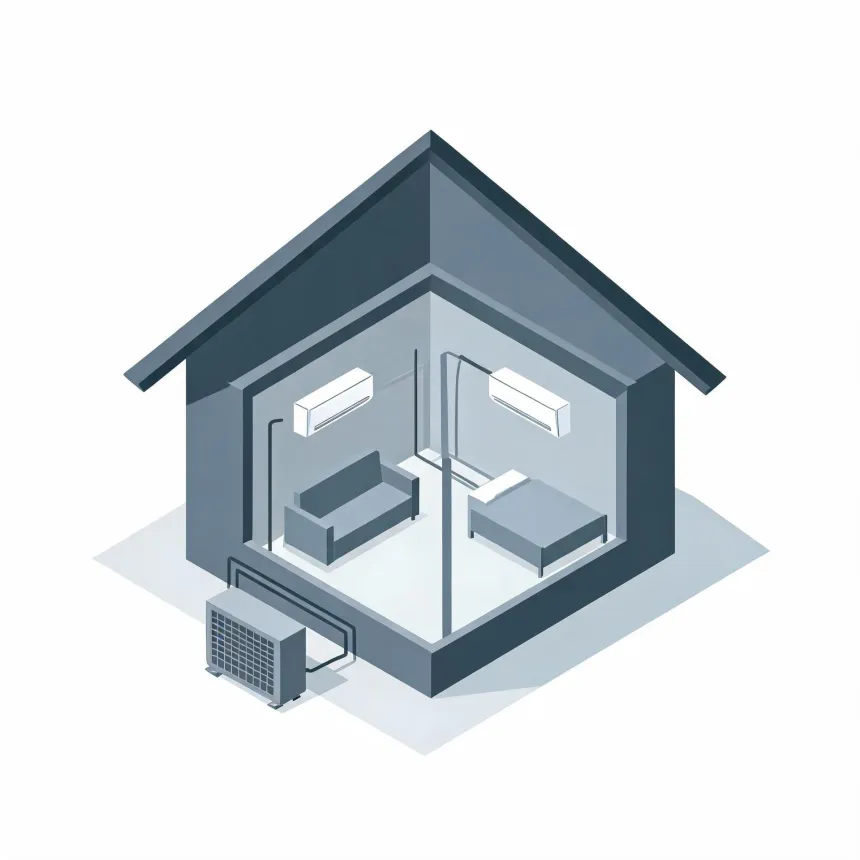
- A single outdoor unit can run one indoor head or several, depending on the system. Single-zone systems cover one room. Multi-zone systems can run up to eight indoor heads off one outdoor condenser, each with its own thermostat, so you can heat or cool different rooms to different temperatures at the same time. How many zones a given house should have depends on the layout and how the rooms are used, which is something a contractor will work out by looking at the space.
- Can a mini split heat a whole house?
- It can, if it's sized and placed to cover every room, but that takes planning. Homes here need heat ten months out of the year, so a whole-house mini split has to keep up on the coldest nights, when temperatures average 12°F. A cold-climate heat pump model is built for that kind of cold, but a contractor still needs to size the system and place enough indoor heads to reach every room, including ones farther from the outdoor unit. Skip a room and it stays cold no matter how well the rest of the house is heated.