Profile view of a bearded man wearing a black baseball cap and a dark gray T-shirt against a plain light background.

Why your furnace rattles in Wyoming

RepairFurnace or heatingWyoming
Step 1 of 2

What ZIP code is the job in?

A rattle usually means something inside the furnace has worked loose. Screws on the cabinet panels back out over months of the blower running and vibrating, and a loose panel is the most common source of that noise. It can also be the blower wheel itself, especially if dust has built up unevenly on the blades and thrown it off balance. A cracked heat exchanger can rattle too, though that one is rare and worth ruling out, since a cracked exchanger isn't safe to keep running. With gas heat working this hard through a long Wyoming winter, parts that were fine in October can work loose by January. A loose panel is a quick fix. A failing blower or exchanger is not something to leave alone, since both tend to get worse and can end up costing you heat on a cold night when you need it most.

A smiling man in a gray long-sleeved shirt stands in a kitchen looking to the side, with open shelves of dishes, a white mug on the counter, a potted plant, and a view through a doorway into a living room.
A smiling bearded man in a green sweater sits at a white marble kitchen island with a mug, potted plant and bowl of fruit, in a bright white interior with open shelving and an arched doorway.
A smiling man with dark curly hair and a beard, wearing a dark green knit sweater, stands at a white marble kitchen counter with a dark blue mug, with open shelving, pendant lights and a houseplant behind him.
A smiling man in a green ribbed sweater stands behind a wooden table holding a ceramic mug of coffee in a kitchen with white subway tile, shelves of potted plants, and a bowl of fruit.

Loose panels and screws

The cabinet panels on your furnace are held on with sheet metal screws, and those back out a little at a time as the blower runs through the winter. A panel that's not seated tight will buzz or rattle against the frame every time the blower kicks on. Checking this is simple: run your hand along the edges of the cabinet while the furnace is running. If a panel moves under light pressure, the screws behind it have worked loose, and that's likely where the noise is coming from.


Blower wheel and motor mounts

A blower wheel spins fast enough that even a small imbalance shows up as noise, and a chip or a buildup of dust on one blade will throw it off balance. The motor itself sits on rubber mounts meant to absorb vibration, and those mounts wear out over years of running. Once they go stiff or crack, the motor transmits its vibration straight into the cabinet instead of being cushioned, and that reads as a rattle rather than a hum. Either problem tends to get louder over time, not better.

An older beige furnace with two louvered vent panels stands on a concrete basement floor, connected to galvanized ductwork and a metal flue pipe, with gas piping and flexible conduit on the wall behind.
Before you get your furnace repair
A beige high-efficiency furnace in an unfinished basement, with white PVC vent pipes, a yellow gas line, metal ductwork, and exposed wood framing on a concrete floor.
After you get your furnace repair

A loose panel you could catch early

A screw or two backing out is a quick fix. Left alone, the rattle gets worse and the panel can work loose enough to affect how the cabinet seals.

I'm done searching

A blower wheel running unbalanced

A rattle from the blower wheel itself means it's hitting something or spinning off balance, and that wear doesn't stop on its own once it starts.

I'm done searching

Fix It Yourself or Call Someone

Rattle you check yourself

  • A panel that buzzes only when you press on it is loose screws, and a screwdriver fixes that in a few minutes.
  • The rattle comes and goes with the blower cycling on and off, and nothing else about the furnace seems off.
  • You can see the screws right on the cabinet and they look like they've backed out a turn or two.
  • The noise hasn't changed or gotten louder over the past few weeks.
  • Your gas bill and the heat output are both normal, so the furnace is doing its job fine.

Rattle a contractor should hear

  • The noise is a knock or a grinding sound rather than a buzz, which points to the blower wheel instead of a panel.
  • Tightening the visible screws didn't quiet it, which means the source is inside the cabinet.
  • The rattle has gotten louder or more frequent since you first noticed it.
  • You hear the furnace struggling to keep up with the cold on top of the noise.
  • You'd rather have someone confirm what's loose before a cheap fix turns into a blower or motor replacement.
A gray high-efficiency furnace in a basement, connected to sheet-metal ductwork on the left and white PVC vent pipes above, with black gas and drain piping and an exposed wood-stud wall with OSB sheathing on the right.

Furnace running quiet

Panels sit flush and every screw is snug, so the cabinet doesn't buzz when the blower kicks on. The ductwork and gas line connections are tight, and nothing vibrates loose against the frame through a Wyoming winter.

An older gas furnace with two louvered front panels stands on a concrete basement floor beside galvanized sheet-metal ductwork, pipes, and a weathered concrete wall.

Furnace worth a second look

An older unit like this has had more winters to shake screws loose and wear on its moving parts. Moisture staining on the walls nearby is worth mentioning to whoever looks at the rattle, since it points to more going on than a loose panel.

A smiling man with dark curly hair in a navy t-shirt sits on a gray couch indoors, with a large-leafed plant and a window in the background.
A bearded man in a plaid flannel shirt stands in a kitchen looking out a window toward snow-covered shrubs, with a steaming mug on the windowsill and potted plants on a shelf behind him.

Let someone else find the pro

Answer a few questions instead of calling shop after shop.

It costs nothing to send, and you don't have to hire anyone.

A gray residential furnace with two panel doors stands against a plain light wall in a concrete-floored room, connected to metal ductwork and white and copper pipes.

Checking it yourself first

You can get a flashlight and look at the cabinet panels while the furnace runs. Press on each one. If the rattle stops when you push a panel flat, that's your answer, and a screwdriver fixes it. Some homeowners stop there, and that's reasonable for a loose panel. But if you press every panel and the rattle keeps going, the noise is coming from inside the cabinet, and that's not something to keep testing on your own.

A gray high-efficiency furnace with white PVC venting pipes stands against a plain wall in a basement, connected to sheet-metal ductwork on a concrete floor.

Having someone else sort it

A contractor opens the cabinet, watches the blower wheel spin, and checks the gas line and duct connections while they're in there. That's the difference between guessing at a panel and knowing what's loose. Send the form and the search for who to call, the back and forth explaining the rattle twice, the comparing of quotes, all of that stops being yours to handle. Through a Wyoming winter with the furnace running most days, that's one less thing sitting on your list.

What are you hearing when the furnace kicks on

You're probably hearing it most when the furnace starts up or shuts off, a rattle or buzz from somewhere in the cabinet. Maybe you've noticed it's louder on the coldest nights, when the furnace runs longer to keep up. You might see a panel that looks slightly off at one corner, or notice the noise changes if you lean against the unit while it's running. Some households catch a metallic clatter that sounds like it's coming from inside the blower compartment rather than the cabinet skin. Left alone through a Wyoming winter, a loose panel can work further loose, and a blower wheel problem can wear on the motor bearing. Either way, it's the kind of noise worth sorting out before the coldest months put the most hours on the system.

A gray high-efficiency furnace with white PVC vent pipes stands against a concrete basement wall beside sheet-metal ductwork, a small condensate pump on the floor, and exposed wood framing at left.
Furnace sitting flush, nothing loose against the frame
A gray sheet-metal furnace with flue pipe and adjacent ductwork stands against a stone basement wall on a concrete floor, with white PVC and metal pipes running nearby.
This is a cabinet with every panel seated tight, so the blower can run all winter without a rattle starting.

Winter nights average 13°F statewide

Statewide, winter nights average 13°F, and that's cold enough that your furnace is running long stretches to keep up, often most of the night. That kind of extended run time is exactly what shakes a loose panel or screw into a rattle you can hear.

NOAA nClimDiv 1991-2020 county normals weighted by homes

  1. Blower motor starts and the cabinet begins to vibrate

  2. A loose screw or panel starts to buzz against the frame

  3. The rattle gets louder as the blower reaches full speed

  4. Noise fades when the blower shuts off and vibration stops

A closed silver laptop and a ceramic mug of dark coffee sit on a wooden table in front of two chair backs, with a kitchen counter, tiled backsplash, wooden cutting boards, a vase of greenery and a potted plant by a window behind.

A rattle is worth checking before the coldest night tells you so

Most of what makes a Wyoming furnace rattle is small. A screw worked loose, a panel not sitting flush, a blower wheel starting to run unbalanced. None of it needs guessing once someone has eyes on the cabinet with the furnace running.

What it takes to get there is the part that wears on you. Searching for a contractor who actually answers, calling two or three more when the first one can't come out, explaining the same rattle over the phone each time, then sitting with quotes trying to tell them apart. Send the form once and that work is off your plate. Someone qualified gets matched to the job, and from there it's between you and them.

Interior corner of a room with a window and sheer curtain at left, a gray upholstered sofa with a cushion at right, and a round wooden table holding stacked books and a round vase with an olive branch.
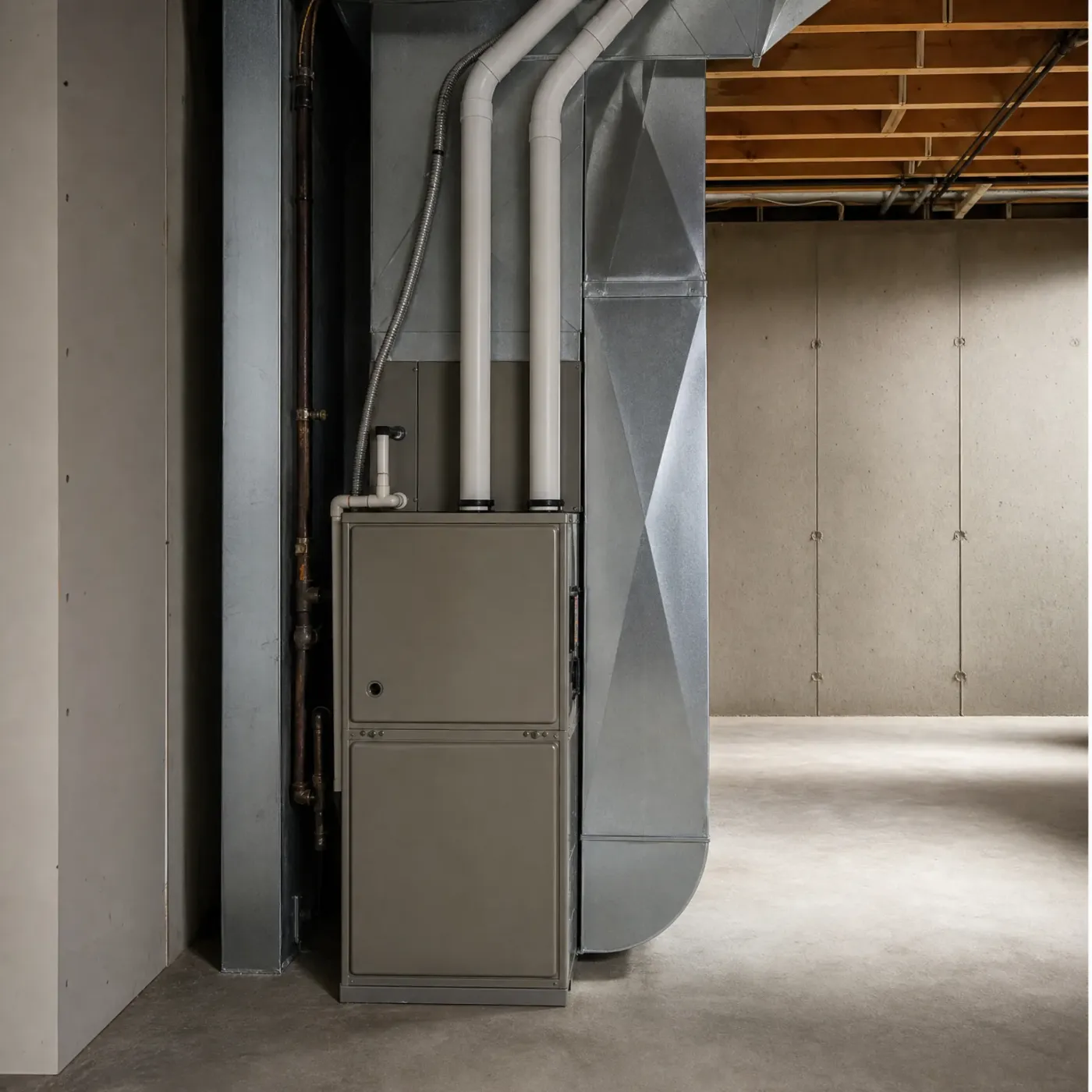
A gray high-efficiency furnace in an unfinished basement, connected to sheet-metal ductwork and two white PVC vent pipes, with copper piping and exposed wood floor joists nearby.

One request and it's handed off

Hand off my repair

Describe your furnace job once, to one pro.

No charge to send it. You decide if you hire them.