
1980 or earlier
Half the homes in Laramie County were built by then. Older duct seams and joints are more likely to leak or sweat where runs pass through crawl spaces or attics.
Mold in your ducts doesn't stay in your ducts. Dry Cheyenne air hides the musty smell faster than it would somewhere humid, so a lot of people here don't catch it until it's in the vents of every room. Once you notice it, the next part is usually the slow part: finding a crew that works on duct systems instead of just carpets, getting someone to actually call back, then doing the same explaining over again with the second or third company because the first one never followed up. That's the part this page shortcuts. Tell it what's going on with your ducts and your house, once, and it gets matched to a contractor near Cheyenne who takes on this kind of job and reaches out to you directly. No call lists, no repeating yourself, no guessing which company in Laramie County actually handles mold in ductwork. Use the button below and let the right contractor come to you instead.
Mold in your ducts usually means moisture got in somewhere it shouldn't have, often at the evaporator coil or a section of ductwork running through an unconditioned space, and dust in the duct gave it something to grow on. Cheyenne summers are hot and dry, so the air moving through your system isn't the problem. The moisture is almost always condensation, a coil that sweats, a drain line that backs up, or a duct that sits somewhere cold enough to collect water on its outside. Once mold starts inside a duct, it spreads with the airflow, which is why you can smell it in a bedroom far from the furnace or the air handler. It will not go away with a filter change or an air freshener, because the growth is inside metal or flex duct where normal cleaning doesn't reach. Left alone, it keeps shedding spores every time the system runs, so the smell and whatever reaction it causes don't let up. Clearing it out means someone opening and cleaning the duct runs themselves.
Half the homes here were built by 1980
Half the homes in Laramie County were built in 1980 or earlier, per Census data. Older duct runs and seams are more likely to sweat or leak where they pass through unconditioned space.
Heat runs September through May
Heat runs September through May here, close to nine months a year. That's nine months of warm air moving past any damp section of duct, feeding mold instead of drying it out.
Cooling runs July through August
Cooling only runs July and August here. The coil only gets cold enough to collect condensation two months a year, but that's enough to leave moisture behind if the duct isn't sealed around it.
ACS 2020-2024 · NOAA nClimDiv 1991-2020

A musty smell when the furnace or AC kicks on, a few dark specks around a vent cover, a filter that looks dirty again a week after you changed it. At this stage, a contractor can clean the ducts, find where the moisture is getting in, and stop it there. The coil, a seam in a crawlspace run, a vent that never gets warm air in January are all worth checking. This is the cheaper visit and the shorter one.

The smell is in every room now, not just one. Dust near the vents looks darker than dust should. Someone in the house is coughing more than usual, or an allergy that used to come and go doesn't let up. At this point cleaning the ducts is still the job, but there's usually more of them to clean, and whatever let the moisture in has had longer to do damage to the ductwork itself.




Skip searching for someone who cleans ducts in Laramie County.
No fee to send it, and nothing to sign.
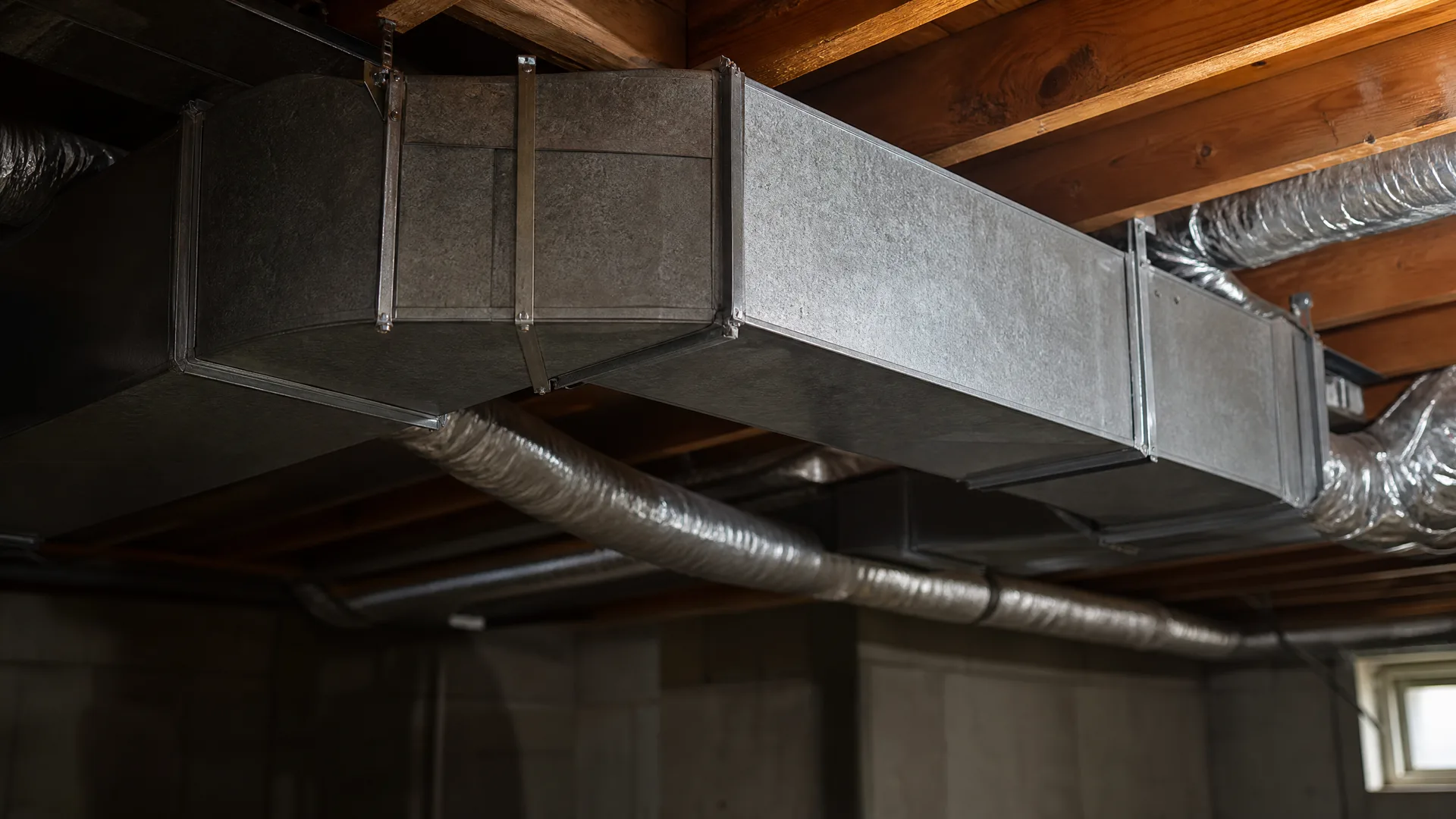
A contractor doesn't just stick a vacuum hose in the nearest vent. Each branch line gets a brush or a whip run through it first, breaking loose the dust and mold stuck to the inside walls of the duct, then a vacuum pulls it out before it can settle somewhere else. The main trunk line gets the same treatment, since that's the line feeding every room in the house, and mold sitting there has already spread further than a single vent cover would suggest. The whole system runs under negative pressure while this happens, so what gets knocked loose goes out through the vacuum instead of blowing back through the vents into the living room or the bedrooms. At the same visit, a contractor usually checks the evaporator coil and the drain pan underneath it, because that's where condensation collects and where a lot of duct mold actually starts. If part of the duct run is flexible and it's crushed or sagging somewhere in the attic or crawlspace, that section holds moisture longer than the rest of the system, and it gets marked for repair rather than just cleaned out. Where a seam has come loose and is letting in humid air, sealing it is part of the job too. Cleaning takes out what's already there. Fixing the coil, the pan, the crushed run or the leaky seam is what keeps it from coming back.


The furnace kicks on in your house thousands of times before spring. Every one of those cycles pushes air through whatever is sitting in the ducts, mold included, and sends it to the same rooms you and your family spend the most time in. You might smell it first in a bedroom with a vent that doesn't get much airflow, or notice a vent cover with small dark specks you didn't see last fall. By the time you can see it, it has usually had a long run to spread through the trunk line and out to other registers. A filter that needs changing more often than it used to is worth paying attention to, since that can mean something other than ordinary dust is building up. None of this clears up on its own over a Cheyenne winter. The moisture that let it start growing is still there, and the cold months tend to let it sit rather than dry out. Left alone, the practical result is a filter you're replacing more often, a smell that doesn't go away, and no real answer until someone finds where the moisture is getting in.


Half the homes in Laramie County were built by then. Older duct seams and joints are more likely to leak or sweat where runs pass through crawl spaces or attics.
Most duct mold starts at the evaporator coil or a run through an unconditioned space, where condensation sits on dust long enough for mold to take hold.
You caught a musty smell for a few seconds when the furnace or AC first kicks on, then it fades, so you weren't sure you smelled it at all. Maybe there are a few dark specks around a vent cover you wiped off and didn't think about again. The filter looks dirty sooner than it used to, even though nothing else changed. Someone in the house has been stuffy or coughing more at home than anywhere else, and it clears up when they're gone for a few days. None of this looks urgent on its own. But every room on that duct system breathes the same air, so whatever is sitting in the trunk line is already moving through the house, not just the one room where you noticed it.
A contractor inspects the coil, the drain pan, and duct runs for moisture first.
Each branch line gets brushed or whipped loose before vacuuming starts.
A vacuum at the trunk line pulls loosened dust and mold out under negative pressure.
Registers go back on once the contractor confirms the moisture source is fixed.


At 16.11 cents per kilowatt-hour, running a vacuum and sealing up leaks once costs less than letting a blower push mold spores through every duct, room after room, all winter. Fixing the moisture source once beats paying to move contaminated air for years.
EIA-861 2025

Mold in your ducts means moisture found a way in and dust gave it something to grow on. Cleaning the ducts without fixing the moisture just buys you a few months before the smell comes back. Fixing both at the coil, the crawl space, or wherever the leak is, and clearing out what already grew, is what actually ends it.
You don't have to figure out which it is on your own, or call around Laramie County looking for someone who'll check both. Answer a few questions about what you're seeing and smelling, and a contractor who handles duct mold in homes like yours will reach out to you directly. No researching company after company, no repeating the same description of a smell that comes and goes. Just someone who knows what to look for, getting in touch.

A pro who works on ducts