Musty smell from vents in Gillette, WY

A galvanized steel round duct with a 90-degree elbow and a white louvered vent cover on one end, shown against a plain gray background.
Match me with a pro

Why do my vents smell musty in Gillette?

You turn on the furnace or the AC and get a musty smell out of the vents, the kind that reminds you of a damp basement. It's not constant, and it's worse right when the system kicks on. You haven't had a flood or any obvious water damage, so it's confusing where that smell would even come from.

Moisture sitting in your ductwork or on the evaporator coil is growing mold, and the smell is coming through with the air

That smell is mold or mildew growing somewhere air passes over, most often the evaporator coil or the inside of the ducts near it. Condensation collects there every time the AC runs, and if it doesn't drain and dry out fully between cycles, it stays damp long enough for mold to take hold. Summers in Campbell County are hot and dry, but the air conditioner still pulls moisture out of the house every time it runs, and that moisture has to go somewhere. A clogged drain line or a dirty coil holds onto it instead of draining it away. Once mold is established, it keeps producing that musty smell every time air moves past it, whether the system is cooling or just circulating.

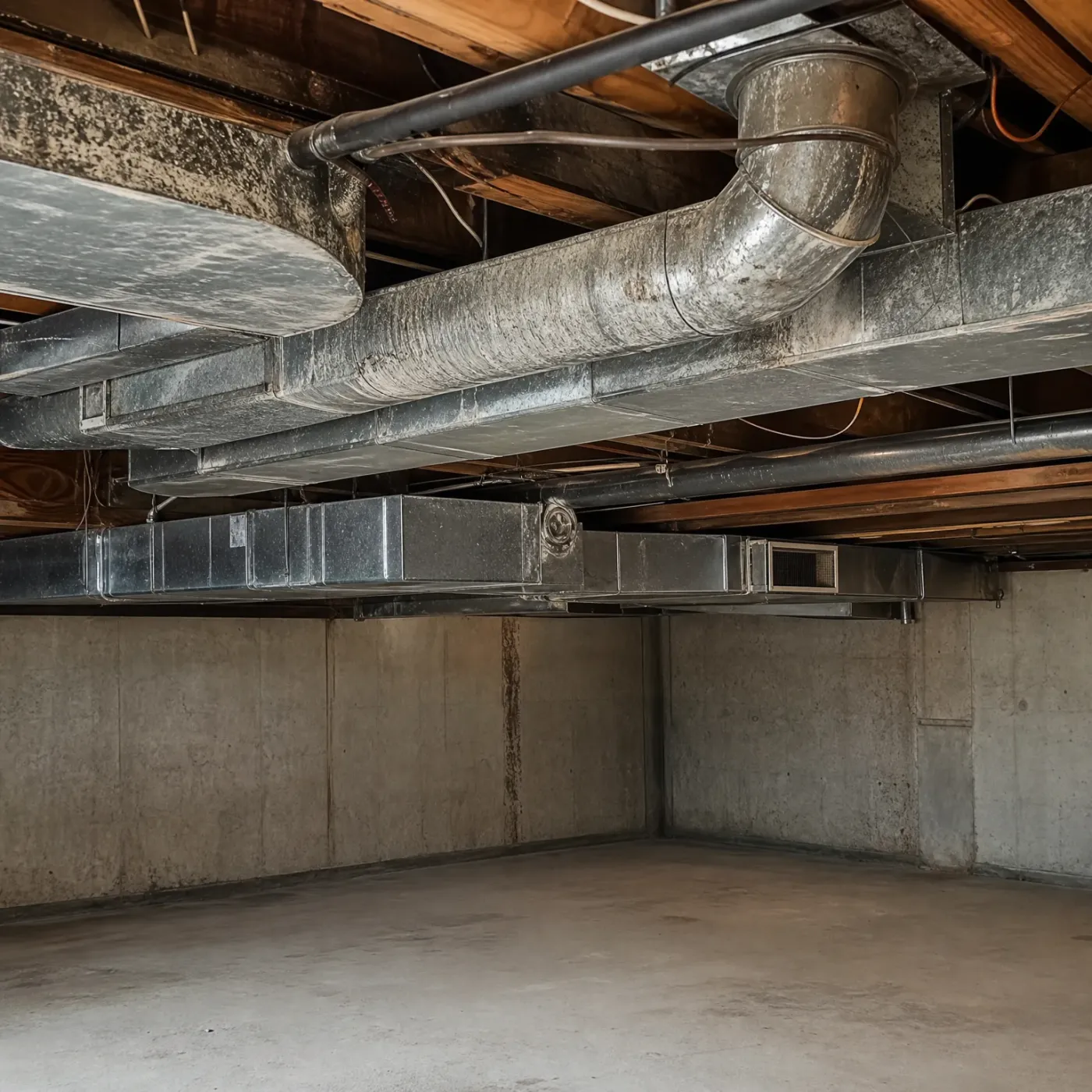
An empty unfinished basement with concrete floor and walls, exposed wood joists, steel beams and support posts, galvanized ductwork and pipes, and a single bare bulb light.

Dry ductwork

Clean metal trunk lines and flex duct, with nothing on the joists or pipes around them. Air moves through and out the vents without picking up anything on the way. This is what a duct system looks like when moisture never gets a chance to settle in.

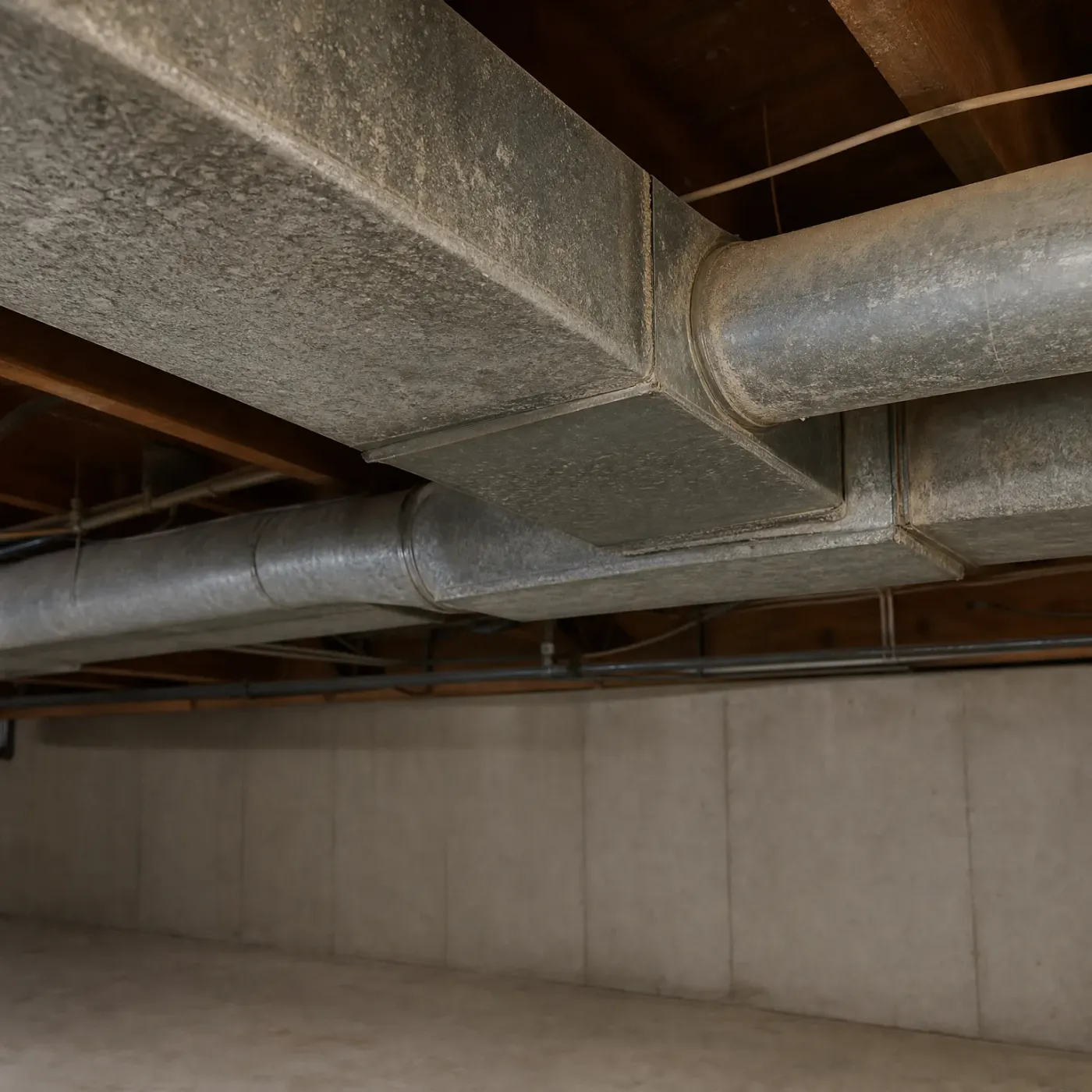
Empty basement with bare concrete walls and floor, with galvanized sheet-metal HVAC ducts, a round duct elbow, and pipes running along the wooden joists of the ceiling.

Ductwork with a moisture problem

Dark staining runs along the duct surfaces and the wood joists above them. That staining is what's feeding the smell every time air passes through the trunk line. Dust and condensation inside the ducts give it a place to grow and spread.

A smiling man with dark curly hair in a dark green henley shirt sits on a light sofa in a living room with large windows, a lamp, shelving, a stone fireplace, and a bowl of popcorn in the foreground.
A smiling man in a dark long-sleeved henley shirt sits on a beige sofa in a living room, with a bowl of popcorn and a remote on the table in the foreground and shelves, a lamp, and a doorway behind him.
A smiling man with graying hair and stubble in a blue henley shirt sits on a gray sofa with cushions in a living room, with a bowl of popcorn on a wooden table in the foreground.
A smiling man in a dark green long-sleeve shirt reclines on a sofa in a dimly lit living room, with a bowl of popcorn on a side table in the foreground and a bookshelf, lamp, and houseplant behind him.

Gillette's dry air works against mold, not for it

Mold needs standing moisture to grow. Outdoor air here is dry most of the year, so the smell almost always traces back to something inside the ducts holding water, not the climate itself.

Hand it off

The smell hits hardest at startup

Air sitting still in the ducts picks up the odor from whatever is growing inside, then pushes it out the vents the moment the blower turns on. That pattern points straight at the duct system itself.

Hand it off

Why does the musty smell keep coming back in your house?

  • Half the homes here were built by 1991

    Half the homes in Campbell County were built in 1991 or earlier, and ductwork that old has had decades to collect dust the moisture can cling to.

  • Heat runs September through June

    Your furnace runs about ten months a year here, September through June, so there's little time for ducts to fully dry out between cycles.

  • Cooling runs July through August

    Cooling only runs July and August here, but that's exactly when condensation forms fastest and the smell tends to show up strongest.

ACS 2020-2024 · NOAA nClimDiv 1991-2020

That musty pull of air hits you every time the furnace cycles on, and it's not staying in the ductwork. It's landing on your couch cushions, your bedsheets, the towels in the hall closet. Guests notice it before you do, because you've stopped smelling it the way you stop smelling your own kitchen. Run the furnace ten months a year here and that smell is working through your house ten months a year too, not just the two days you happen to notice it. Whatever is holding moisture in your ducts, usually dust that never dried out, keeps feeding mold spores into every room the system reaches. That's not a comfort problem anymore. Spores in the air you breathe all winter can wear on anyone in the house who already deals with allergies or asthma, and kids and older adults feel it first. Leave it alone through another Gillette winter and you're not just stuck with the smell. You're breathing whatever is making it.

Galvanized rectangular and round sheet-metal ductwork running beneath a wood-joist ceiling in a basement with concrete walls and floor, with pipes and wiring alongside.
Before you get your ductwork cleaning
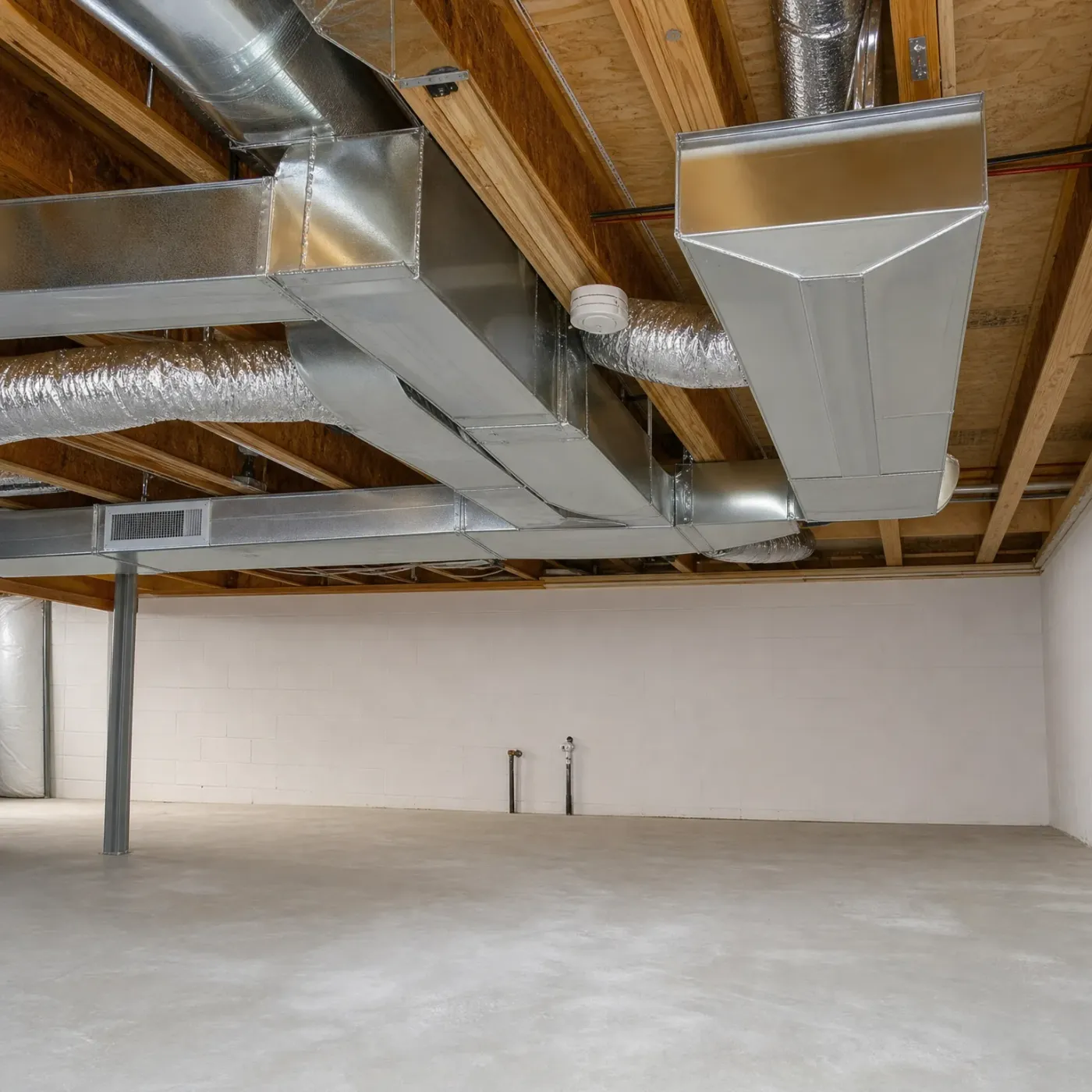
Empty basement with bare concrete floor, painted block walls, and an exposed wood-joist ceiling with sheet-metal and insulated flexible ductwork and a steel support column.
After you get your ductwork cleaning

What's that smell every time the vents kick on

You notice it most in the bedrooms, right after the system kicks on, and it fades within a minute or two. Check the vent covers themselves and you might see a thin gray film on the slats, or dust that looks damp rather than dry. Towels and bedding pulled from closets near a vent can pick up the smell even though they were never wet. None of this means your house is dirty. It means moisture is sitting somewhere in the duct run and feeding on what collects there. Left alone, that's what keeps the smell coming back every time you run the furnace or the AC, no matter how often you clean the rooms themselves.

A dimly lit living room corner with a gray wall, framed picture, a table lamp on a wooden side table, a beige sofa with pillows, a ceiling vent, and windows showing flowering trees outside.

It's late April, warm enough that you've left the furnace off since morning. Sun comes through the living room window and lands right on the ceiling vent above the couch. You notice the grille is gray, not white, a layer of dust thick enough to see the pattern of the slats. The end table under it has the same film, and so does the lamp shade behind it. You run a finger along the vent cover and it comes back dark. Nobody's touched that corner of the room in weeks. You stand there a second, looking at how far the dust has spread past the vent itself, onto the cushions, onto the picture frame on the wall.

A duct system pro near you

You've probably already pulled the vent covers off and wiped them down, maybe run a HEPA filter for a few weeks hoping it would settle. It helps for a day or two, then the furnace kicks on and the smell is back, because the filter never touched what's sitting inside the trunk line itself. Finding someone who cleans ducts for a living and has the equipment to do it right, a contractor who can get a brush and a vacuum deep into runs you can't reach with anything from the hardware store, is its own chore on top of the one you already have. You don't need another name to vet or another number to call around. Send the request once and it goes to a contractor who already works on homes like yours in Campbell County, so the next thing you do about that smell is open the door when they show up, not keep hunting for who to ask.

You run a dehumidifier in the basement and the smell eases off for a while, because you've dealt with the moisture sitting in the air of the room, not the moisture sitting inside the ducts themselves.

The ducts still hold whatever damp dust built up before you started, and that keeps feeding the smell every time the furnace or the AC pushes air through them, dehumidifier running or not.

Power here costs 13.24 cents per kilowatt-hour

At 13.24 cents per kilowatt-hour, running a blower fan longer or adding a standalone air scrubber to chase the smell doesn't hit your bill hard. The fix isn't the cost of running equipment. It's getting whatever is sitting in the ducts out of them.

EIA-861 2025

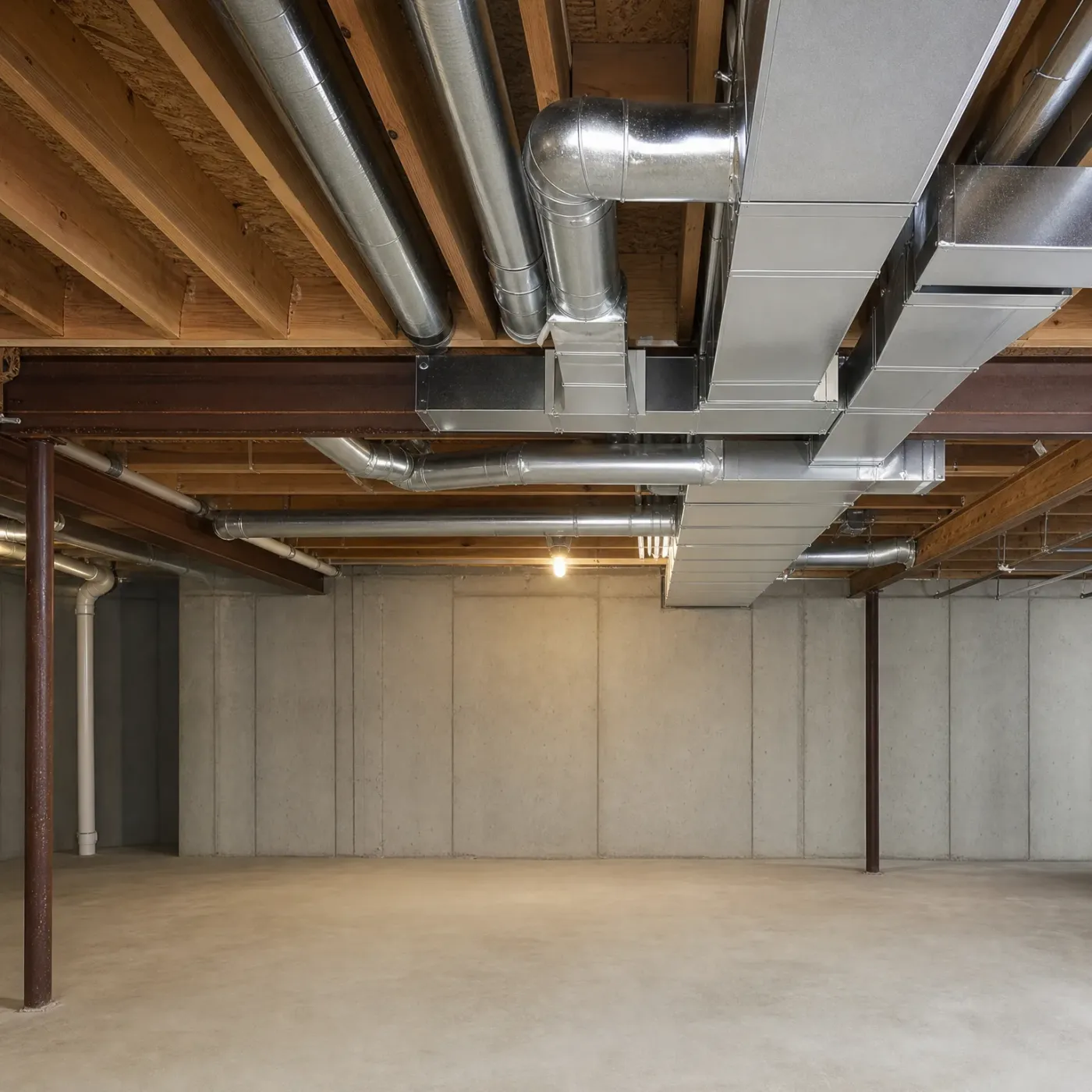
Empty unfinished basement with concrete walls and floor, exposed wood joists, metal HVAC ducts and pipes overhead, and a steel support column near a framed wall.

Ductwork running clean

This is a duct system doing its job. Trunk lines and flex duct stay dry, joists and pipes nearby are bare, and nothing sits on the metal waiting to get stirred up. Air passes through and out the vents the same way it came in.

Empty basement with bare concrete walls and floor, a steel support column, and galvanized sheet-metal ductwork and pipes running along the exposed wood joist ceiling.

Ductwork holding trouble

Same basement, same layout, but the ducts are carrying something. Dust has settled along the seams and branches long enough to hold moisture, and every time the blower kicks on, that's what reaches your vents. Nothing about the room shows it. The ducts do.

Duct Cleaning vs. Just Treating the Air

Duct cleaning

  • A contractor runs a brush and vacuum system through the trunk lines and branches, pulling out the dust and debris the moisture has been clinging to.
  • Once that buildup is gone, there's nothing left inside the ducts for the air to pick up a smell from as it passes through on its way to the vents.
  • It addresses the ducts themselves, not just the room air, so the smell doesn't just fade for an evening and come back the next morning.
  • A thorough cleaning reaches the return side too, where dust tends to collect heaviest from pulling air through the house all day.
  • The grille and register covers get cleaned along with the ducts, so the gray film you've been wiping off stops reappearing within days.

Dehumidifier or air scrubber

  • A dehumidifier pulls moisture from the air in the room it sits in, which can ease a musty smell you notice in that space.
  • It does nothing for the ducts themselves, so whatever damp dust built up in the trunk lines stays right where it is.
  • An air scrubber filters air as it circulates, but the ducts are what's feeding the smell, and air passing through doesn't clean what's lining them.
  • Both run on electricity you're already paying for, and neither one touches the actual duct interior where the smell originates.
  • The smell comes back as soon as the furnace or AC cycles again, because the source was never removed, just covered over for a while.
  1. A contractor inspects the duct system and finds where moisture collects

  2. A vacuum unit connects to the ductwork to create negative pressure

  3. A brush or air whip loosens dust stuck to the duct walls

  4. Loosened debris gets pulled into the vacuum and out of the house

Unfinished basement with concrete floor and walls, exposed wood joists, steel support posts, and large galvanized sheet-metal ductwork running to a furnace or air handler against the far wall.
Supply and return lines run tight along the joists, metal bare and dry, nothing sitting on top waiting to get knocked loose.
Galvanized sheet-metal ductwork and round pipes run along a wooden floor joist ceiling above a bare concrete wall and floor.
Same kind of joist bay, but the duct run here has sat damp long enough to hold dust instead of shedding it.

Where the smell actually lives

  • Musty vent smell in Gillette almost always means moisture holding onto dust inside the ductwork, not the dry outdoor air.
  • The smell comes back after wiping vent covers or running a dehumidifier because neither one reaches what's built up inside the trunk lines.
  • A duct system with nothing clinging to the metal passes air through without picking up any smell at all.
  • Cleaning pulls the dust and debris out of the ducts themselves, which is the only thing that stops the smell for good.
  • With power at 13.24 cents per kilowatt-hour, the cost isn't running equipment longer, it's getting the buildup out of the ducts.
  • Ductwork built in 1991 or earlier has had decades to collect the dust that moisture clings to.

The musty smell from your vents has one source: dust sitting inside your ductwork that moisture has clung to. Gillette's air is dry most of the year, so the problem was never the climate outside. It's whatever built up inside the trunk lines, often over years, waiting for the furnace or AC to stir it loose and push it through the house. Wiping down vent covers cleans the part you can see and reach. Running a dehumidifier dries the air in the room. Neither one gets inside the metal where the actual buildup sits, which is why the smell always comes back once the system runs again. A duct system without that buildup doesn't produce the smell at all, no matter how often it cycles on. That's the difference cleaning makes. A contractor runs a brush and vacuum through the trunk lines and branches, pulls the dust and debris out, and leaves nothing behind for the air to pick up on its way to your vents. Power here is cheap, 13.24 cents per kilowatt-hour, so running a fan longer or adding an air scrubber was never going to cost you much or fix much either. The fix was always about removing what's inside the ducts, not managing the air around them. If your ductwork dates back to 1991 or earlier, it's had decades to collect what moisture needs to hold onto. Getting it cleaned out is what stops the smell for good.

A woman with dark hair in a bun sits on a beige sofa under a knit blanket with her eyes closed and an open book in front of her, with a lit lamp and houseplant in the background.
A smiling bearded man in a dark sweater sits at a dinner table with lit candles, a glass of red wine, and bowls of food, in a dimly lit room with a lamp and houseplant behind him.

Ductwork Cleaning

Get matched with a duct system pro in Campbell County

Send the form and the duct cleaning stops sitting on your list.

A black-framed smartphone standing upright against a plain light gray background, its screen filled with solid green.
Duct and vent cleaningDucts or ventsCampbell County, WY
Step 1 of 2

What ZIP code is the job in?