Dry, sealed, and holding up fine
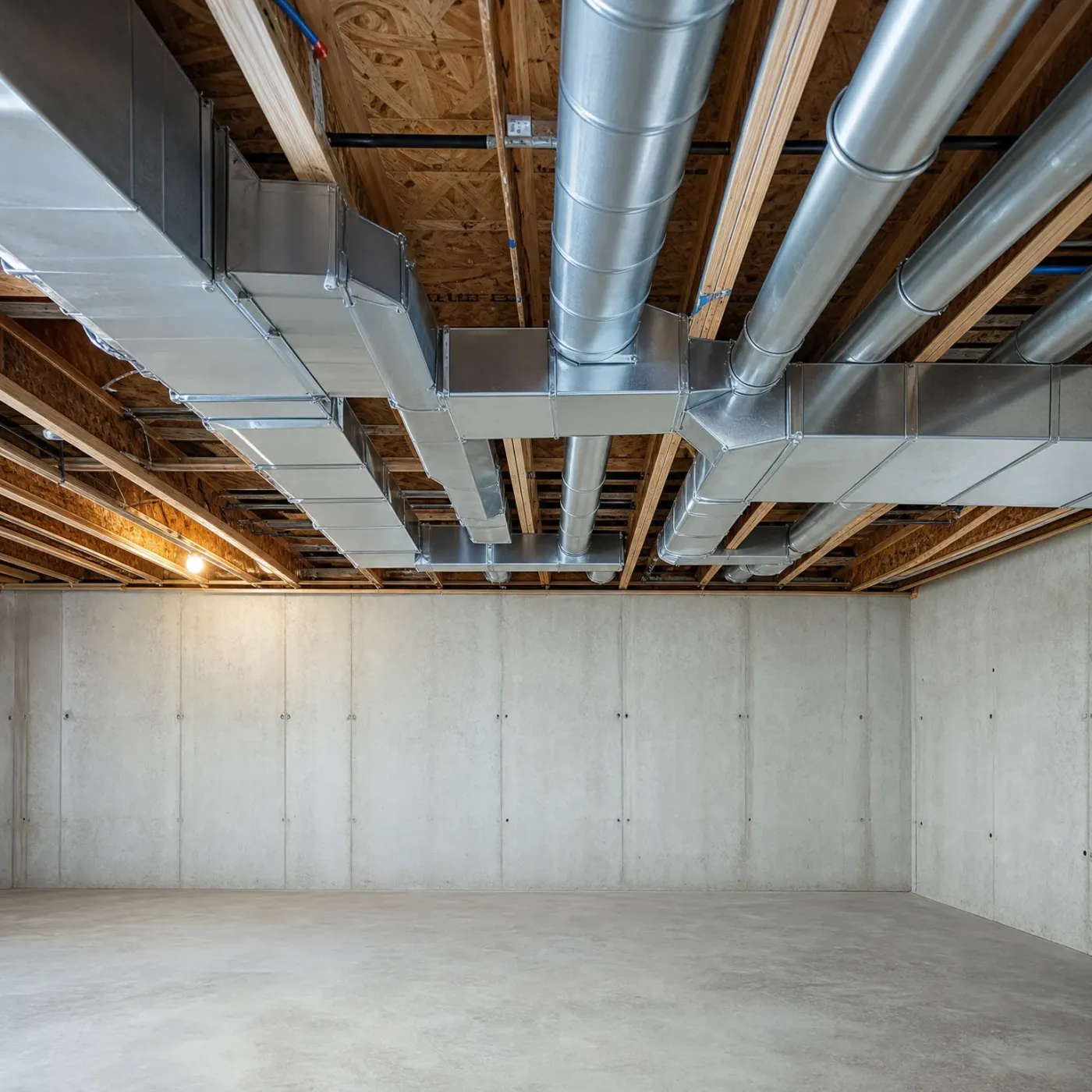
This basement stays dry. The concrete floor is sealed, the sheet-metal ducts and galvanized pipe overhead show no rust, and the joints are tight. Moisture has nowhere to collect, so mold has nothing to grow on.

Mold in your air ducts usually means moisture got in somewhere it shouldn't have, from a leaky duct joint, a condensate drain backing up, or humidity in the house with nowhere to go. Rock Springs air is dry most of the year, so mold is less common here than in damp climates, but it still happens, especially around an AC coil or a duct run that passes through an uninsulated space and picks up condensation. You'll usually notice it as a musty smell when the system runs, or dust that looks darker or streaked near the vents. Mold in the ductwork doesn't stay in the ductwork. Every time the blower runs, it pushes whatever is growing in there through the vents and into the air you're breathing in every room. A duct system that stays dry doesn't grow mold, so finding and fixing the moisture source matters as much as cleaning out what's already there.
Half the homes here were built by 1980
Half the homes in Sweetwater County were built in 1980 or earlier, and older duct metal rusts and pits, giving mold a surface to hold onto.
Heat runs September through June
Heat runs through your ducts about ten months a year here, from September through June, so any damp spot inside barely gets a chance to dry out.
Cooling runs July through July
Cooling only runs in July, so for most of the year the ducts aren't pulling cold, damp air across themselves the way they would somewhere humid.
ACS 2020-2024 · NOAA nClimDiv 1991-2020




Mold doesn't need much to get going inside a duct. It needs moisture, and it needs something to eat, and the dust that settles on duct walls over months of use gives it that. Once it has both, it spreads along the metal and releases spores every time the blower runs, which is why a musty smell when the furnace first kicks on usually means mold, not burnt dust. Ducts near the evaporator coil or the plenum are common starting points, since that's often where moisture shows up first, and from there spores travel through the whole system on the same air that heats or cools your house. Fixing the leak or the drain line that let moisture in is a separate job from removing mold that's already growing. That takes reaching the full duct run, not just what's visible at the vents, since spores hold onto metal well past arm's length. Sealing the source stops it from coming back. It doesn't undo what's already there.
A contractor doing this work runs the duct system under negative pressure, using a vacuum connected to the trunk line while agitation tools knock loose material off the duct walls. That means the mold growth, the dust it fed on, and any debris sitting in the low points of the ductwork all get pulled out rather than pushed further into the system. Registers and the inside of the plenum get wiped down too, since mold near the blower can reseed clean ducts fast. None of this fixes the moisture source. If a condensate line is still draining wrong or a duct joint is still open to a damp crawlspace, cleaning buys time but the mold comes back. A contractor can tell you during the job whether they're seeing a moisture problem that needs separate attention.
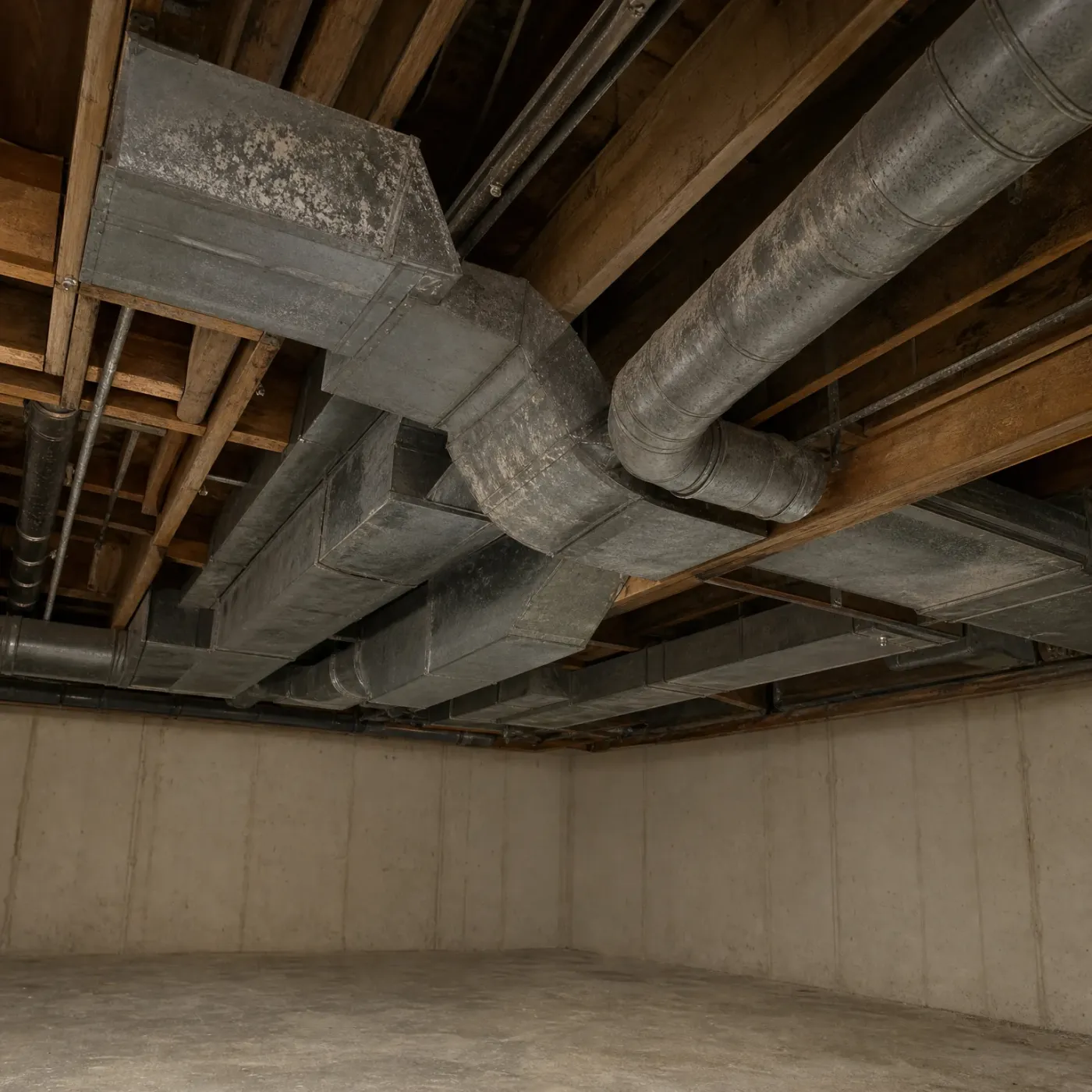
Rusted or pitted duct metal, the kind shown in the comparison above, doesn't get smooth again from a cleaning. The surface stays rough enough for spores and dust to catch on, which is why older ductwork in Sweetwater County homes tends to need cleaning again sooner than newer metal does. A contractor inspecting the ducts after cleaning can tell you whether the metal itself is the limiting factor, versus a moisture issue that keeps feeding new growth. If the ducts came with a house built in 1980 or earlier, that inspection is worth asking for directly, since it's the difference between a problem that's solved and one that's been reset to zero.


That musty smell coming back every time the furnace kicks on means the spores are still in the ductwork, not just in the air for a day. Duct cleaning is the way to actually get that material off the duct walls instead of waiting for it to settle again. With half the homes in Sweetwater County built in 1980 or earlier, a lot of duct metal here has the rust and pitting that gives mold somewhere to hold on, and that's not something that clears up on its own between furnace season and AC season. Once moisture and a food source are both sitting in your ducts, the growth keeps renewing itself every time the system runs, which here is close to ten months a year. Finding a contractor who does this work properly, with the right equipment and negative pressure setup, takes some looking. Handing that search off means you're not the one making calls and comparing who actually knows duct cleaning from someone who just vacuums the vents you can see.
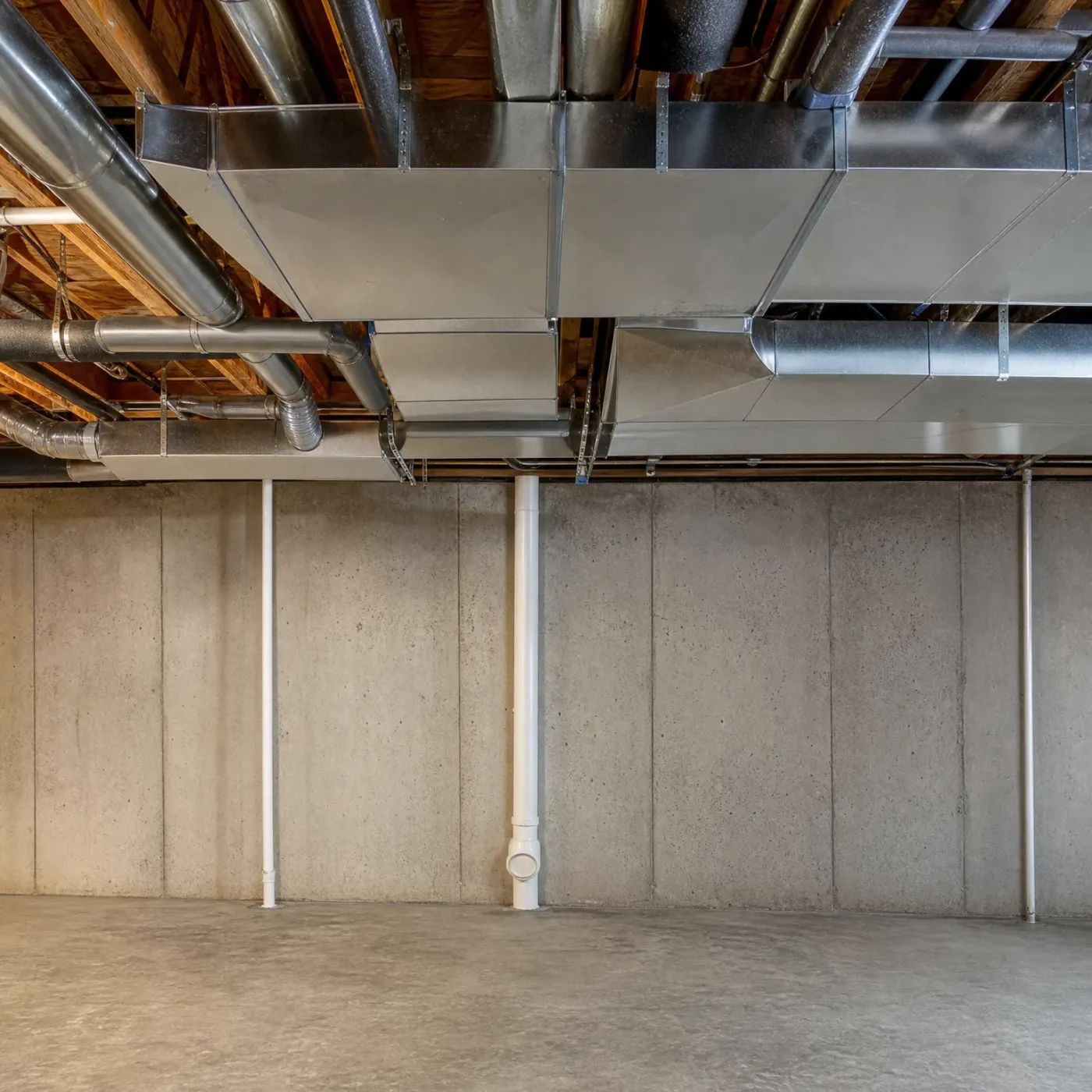
This basement stays dry. The concrete floor is sealed, the sheet-metal ducts and galvanized pipe overhead show no rust, and the joints are tight. Moisture has nowhere to collect, so mold has nothing to grow on.
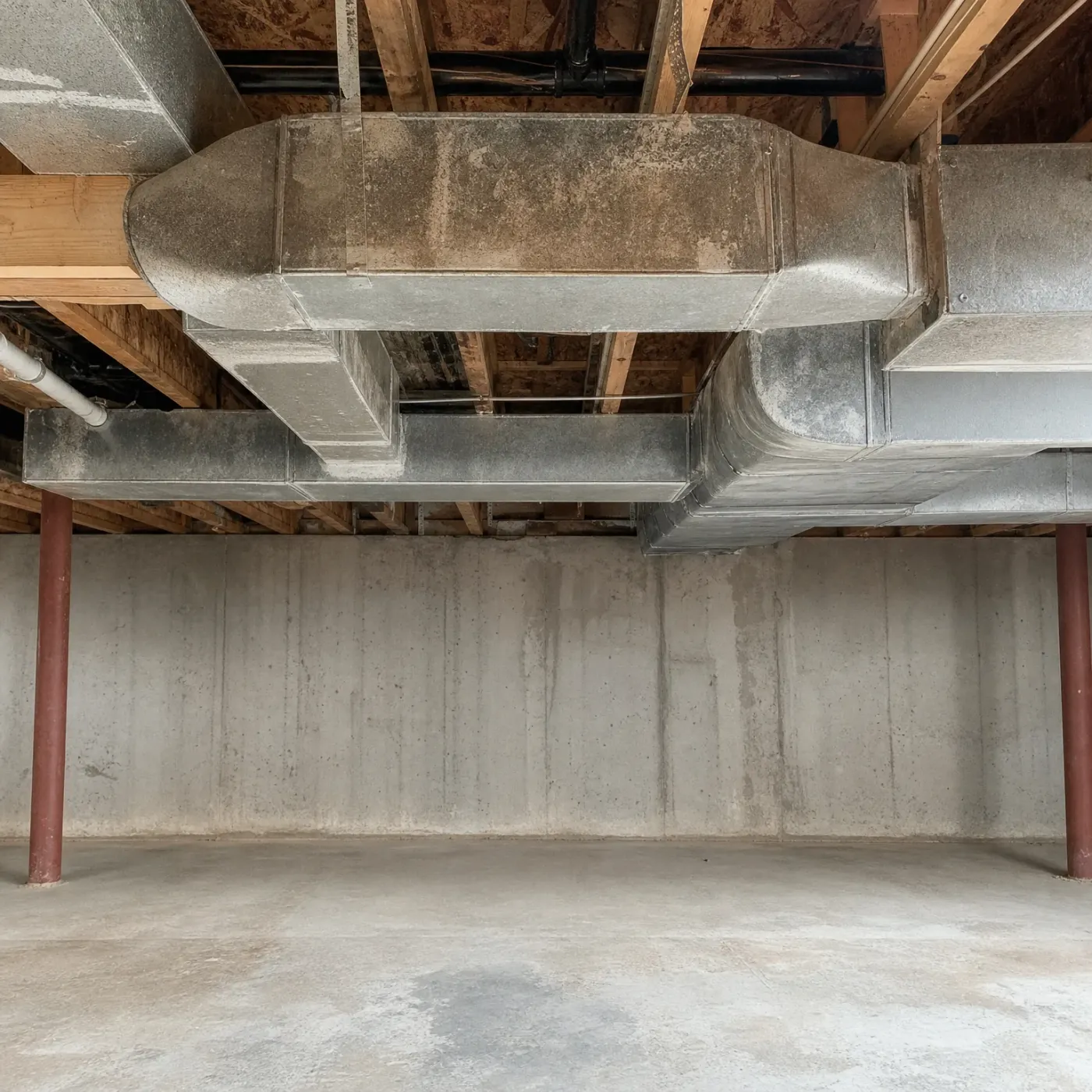
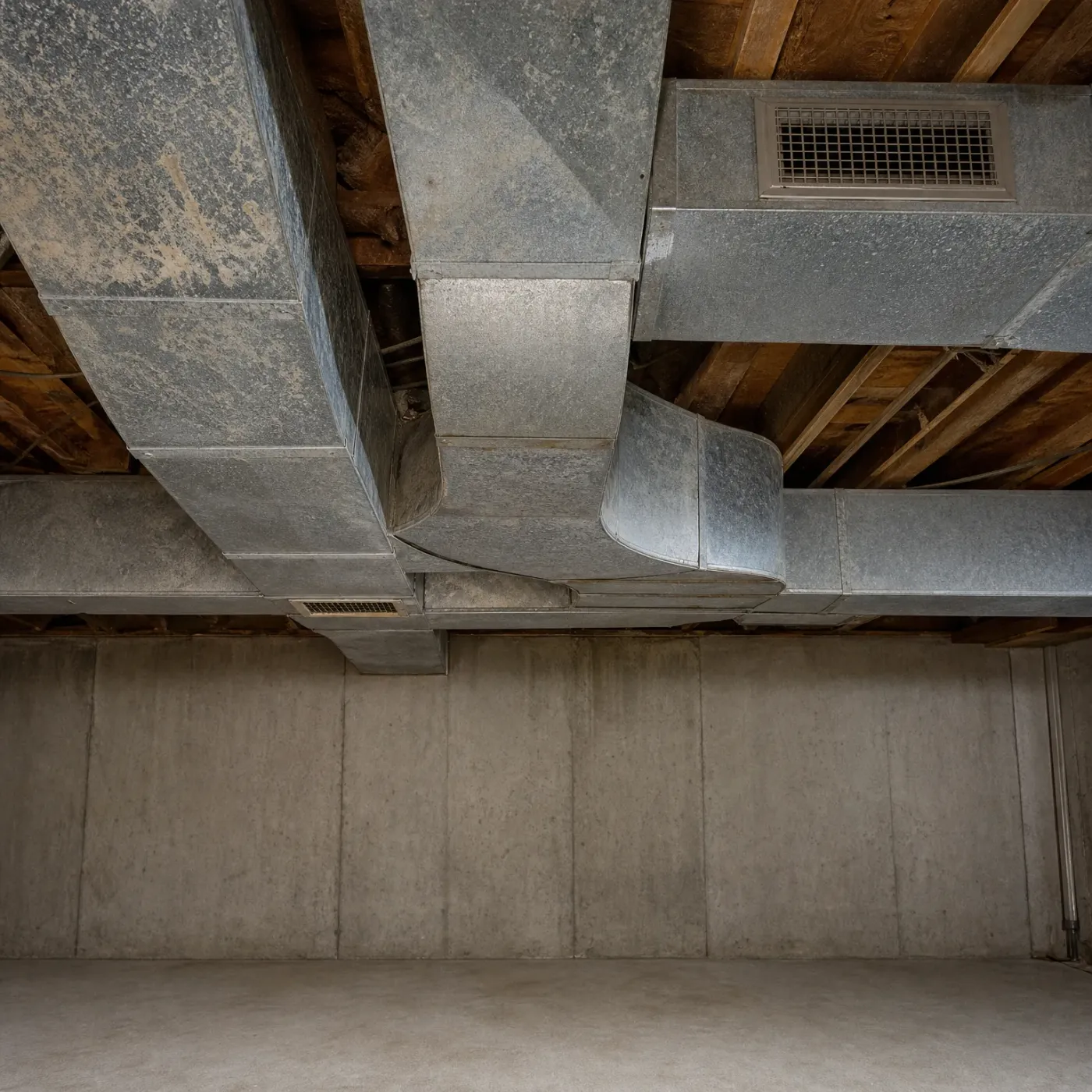
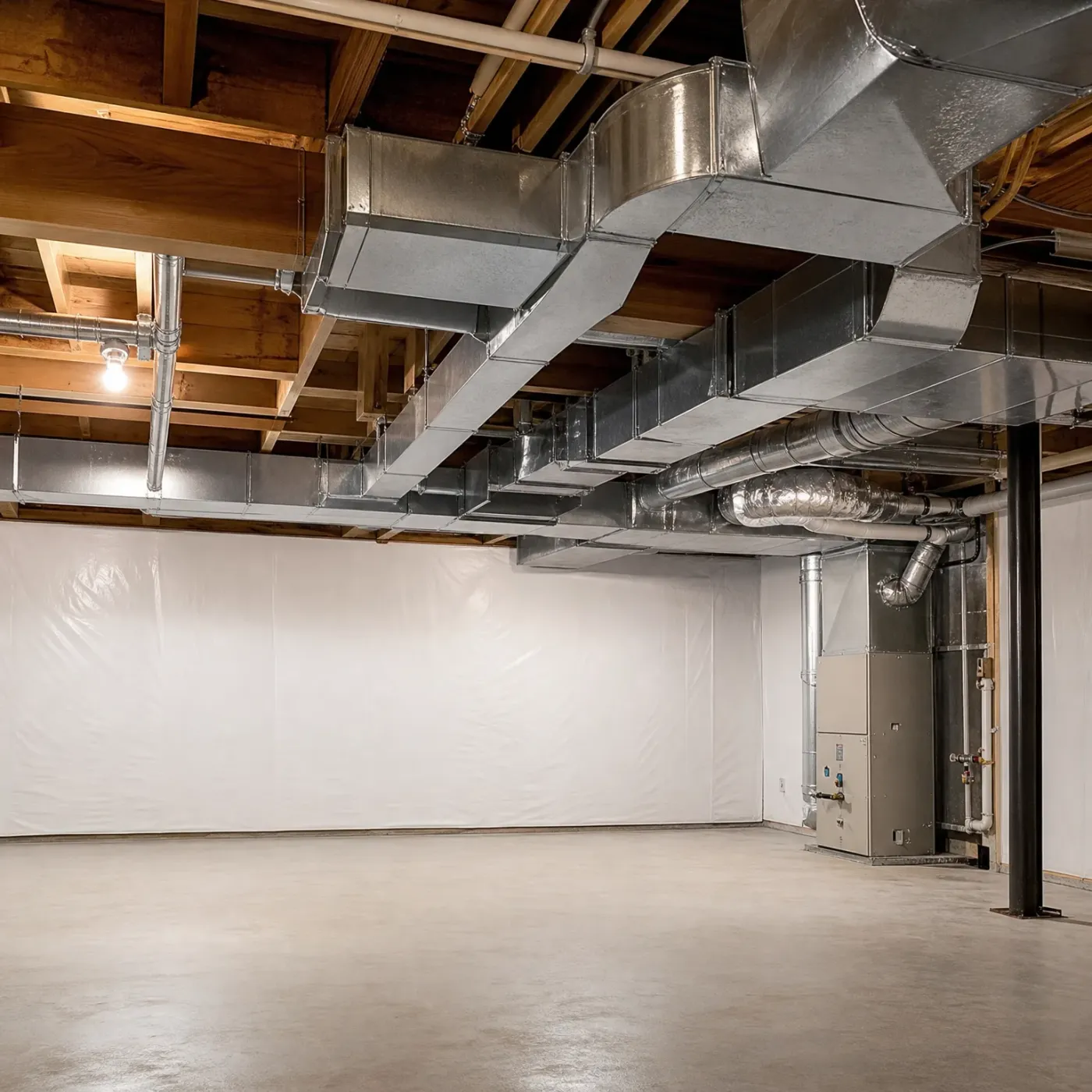
These ducts hang exposed between the joists with no insulation to stop condensation from forming on the metal. Once that moisture sits against aging duct walls, it gives mold a surface to take hold and keep spreading.

Once mold is established in your ductwork, it rides the air into every room the system serves. You might notice it as a smell when the furnace kicks on in October, or as someone in the house getting stuffy or itchy-eyed for no clear reason during the months the system runs almost constantly. It does not stay put in one duct run. Every register in the house is connected to the same trunk line.
Figuring out how bad it is, and whether it is just the ducts or also the coil or the drain pan, is not something to guess at from the register covers. A contractor who works on Sweetwater County duct systems can look at what is actually growing in there and what let the moisture in, then tell you what it takes to get it out and keep it from coming back. Once you send that information in, you are not the one tracking down who can do this work. Someone who handles it reaches out to you.


This is what sound ductwork looks like. The metal is clean, the joints are tight, and there's no rust on the trunk or the branch lines. Moisture isn't collecting anywhere, so mold has no surface to grow on and nothing to feed on.
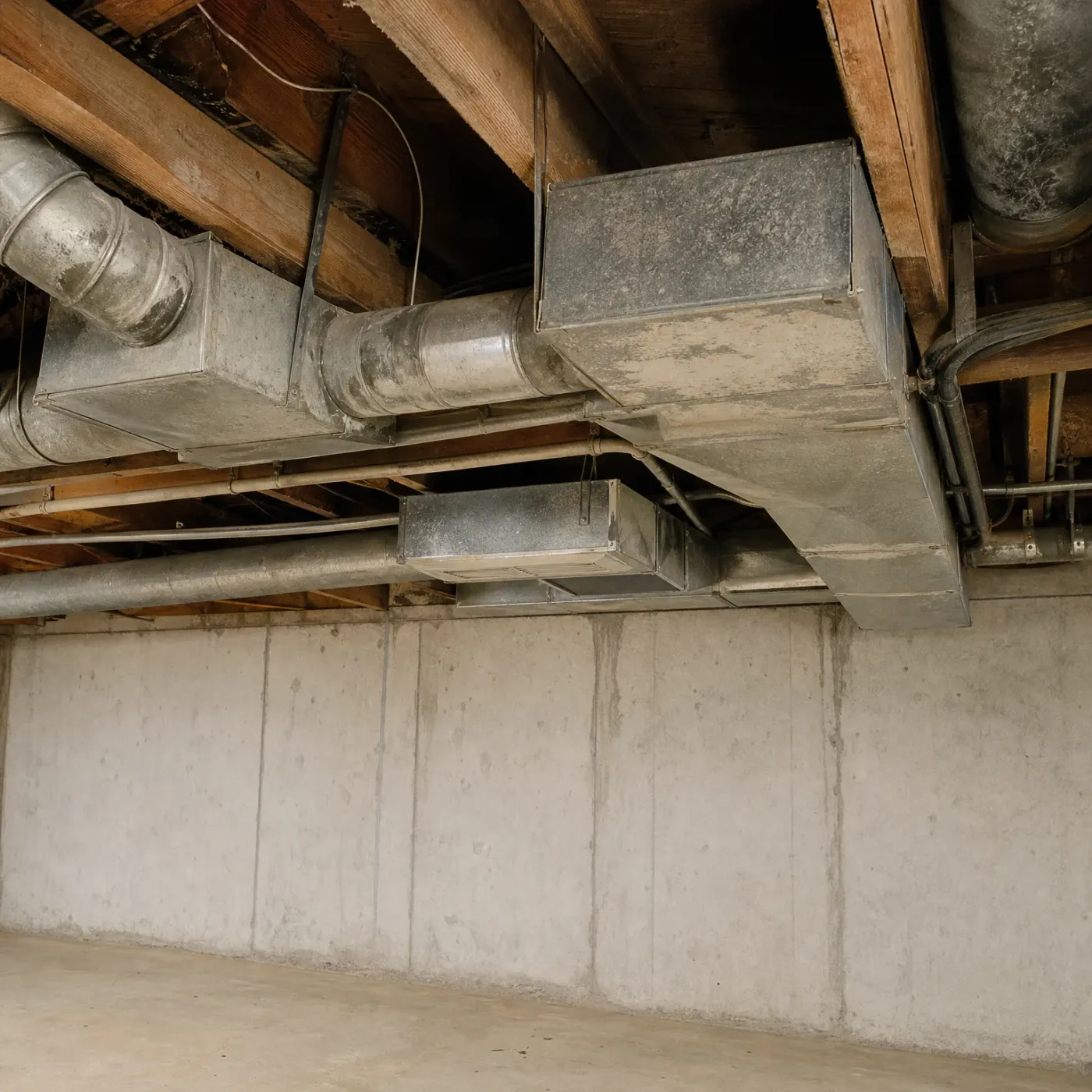
Here the metal is aging and starting to pit where moisture has been sitting against it. Pitted metal holds moisture longer than smooth metal does, and once rust sets in it gives mold a rough surface to grab onto near the joints and seams.
Running a vacuum or an agitation tool through your ducts for a cleaning doesn't add much to the bill at 14.64 cents a kilowatt-hour. What costs you is leaving mold in place, since contaminated ducts make your furnace and AC work harder to push air through the same rooms.
EIA-861 2025
Mold in a duct system almost never comes from the dry air outside. It comes from moisture that got in somewhere, a leaky joint, a condensate line backing up, or humidity in the house that never found a way out. Once that moisture settles on old, rusted duct metal, and Sweetwater County has plenty of that from homes built in 1980 or earlier, mold has a surface to hold onto and dust to feed on. From there it rides the airflow every time the furnace or AC kicks on, which is why that musty smell shows up again and again instead of airing out on its own. The smell is spores leaving the duct walls, not settling back onto them.
Cleaning is what actually breaks that cycle. Run under negative pressure, with agitation tools working the duct walls while a vacuum pulls the loosened material out through the trunk line, it takes the mold, the dust, and the debris with it instead of just stirring them around. Left in place, that same buildup narrows the path air has to move through, so the furnace and AC both work harder to push air where it needs to go.
You don't have to track down who does this work or figure out who's reliable. Send the form, and a contractor who handles duct cleaning in your area reaches out to you. From there it's a conversation about your ductwork, not a search.





One request and the duct cleaning stops waiting on you.
You're not committing to anything by asking.