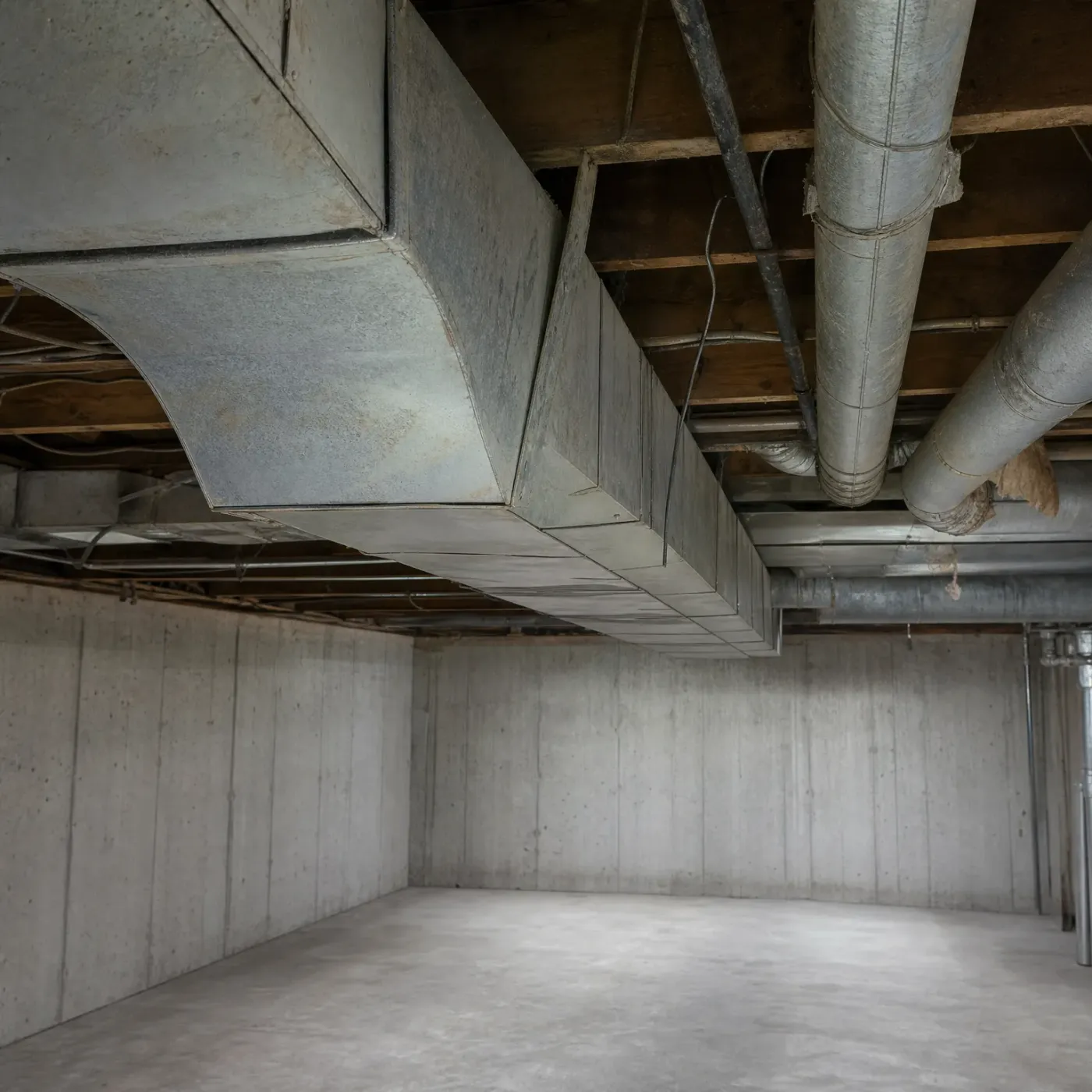
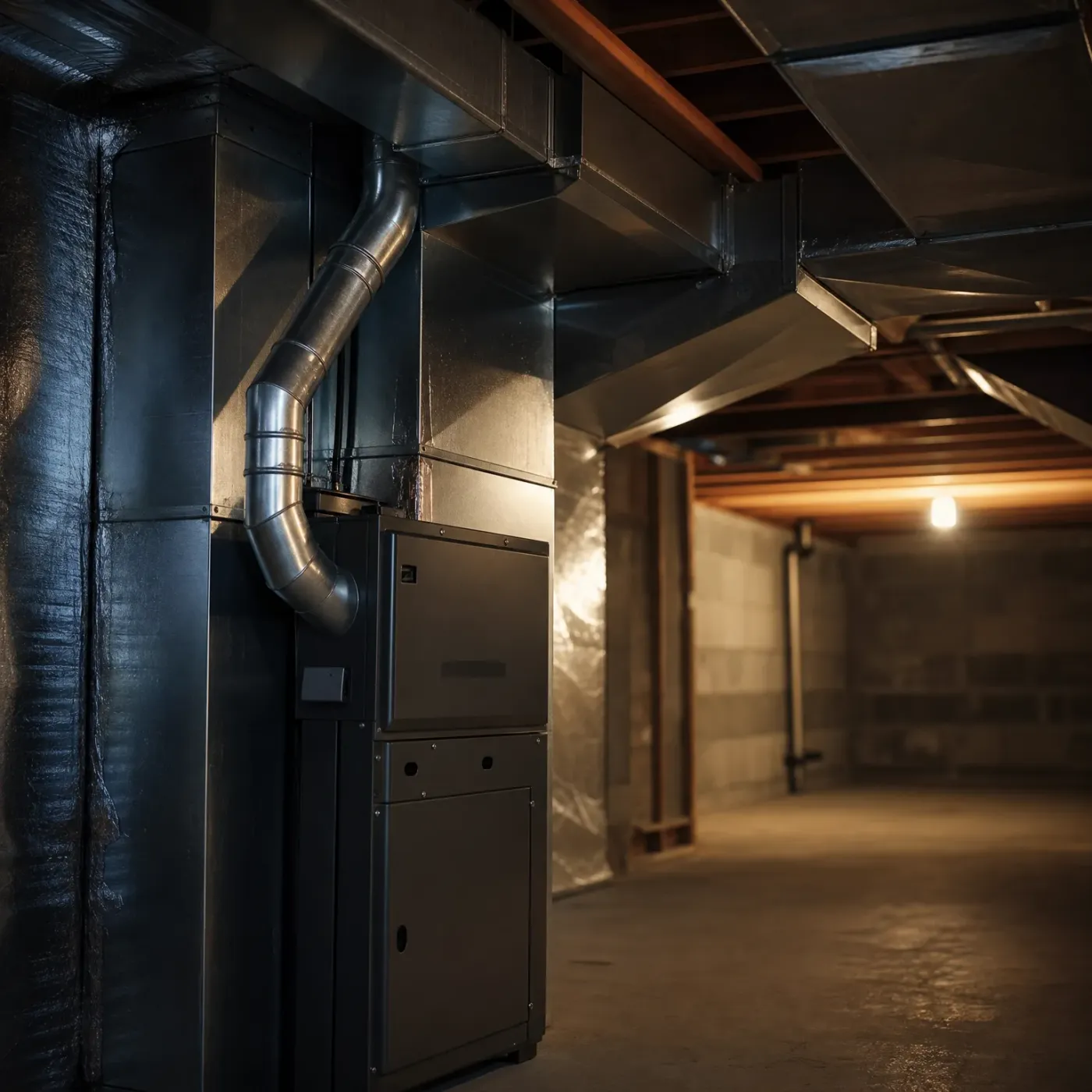
Basement interior with a furnace unit, insulated rectangular ductwork and a flexible metal pipe along the ceiling, with a bare lightbulb and concrete block walls in the background.

One request and it's handed off

Signs of leaky ductwork in Rock Springs, WY

Leaky ducts show up as rooms that never get cool in July or never get warm in January, and a gas bill that keeps climbing. This page walks through what to look for, from loose connections to crushed runs, and what it costs you when air leaks out before it reaches a vent. Once you send the form, you're done hunting for who to call.

Hand it over

A few rooms running warmer or colder than the rest of the house is usually the first sign your ducts are leaking. Check the connections at the joints and boots you can reach in the attic or crawlspace: loose seams, gaps around the metal, flex duct that's been crushed or kinked under something stored on top of it. Air escaping there never makes it to the vent, so the furnace or AC keeps running to try to catch up. In Rock Springs, where summers push the AC hard and winters lean on the furnace for months, that lost air shows up as a gas or power bill that climbs without anything else changing. Dust around vent covers or a musty smell from a crawlspace duct run points the same direction. None of this means the system is broken. It means the air it makes isn't reaching the rooms it's meant for.

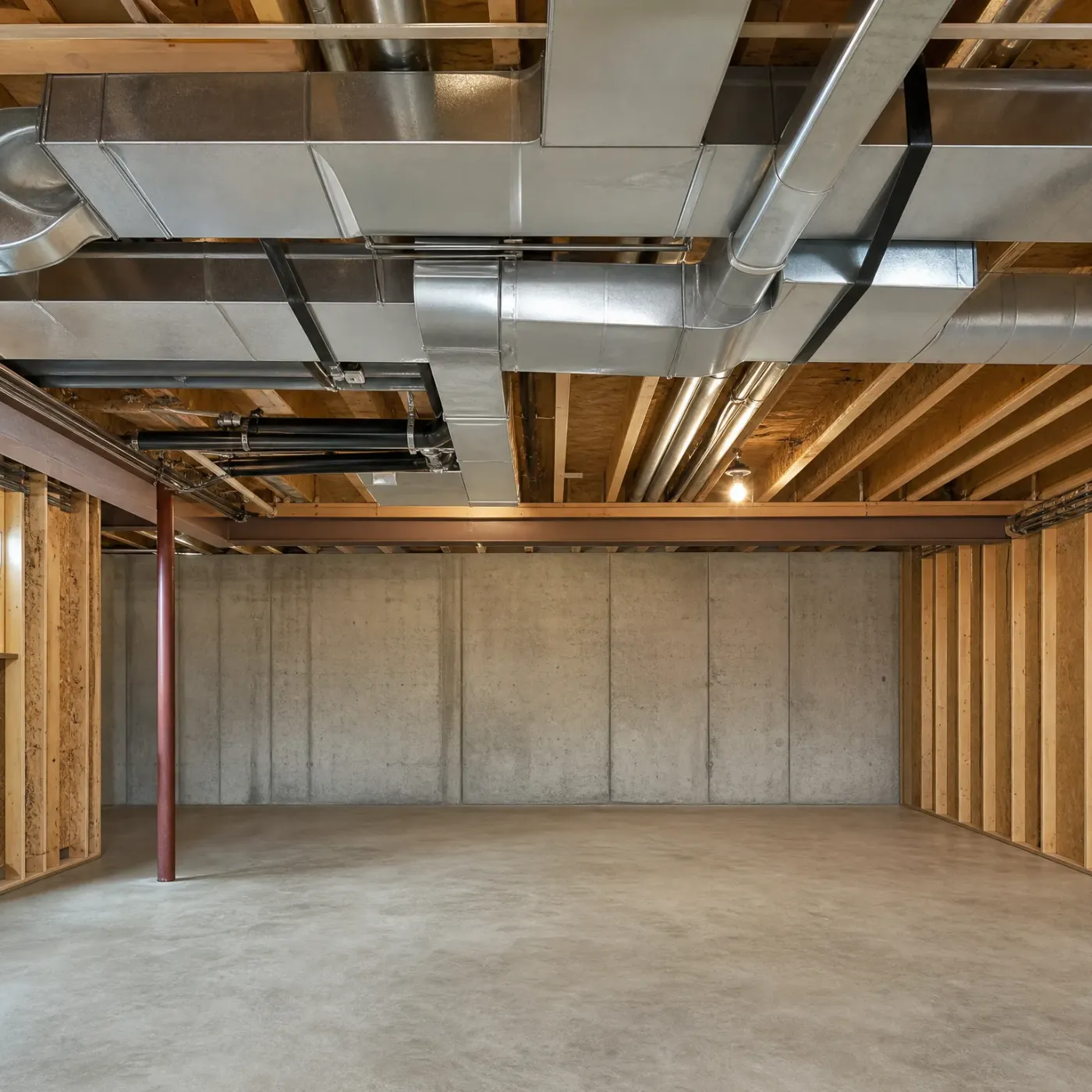
Empty unfinished basement with bare concrete floor and wall, wood-framed stud walls, exposed joists, galvanized HVAC ducts and pipes overhead, a steel beam and red support column, and a single bare bulb light.

Sealed and running right

Each joint along this trunk line sits tight against the next, and the boots are sealed where they meet the metal. Air moving through here stays in the duct until it reaches the room it was sent to. Register output stays even from one end of the house to the other.

Empty concrete-walled basement with bare floor, showing large galvanized sheet-metal HVAC ducts, insulated pipes, wiring and wooden floor joists overhead.

Losing air before it arrives

A run like this can pull apart at the seams over time, especially where it crosses the joists or takes a bend near the I-beam. Warm or cool air escapes into the basement instead of reaching the vent, and the room it was meant for falls behind the rest of the house.

Why does duct leakage matter so much for your house?

  • Half the homes here were built by 1980

    Half the homes in Sweetwater County were built in 1980 or earlier, long enough for duct connections to loosen or seams to pull apart.

  • Heat runs September through June

    Heat runs here from September through June, about ten months a year, so a leak in the ductwork sends conditioned air into the attic or crawlspace nearly every month.

  • Cooling runs July through July

    Cooling only runs in July here, but that single month is when a leaky return can pull hot attic air straight into the duct and into your house.

ACS 2020-2024 · NOAA nClimDiv 1991-2020

A smiling man in a dark olive long-sleeve shirt sits in a kitchen beside a counter with a dark mug, with a dining table, sideboard and hallway visible in the blurred background.
A smiling bearded man in a navy sweater sits at a white kitchen island with a ceramic mug, with open shelves, potted plants and a range hood behind him.
A smiling bearded man in a grey long-sleeved shirt sits at a kitchen counter with a dark mug, with a dining table, pendant light and glass doors onto greenery behind him.
A smiling man in a blue denim shirt over a white tee sits at a light stone kitchen counter with a grey mug and a bowl of oranges and bananas, with pendant lights and shelving behind him.

Patch It Yourself or Call for an Inspection

Patch it yourself

  • Mastic or foil tape on the joints and boots you can reach in the attic or crawlspace costs you a trip to the hardware store and an afternoon.
  • You can only seal what you can see and reach, so runs behind drywall or under the slab stay leaking.
  • Duct tape fails within a couple years despite the name; mastic holds up far longer but takes more care to apply right.
  • A missed connection or a crushed section further down the line keeps pulling in unconditioned attic air no matter how well you sealed the rest.
  • You find out if it worked by watching the next gas bill and whether that back bedroom finally warms up.

Have the system checked

  • A contractor can pressure test the whole system and find leaks in runs you'd never see from the attic hatch.
  • Sealing gets done with mastic or mechanical fasteners rated for the job, not whatever tape was on hand.
  • Crushed or disconnected runs behind walls or under floors get found and fixed, not just the joints in plain sight.
  • Once the form is sent, finding someone to do this stops being your problem to chase down.
  • A full inspection catches the leak that's costing you the most, not just the ones that happen to be in reach.
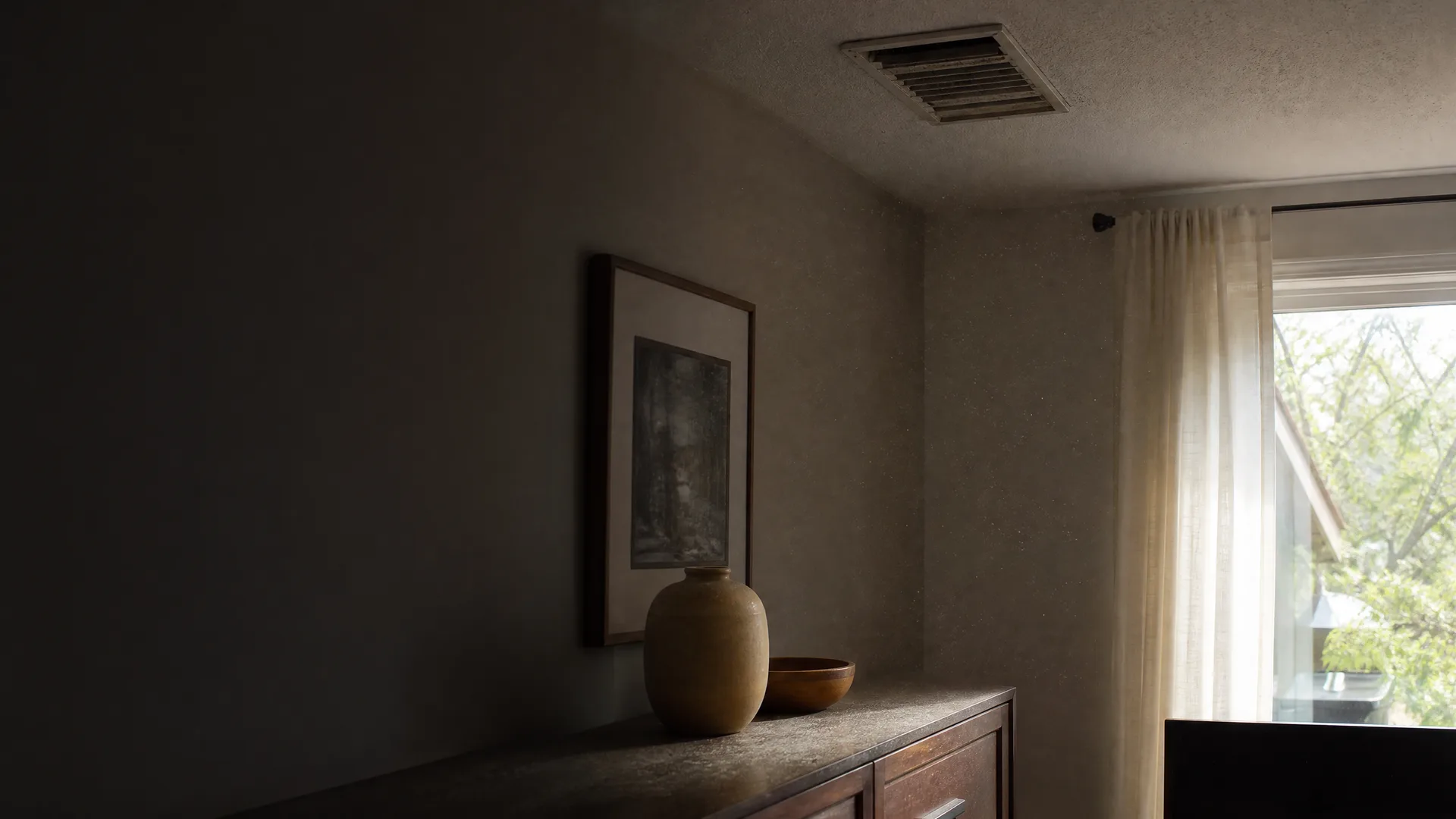
Dim room corner with a framed picture on a textured wall above a counter holding a tall ceramic vase and a shallow wooden bowl, with a sheer curtain beside a window and a ceiling air vent overhead.

It's a quiet afternoon in late March, sun coming in through the living room window. You're sitting on the couch and you notice the ceiling vent above you has a gray ring of dust around the grille, thicker than you'd expect. You run a finger along the end table under it and there's a fine layer there too, the kind that builds back up a day after you wipe it down. The furnace hasn't run hard in weeks, just enough to take the chill off a Rock Springs morning. You figure the duct run behind that vent is pulling dust from the attic space on its way through, and setting it down right here, on the table, before it ever makes it anywhere else.
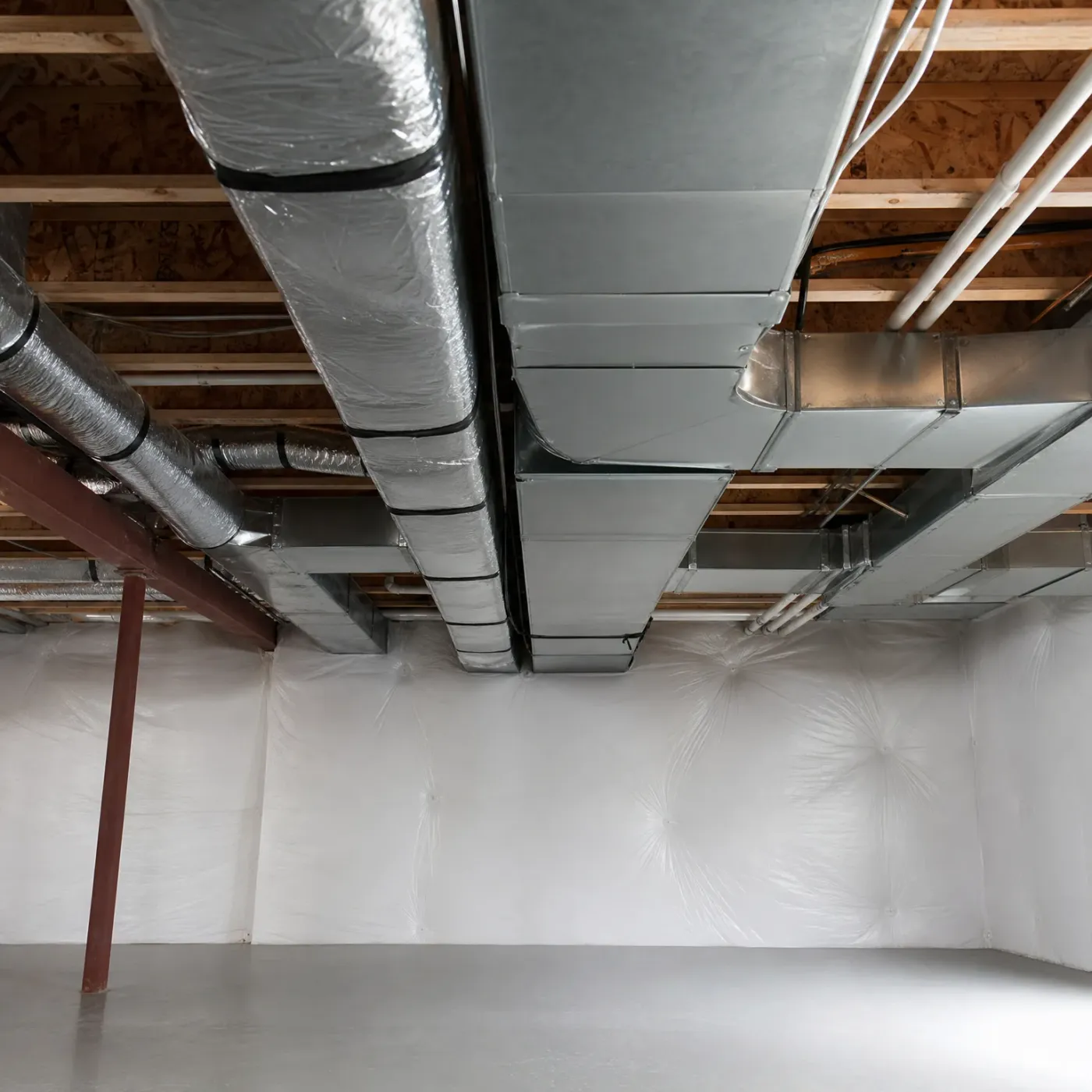
Unfinished basement with exposed wood joists, sheet metal and insulated flexible ductwork, white pipes, a steel support post, plastic-covered walls, and a bare concrete floor.
Here the trunk line runs straight with every joint snug, so conditioned air reaches the registers instead of the joists.
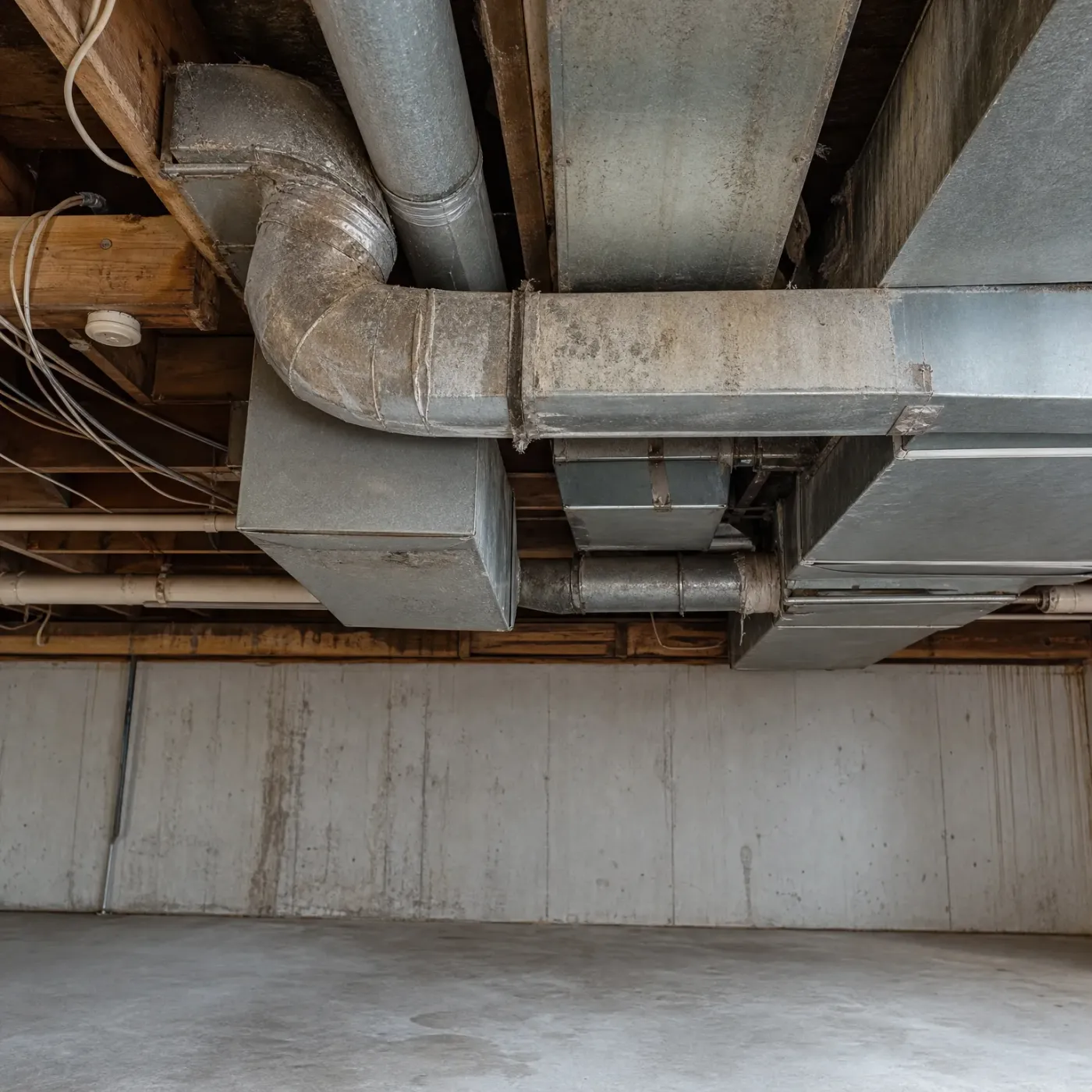
Galvanized sheet-metal ductwork and round pipes run beneath wooden floor joists in a basement with concrete walls and floor.
Here a flex connector sags off true and the seam gaps at the collar, so warm or cooled air spills into the crawl space instead of the room.
  1. Air leaves the furnace or AC under pressure, pushed into the trunk line.

  2. Pressure forces air through every loose joint, seam, and torn boot along the way.

  3. Lost air ends up in the attic, crawlspace, or wall cavity instead of the room.

  4. The blower keeps running longer to make up what escaped before reaching the register.

Why does one room feel wrong all the time

Walk your house in the afternoon and check the vents room by room. One bedroom runs warmer than the rest in July, or a back room stays cold no matter how long the furnace runs in January. Hold your hand up to a supply register and the air feels weak, barely moving, while the one in the hallway blows strong. Look at the duct where it runs through the attic or crawlspace and you might see a dark smudge trailing from a joint, dust pulled through a gap by escaping air. A gas bill that keeps climbing while the thermostat setting stays the same points the same direction. Left alone, the furnace and AC keep running longer to make up what's lost, and that wear adds up over the years.

A smiling bearded man in a blue-gray t-shirt sits on a gray couch in a living room with wooden shelving and a bright window behind him, looking down toward a device at the lower edge of the frame.
A bearded man in a dark plaid flannel shirt stands indoors looking out a window at a snow-covered yard, with a dark gray mug on the windowsill and kitchen shelves behind him.

Done looking for a duct system pro

Skip searching for someone who cleans ducts in Sweetwater County.

Asking costs nothing, and the choice to hire stays yours.

What a pressure test actually measures

A contractor can put a duct system under pressure with a fan and read how much air it loses before it reaches a register. That number is given as a percentage of what the furnace or AC blower is pushing out. A system built and sealed well loses under 10 percent. Past 20 percent, enough air is escaping into the attic or crawlspace that the house is harder to heat and cool than it should be, no matter what the thermostat is set to. The test finds leaks you can't see from a ceiling vent or a crawlspace crawl, the ones buried behind drywall or under the slab.

Why the furnace runs longer than it should

Every cubic foot of air that leaks out before it hits a register is air the blower already paid to move. The furnace doesn't know the air went missing. It keeps running until the thermostat sees the temperature it wants, so a leaky system just runs longer to get there. That extra runtime shows up as wear on the blower motor and the igniter, parts that are rated for a certain number of cycles over their life. A duct system that holds its air gets the house to temperature with less of that wear, cycle after cycle.

Power here costs 14.64 cents per kilowatt-hour

At 14.64 cents per kilowatt-hour, your electric bill already reflects every bit of air your blower pushes, whether it reaches a register or leaks into the attic. A duct system losing air makes that motor run longer to hit the same temperature, and you pay for the extra runtime even though the house never fully catches up.

EIA-861 2025

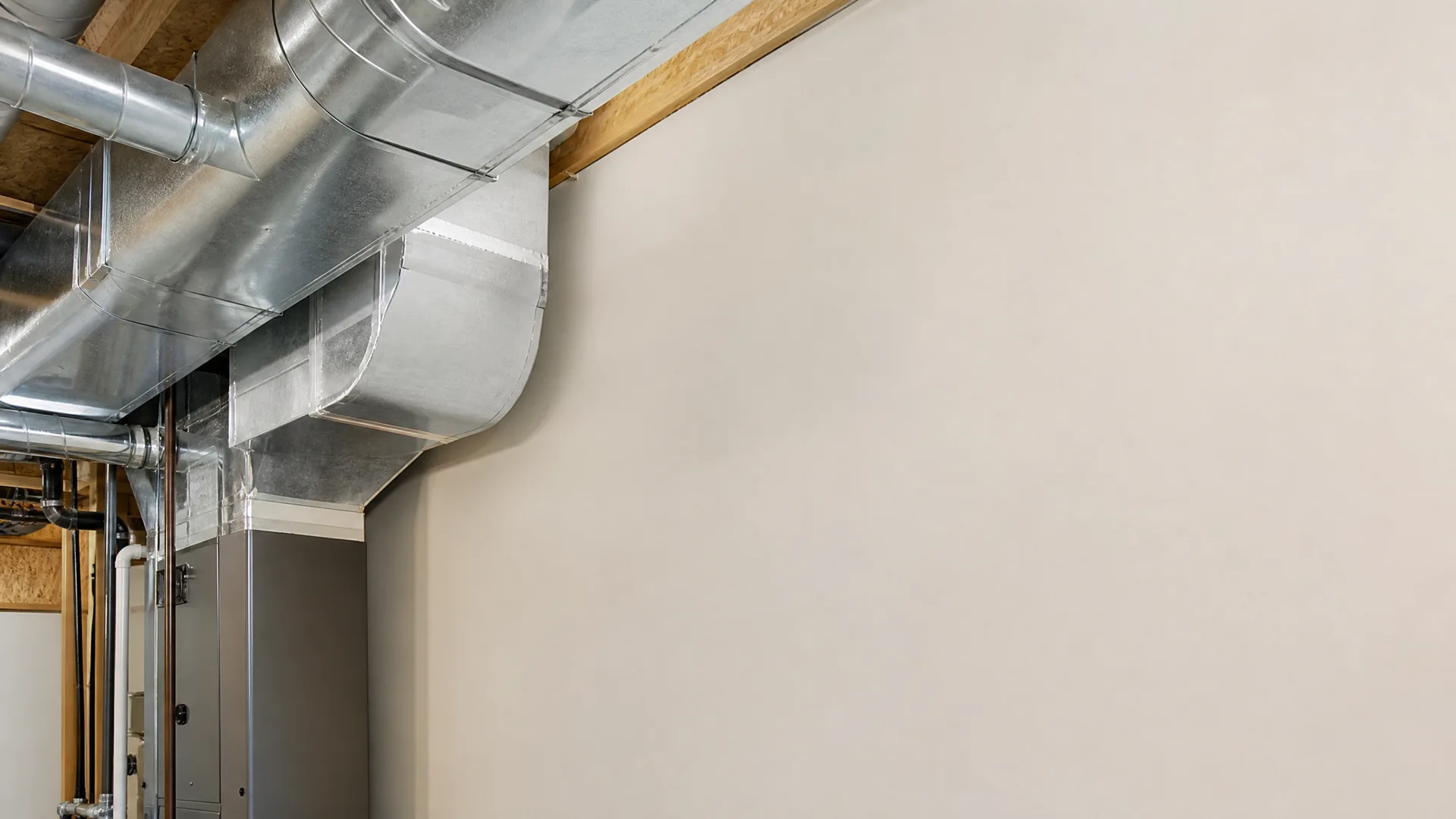
Galvanized sheet-metal ductwork and pipes running along an unfinished basement ceiling beside a plain beige wall, with a gray equipment cabinet below.

Ducts run through the attic

Rock Springs attics swing from well below zero in January to well over a hundred in July. A duct that leaks in that space loses conditioned air straight into those extremes, and the attic air leaking back in is about as far from room temperature as it gets. Check where the ductwork enters the attic floor for the same loose seams and gaps you'd look for at the boots.

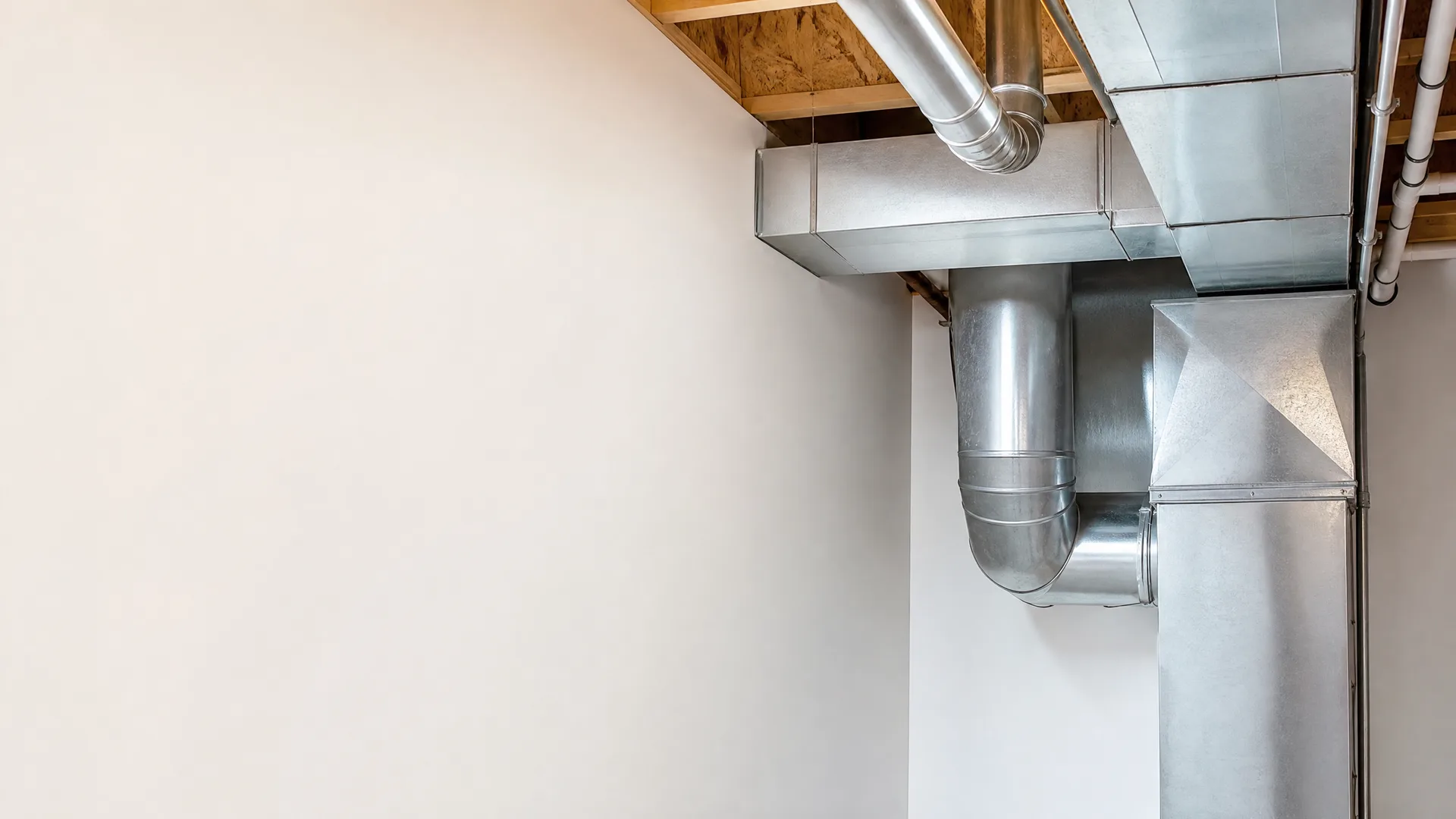
Galvanized sheet metal rectangular and round HVAC ducts running along a ceiling and down a white interior wall, with exposed wood joists and subfloor above.

Ducts run under the house

If your ductwork runs through a crawlspace instead, a leak there pulls in air sitting at ground temperature, cooler than the attic in summer and often damper. That moisture matters more below the house than above it. Look for insulation hanging loose off the duct or sagging away from a joint, and feel for a draft at the seams where the trunk line meets the floor joists.

A closed laptop and a ceramic mug of coffee on a wooden table, with a blurred kitchen counter, cutting board, utensil jar and plant in the background.

What to do with what you've found

A room that runs hot or cold, a dusty ring around a grille, a gas bill that keeps climbing, a trunk line sagging off true in the attic. Any one of these points to the same thing: your ducts are letting conditioned air go before it reaches a register. The fix is sealing what's loose and reachable, or having a contractor pressure test the runs you can't see.

If you've gotten this far, you already know you're not going to let this ride another winter or another July. The part left isn't figuring out what's wrong, it's finding someone licensed to fix it, which usually means calling around, explaining the same thing to three different companies, and sorting through quotes that don't line up. Send the form and that part is off your plate.

Interior corner of a room with a dark upholstered sofa and textured cushion, a potted plant, sheer curtains at a multi-pane window showing blurred green and yellow trees, and a dark table holding a wooden tray with stacked coasters and a small ceramic vase.
A single-story house with horizontal siding and large windows lit from within at dusk, beside a lawn, low path lights and a dark gravel driveway, with pine trees and a distant waterway under an orange and blue sky.

Ductwork Cleaning

It's off your list after this

Duct and vent cleaningDucts or ventsSweetwater County, WY
Step 1 of 2

What ZIP code is the job in?

  • A gray upholstered sofa arm with a cream knit fringed throw sits beside a wooden side table holding a stack of books, a shallow wooden bowl, and a ceramic vase of leafy branches, on a wood floor near a window.
    • Get matched with a pro who works on ducts in Sweetwater County.
    • Your request goes to a Sweetwater County pro who takes ductwork jobs.
  • A living room corner with a cream upholstered sofa and cushion beside a wooden side table holding a ceramic vase of olive branches and a small dark bowl, with a framed landscape painting on the gray wall and a linen curtain at the window.
    • One request and the search for a pro is handled.
    • Send it once and finding someone is no longer on you.
  • A wood-framed armchair with a beige cushion and knitted throw sits beside a round wooden side table holding a ceramic mug, with a potted green plant near a window in the corner and a framed picture on the wall.
    • Explain the job once and skip repeating it on every call.
    • Skip searching for a duct system pro and answer a few questions instead.
  • Interior corner with beadboard wainscoting, a gray cabinet with wood countertop holding a vase of greenery below a window, and a potted leafy plant in a woven basket on a wood floor with a fringed jute rug.
    • The pro who gets in touch is licensed in Wyoming and works in Sweetwater County.
    • A licensed pro who works in Sweetwater County gets your request.