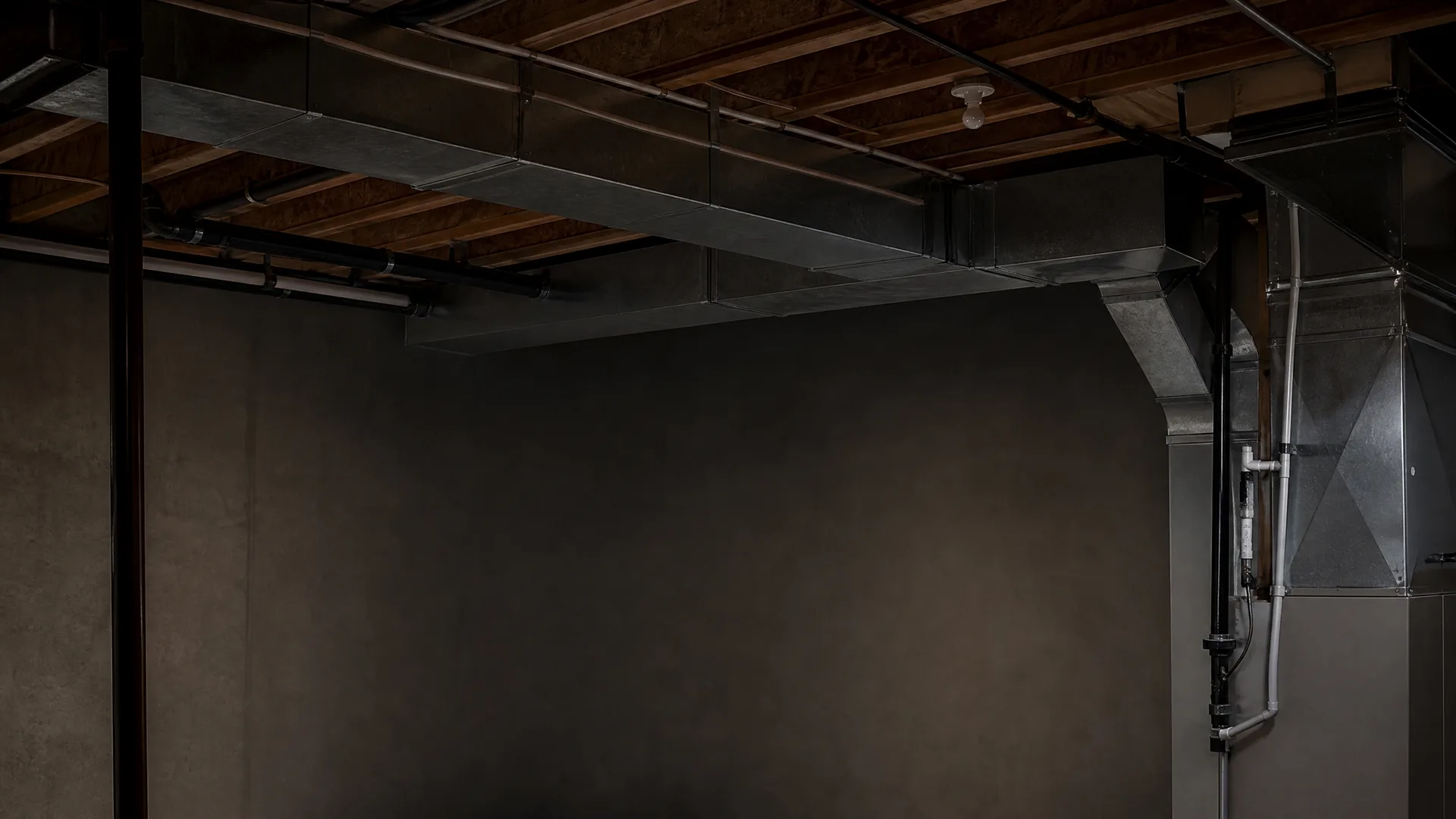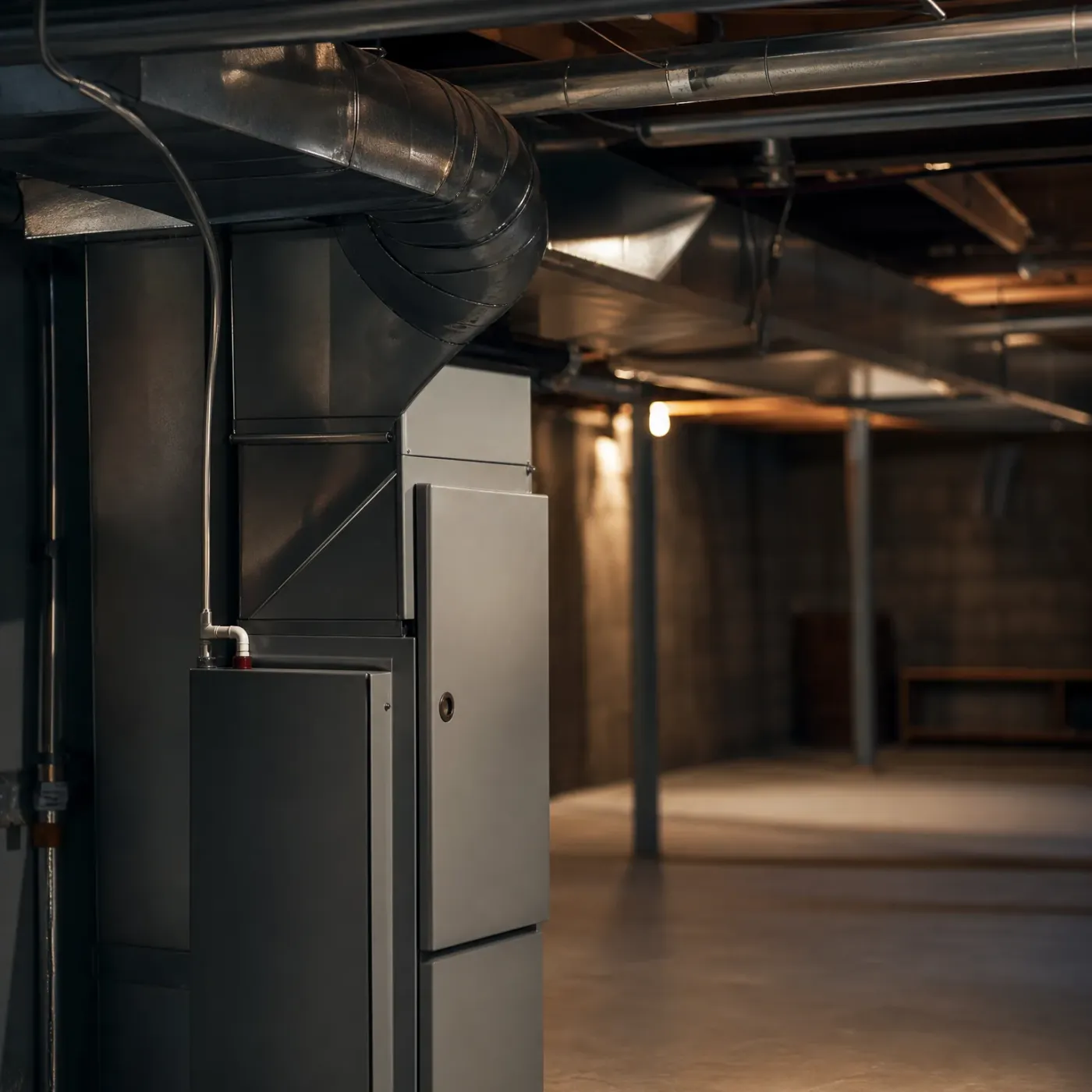







A basement interior with a gray furnace or air handler unit connected to large sheet-metal ductwork running along the exposed joist ceiling, with support posts and a concrete block wall in the dim background.

A pro who works on ducts

Signs of mold in your air ducts in Wyoming

Dry Wyoming air doesn't mean your ducts stay dry inside. A musty smell when the furnace kicks on, dark spots around a vent cover, or dust that keeps coming back after you clean can all point to mold growing where you can't see it. This page walks through what to check and where it tends to show up, and can connect you with a contractor who looks at duct systems like yours instead of calling around and re-explaining the problem each time.

Find my pro

A musty smell when the furnace or the AC kicks on is usually the first sign, and it's often stronger than any smell you'd notice just standing in the room. Mold needs moisture, and in Wyoming that moisture usually comes from condensation around the AC coil or a duct run that passes through a cooler space, not from humidity in the air itself, since the air outside is dry most of the year. Look for dark specks or a fuzzy coating around vent covers and the return grille. Dust that builds back up fast after you've just cleaned is another sign, since mold feeds on that dust and spreads through it. If anyone in the house has started coughing more or dealing with sinus trouble that eases up when they leave, the ducts are worth checking. None of these signs tell you how bad it is inside the duct run itself.

Basement ceiling with galvanized sheet metal rectangular ducts and round pipes running between wooden joists above a bare concrete wall and floor.
Before you get your ductwork cleaning
Unfinished basement with bare concrete walls and floor, showing exposed wood floor joists overhead with sheet-metal rectangular ductwork, insulated flexible ducts, and pipes.
After you get your ductwork cleaning

Mold doesn't need standing water to get started. It needs a damp surface, and the metal inside your ducts stays wet longer than the coil does after the AC shuts off. Dust settles on that wet metal, and that's the food mold actually uses. A system that hasn't been cleaned in a while has more of it sitting there.

Once mold takes hold near the coil or in the ductwork right after it, the blower motor does the rest of the work. Every time it runs, air moves across that spot and carries spores down every branch of the system. Your filter doesn't stop this. It only catches what passes through it, and mold growing on a duct wall or a seam downstream never crosses the filter at all.

Return ducts make it worse, because they're pulling air from your rooms back into the system before it's filtered again. A moldy return can seed the whole house. And running the fan more, thinking it'll dry things out, just spreads the problem faster.

How mold moves through your ductwork

  • Mold spores need a surface to land on, and the sheet metal inside your ducts holds condensation long after the AC coil itself has dried off.
  • Dust mixed with moisture is what mold actually feeds on, so a duct system that hasn't been cleaned in years gives it more to grow on.
  • Mold growing near the coil or in the first few feet of ductwork gets pulled across the whole system every time the blower motor runs.
  • A furnace filter only catches particles moving through it, so mold sitting in a duct run past the filter never gets trapped there.
  • Return ducts pull air from the house into the system, so a moldy return can spread spores into every room it serves before you smell anything.
  • Once mold is established on duct insulation or seams, running the system longer or the fan higher just moves more spores, it doesn't dry the ducts out.
A smiling gray-haired man in a dark wool coat with snow flecks stands in a dimly lit home entryway, with a lit table lamp, potted plant, framed pictures and a living room visible behind him.
An older man with gray hair and a beard, wearing a snow-dusted dark coat and knit scarf, stands smiling in a dimly lit house entry with a lit lamp, mirror, and a living room with snow visible through the window behind him.
An older man with gray hair and a beard, wearing a dark snow-dusted coat and plaid scarf, stands smiling in a warmly lit hallway with a lamp, side table and glass-paned doors behind him.
An older man with gray hair and a beard, wearing a dark coat dusted with snow, stands in a home entryway with a lit lamp, a staircase railing, and a living room with large windows behind him.

Get your ductwork to the right pro

Answer a few questions instead of calling shop after shop.

It costs nothing to send, and you don't have to hire anyone.

Why the smell is hard to place

A duct system runs through the house, so a smell coming from inside it doesn't act like a smell in one room. It shows up near one vent, then another, depending on which room the air is moving to. Some people notice it most in a bedroom that's rarely used, because the air there sits longer between times the furnace runs. Shut off the blower and walk the house room to room. If the smell fades everywhere at once, it's probably riding the duct air rather than coming from something in that one room, like a damp towel or a houseplant that's been overwatered.

What dark spots actually mean

Mold doesn't grow evenly across a vent cover. It shows up first in the corners and along the screw holes, where metal meets metal and moisture sits longest after the coil stops condensing. A spot the size of a coin can mean a much larger patch just inside the duct, past where you can see. Wiping the cover clean doesn't address that. If a spot comes back within a few weeks of cleaning the cover itself, that's a sign the growth is on the inside surface of the duct, not on the cover you can reach with a rag.

Power costs 13.37 cents per kilowatt-hour statewide

At 13.37 cents per kilowatt-hour, running the blower longer to chase a musty smell won't hit your bill hard. That's worth knowing before a cleaning, since a contractor may want the system running while checking return air and vent covers for mold.

EIA-861 2025 statewide residential average

What you'd notice day to day

A musty smell that comes back no matter how often you clean, dust that settles again within days, or a family member with allergies who does worse indoors than outside. Some people notice their eyes or throat bother them more in certain rooms, usually the ones closest to the return vent. None of this shows up on a gas bill or a utility notice. It shows up in how the house feels to live in, and in how often you find yourself wiping down the same vent cover or running an air purifier that shouldn't need to work that hard.


What it puts at risk if it sits

Mold in the ducts doesn't stay contained to the metal it started on. Every time the blower runs, it moves air across that surface and into the rooms you breathe in. Left alone, the spots around a vent cover tend to spread rather than fade, and a smell that used to show up only when the furnace first kicked on can start lingering longer into the cycle. For a house you're keeping up, that's the difference between a problem you caught early and one that's worked its way through the system.

A woman with dark shoulder-length hair sits wrapped in a gray fleece blanket on a sofa with an open book on her lap, beside a lit lamp and a dark window.
A woman in a cream knit sweater sits in an armchair with her eyes closed and head tilted back, beside a window showing orange autumn foliage and a wooden side table with a mug.
A woman in a long cream cardigan and jeans stands at an open wooden front door of a gray shingled house with stone-based porch columns, with a second person visible inside, and potted flowers and shrubs beside the entry.

If the smell keeps coming back, the ducts are telling you something

A musty smell that won't clear, dark spots near a vent, dust that returns days after you've cleaned it up. Any one of those points to mold sitting in the ductwork, not just a dusty house. Dry air outside doesn't change what's happening inside the metal, where condensation from the AC coil gives mold what it needs.

Finding a contractor who does duct cleaning, checking they're free, explaining the smell and where you've noticed it, then doing that again with the next name on the list. That's the part that eats an afternoon. Once you're matched with a contractor who handles this in Wyoming, they reach out to you, already knowing what you're dealing with.

Interior corner with sheer white curtains at a window, a brown upholstered sofa in the foreground, and a wooden multi-drawer cabinet holding a round ceramic vase with leafy branches.
Dim interior with a dark gray wall, exposed wood joist ceiling, sheet-metal ductwork, conduit, pipes and a sprinkler head.

The right pro for this job

Describe your ductwork job once, to one pro.

Duct and vent cleaningDucts or ventsWyoming
Step 1 of 2

What ZIP code is the job in?