





Signs of leaky ductwork in Cheyenne, WY

Find my pro

A duct that leaks is wasting the air your furnace or AC just paid to heat or cool. In Cheyenne, with winters this hard and power this expensive, that loss shows up fast. You might have noticed a room that never feels right, a utility bill that keeps climbing, or ducts running through the attic or crawlspace that have never once been checked. Figuring out whether that's a leak, and where, means someone getting hands on the system. This page connects you with a licensed local contractor who works on duct systems around Laramie County and knows which joints and connections tend to fail first in homes here. You'll hear from one contractor, not a handful calling at once, so you can talk through what you're seeing and get a straight read on whether your ducts are the problem. Start below.

What are the signs of leaky ductwork in my house?

You've noticed a room that won't heat or cool right, or a utility bill that keeps going up without any real change in how you live. Before you call anyone, it helps to know what leaky ducts actually look and feel like from inside the house. The signs are usually small and easy to write off as normal until you know to look for them together.

Uneven rooms, high bills, and dust are the main signs

Leaky ducts show up as a mix of small things. One bedroom or the basement stays too warm or too cold no matter what the thermostat says. Your gas and power bills run higher than they should for how much you actually run the furnace or AC. Dust seems to collect faster than it used to, especially near vents, because leaking ducts pull in air from attics and crawlspaces and push it through the house. You might also hear the furnace or AC running longer or more often than it used to. Any one of these could have another cause, but together they point to air escaping somewhere between the unit and the vent.

An older man with gray hair and a beard, wearing a dark coat flecked with snow, stands smiling in a dimly lit home hallway with lamps, a framed picture, and a wooden door.
A gray-haired, bearded man in a dark coat dusted with snow stands just inside an open door of a warmly lit home, looking off to the side.
An older bearded man in a dark snow-dusted coat and gray scarf stands just inside a dimly lit home entry, with a framed picture, lit table lamp, and an adjoining room with a fireplace behind him, and snow visible through the open door.
A gray-haired bearded man in a dark coat and scarf dusted with snow stands smiling in a dimly lit entryway with a white front door, a side table with a lit lamp, an oval mirror, and a patterned rug.

Why does duct leakage matter so much for a Laramie County house?

  • Half the homes here were built by 1980

    Half the homes in Laramie County were built in 1980 or earlier, so a lot of duct runs have had decades to loosen at the joints.

  • Heat runs September through May

    Heat runs here from September through May, about nine months a year, so a leak in the ductwork is losing you warm air most of the year.

  • Cooling runs July through August

    Cooling only runs July and August here, but a leaky duct during those two months still means the AC works harder for less result.

ACS 2020-2024 · NOAA nClimDiv 1991-2020

You seal the ducts and the rooms even out. The one that ran cold finally gets warm air, the thermostat stops cycling the furnace so often, and the gas and electric bills start matching what you actually use.

You leave it alone and the furnace keeps pushing heated air into the attic or crawlspace instead of your rooms. It runs longer to make up the difference, and in a Cheyenne winter that difference gets expensive fast.

A woman wrapped in a chunky knit blanket sits in an armchair with an open book on her lap, beside a lit table lamp and a window with frost and snow outside.
A woman in a cream knit sweater sits in an armchair indoors, eyes closed and smiling, beside a window showing yellow and orange autumn foliage, with a mug on a wooden side table and shelves holding vases behind her.

How Duct Leaks Actually Work

  • Air escapes mostly at the joints where two duct sections meet, not through the metal itself.
  • A return duct that leaks pulls in dusty attic or crawlspace air and feeds it straight to your furnace.
  • A supply duct that leaks pushes heated or cooled air into the attic instead of the room it was meant for.
  • The furnace blower runs on a timer, not on room temperature, so it can keep running past the point a sealed system would have shut off.
  • Leaks near the plenum, right where ducts connect to the furnace, usually waste more air than the same size gap out at a register.
  • Mastic sealant and foil tape hold up over time; ordinary cloth duct tape dries out and lets go within a few years.

Most people picture a duct leaking through a crack in the metal somewhere along its length. That's rarely how it happens. The weak point is almost always the joint, the spot where one section of duct fits into the next and gets sealed, or doesn't. Over the years the sealant at those joints shrinks, or the tape holding them lets go, and that's where the air finds its way out.

Where the leak sits changes what it does to your house. A leak on the return side, the ducts pulling air back to the furnace, draws in whatever is sitting in your attic or crawlspace and sends it straight through the system. A leak on the supply side, the ducts carrying heated or cooled air out to your rooms, just dumps that conditioned air somewhere it was never meant to go, usually into the attic itself. Either way, the furnace doesn't know the difference. It runs on a timer, not on whether the room it's heating has actually reached temperature, so a leak doesn't trip any warning. It just means the furnace runs longer to get the same result, or never quite gets there.

The leaks that matter most are usually close to the furnace, right at the plenum where the main trunk lines connect. A gap there moves far more air than the same size gap out at a single register, simply because everything downstream depends on it.

Power here costs 16.11 cents per kilowatt-hour

At 16.11 cents per kilowatt-hour, every bit of conditioned air that leaks out of your ducts before it reaches a room is money gone. A leaky return pulling in attic air makes your furnace blower run longer to compensate, and that runtime is what shows up on the electric bill.

EIA-861 2025

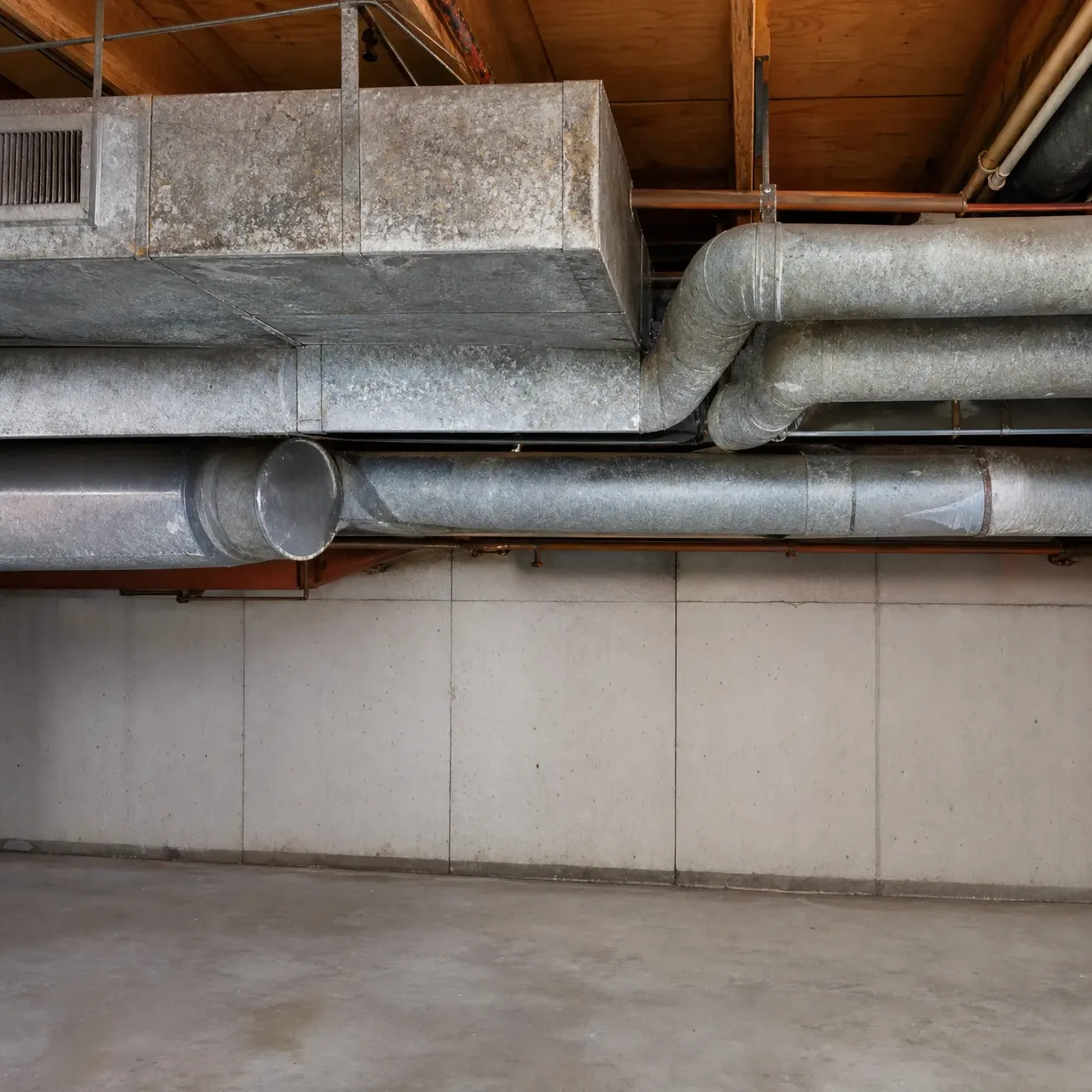
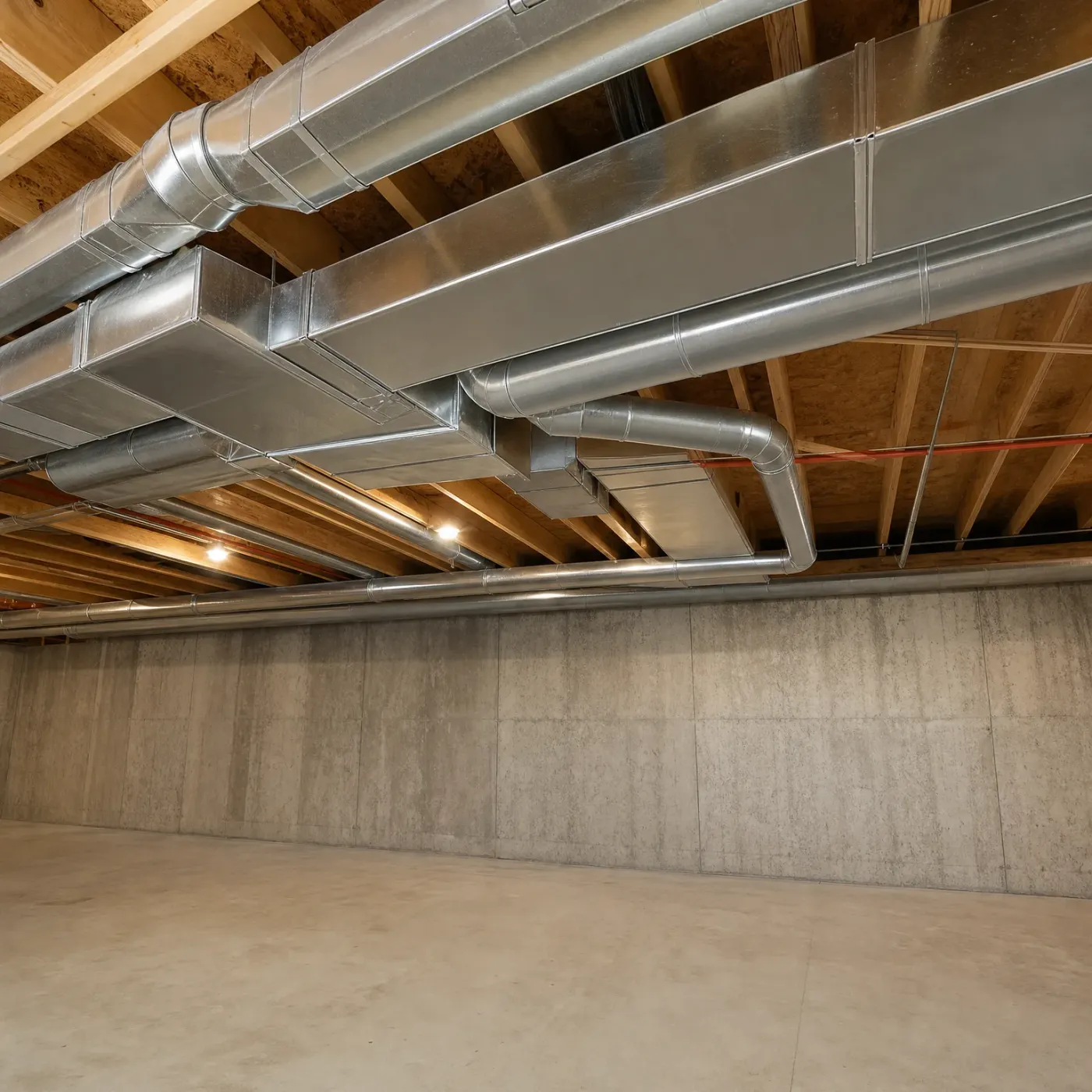
Basement interior with galvanized rectangular and round sheet-metal ductwork and copper piping running below a wood-joist ceiling, above a concrete wall and bare concrete floor.
Before you get your ductwork cleaning
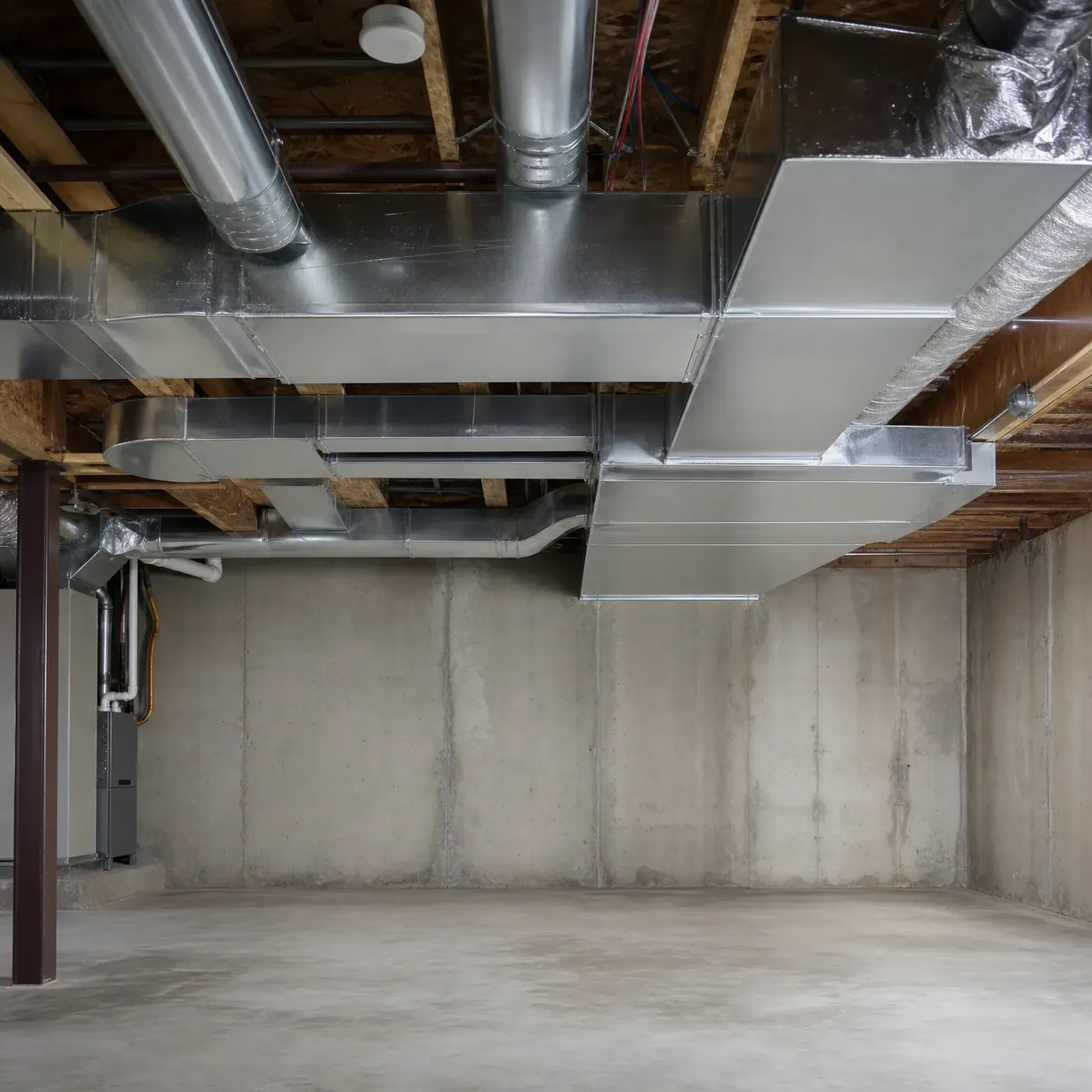
Unfinished basement with bare concrete walls and floor, exposed wood joists, and large sheet-metal HVAC ducts and pipes running along the ceiling.
After you get your ductwork cleaning

Get matched with a duct system pro in Laramie County

You've read through what leaky ducts do to a Cheyenne winter bill and what they're doing to the room that never feels right. At some point the next move is having someone look at the actual runs in your attic or crawlspace, because no amount of reading tells you which joint let go or how bad the return leak is. That's a job for someone who works on duct systems in this county every season, who knows which fittings in houses built here tend to loosen first and what a bad return typically looks like when they open one up. Getting matched means one local, licensed contractor takes on your situation specifically, not a handful of companies competing for your attention. You still have a heating bill coming whether or not you act, and a furnace that keeps working harder to cover for air it's losing before it reaches your rooms. Handing this off now means someone qualified is looking at your ducts instead of you guessing from a list of symptoms.

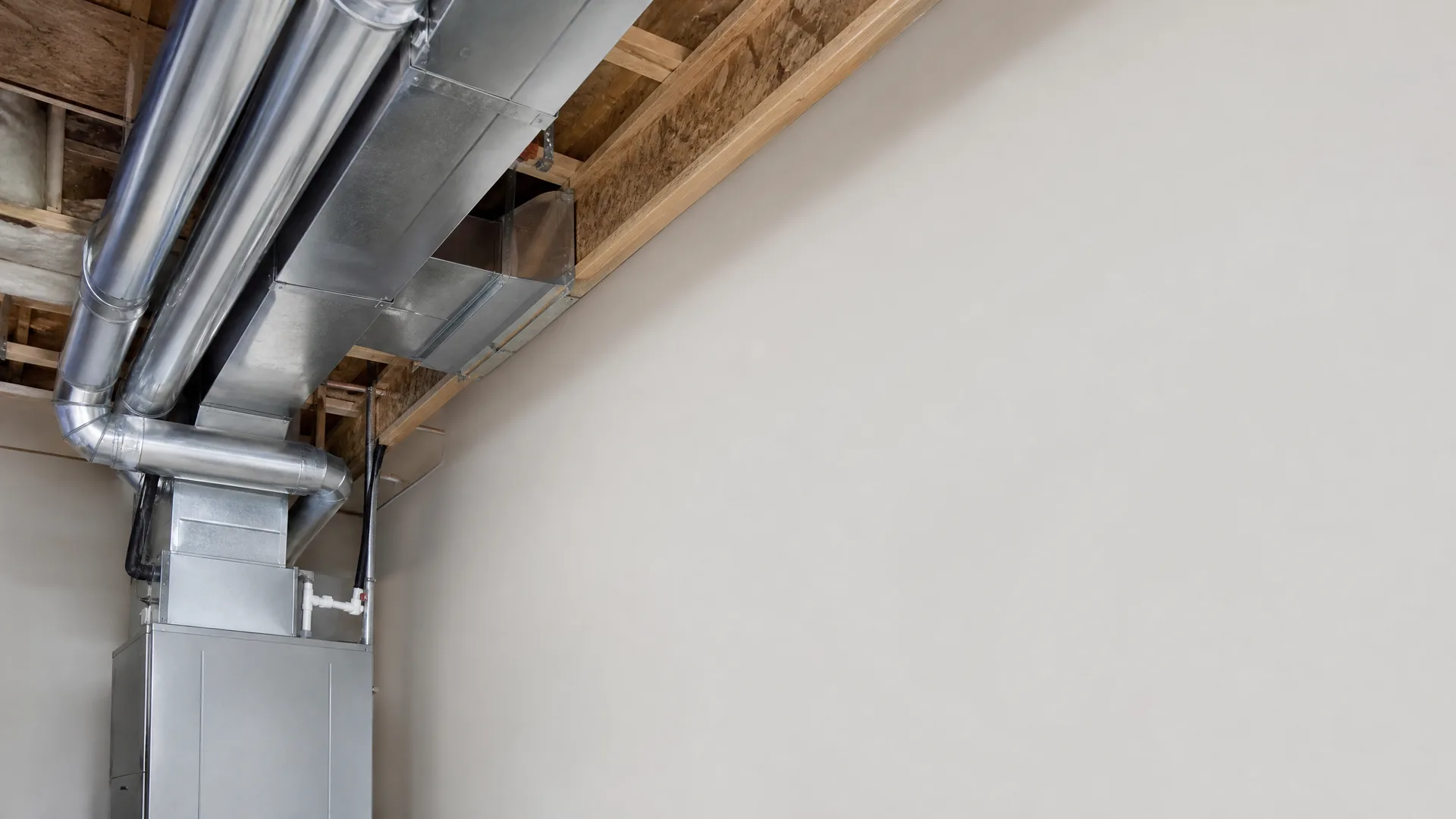
Galvanized sheet-metal ductwork and round pipes running along an exposed wood-joist ceiling with insulation, above a furnace unit beside a blank painted wall.

The room you keep adjusting for

If one bedroom runs cold while the rest of the house is fine, the duct feeding it is a likely spot to check. You close the vent in other rooms to force more air there, or you run a space heater, and you stop noticing it because you've built a habit around it. That habit is the leak paying rent in your house every day from September through May.

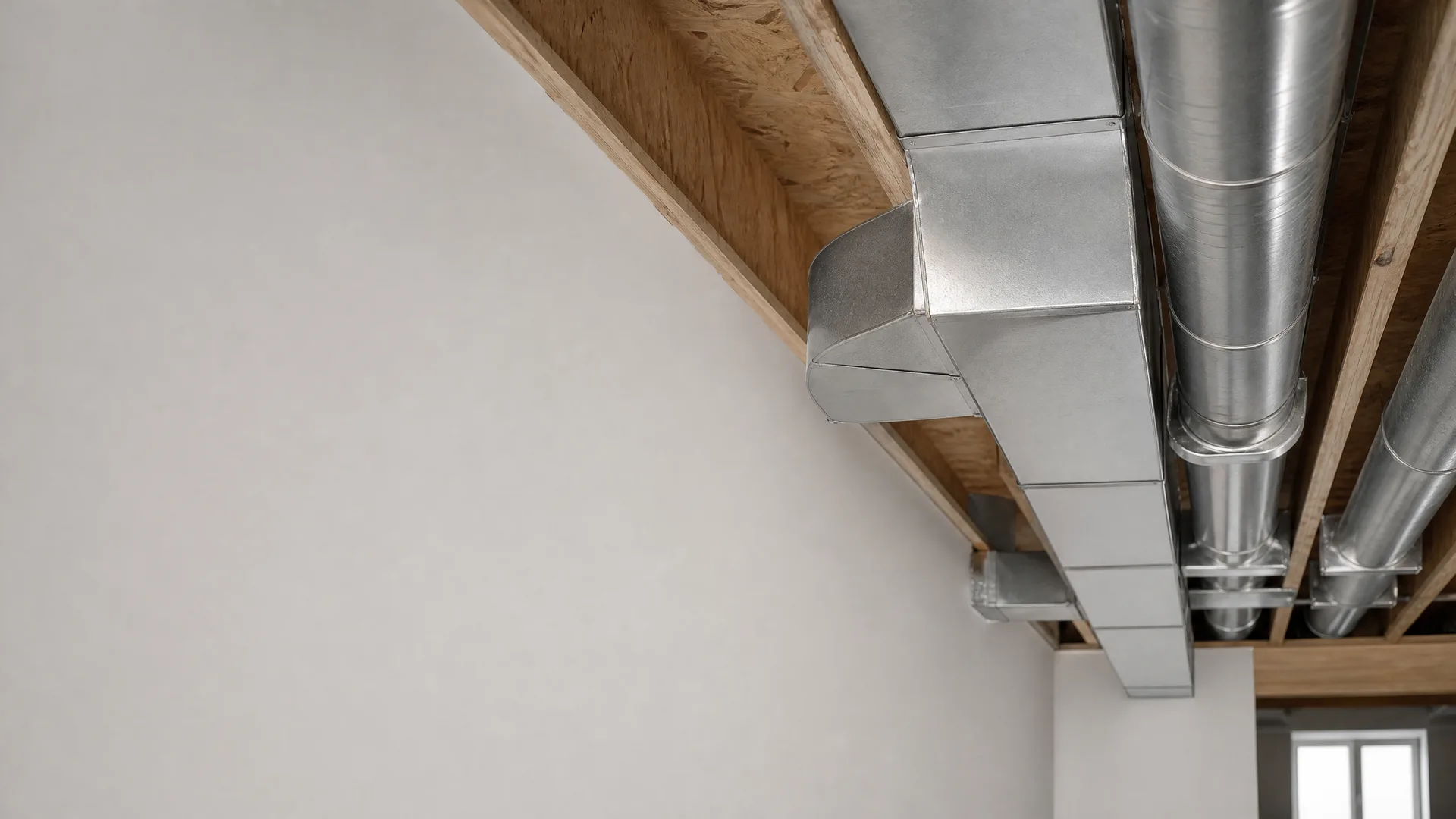
Galvanized rectangular and round sheet-metal ductwork mounted beneath an exposed wooden joist and OSB ceiling, next to a plain white wall and a window at lower right.

Dust that comes back fast

A return duct pulling air from your attic or crawlspace brings in dust and insulation fibers along with it, and your furnace pushes that straight through the house. If you're dusting the same shelf every few days, or the filter looks gray well before you expected to change it, that's the kind of thing a leaky return does. It's worth noticing before you assume the filter itself is the problem.

What would you actually notice if your ducts are leaking

Walk through your house and pay attention to what's different room to room. One register barely puts out air while another blows strong. Dust settles faster in some rooms, or you can see it streaked around the vent cover itself. The attic or crawlspace access might feel warmer or colder than it should when you're up there. If your furnace or AC runs longer than it used to just to hit the same temperature, that's the blower working harder to make up for air that never reaches the room. Left alone, the furnace logs more hours every winter than the house actually needs, and a return pulling in attic or crawlspace air keeps feeding that dust and debris straight into the system you breathe through every day.

Unfinished basement with bare concrete floor and walls, showing galvanized sheet-metal HVAC ducts, pipes and recessed lights beneath a wood-joist ceiling.

Ductwork that's sealed and clean

Each joint sits tight where two sections meet, so the air your furnace heats reaches the rooms instead of the joists. The metal stays clear, airflow through the system stays even, and every register puts out close to the same amount of air.
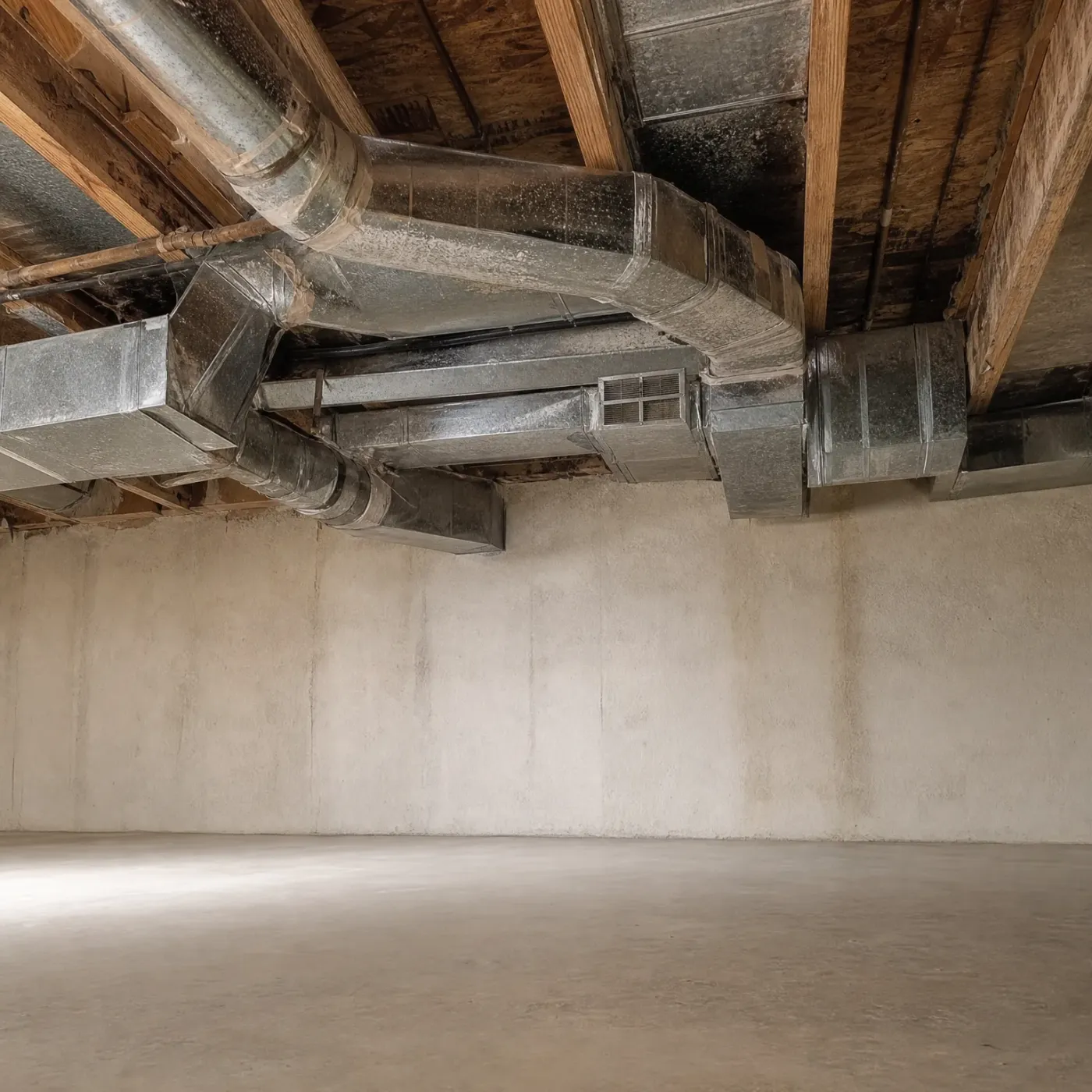
An empty basement room with bare concrete walls and floor, with galvanized sheet-metal HVAC ductwork and a vent grille running along the wooden joist ceiling.

Ductwork that's been leaking for years

Dust and dark streaks collect around the joints and along the seams, a sign of air and debris moving in and out where it shouldn't. That buildup also means a return duct nearby is likely pulling in basement or crawlspace air and sending it straight to your furnace.

A room that never heats right, a bill that keeps climbing, dust around a register: those are the signs, and by now you know what they mean in a Cheyenne house. The fix is having someone open up the attic or crawlspace and find where the joints have let go. That's not a job for guessing from the thermostat. A local contractor who works on duct systems in Laramie County all year has seen which joints give out first in homes like yours and what nine months of heating does to them over time. You'll be matched with one, not a handful of companies competing for the callback, so the person who shows up is the one who looks at your ducts and tells you straight what needs sealing and what doesn't.

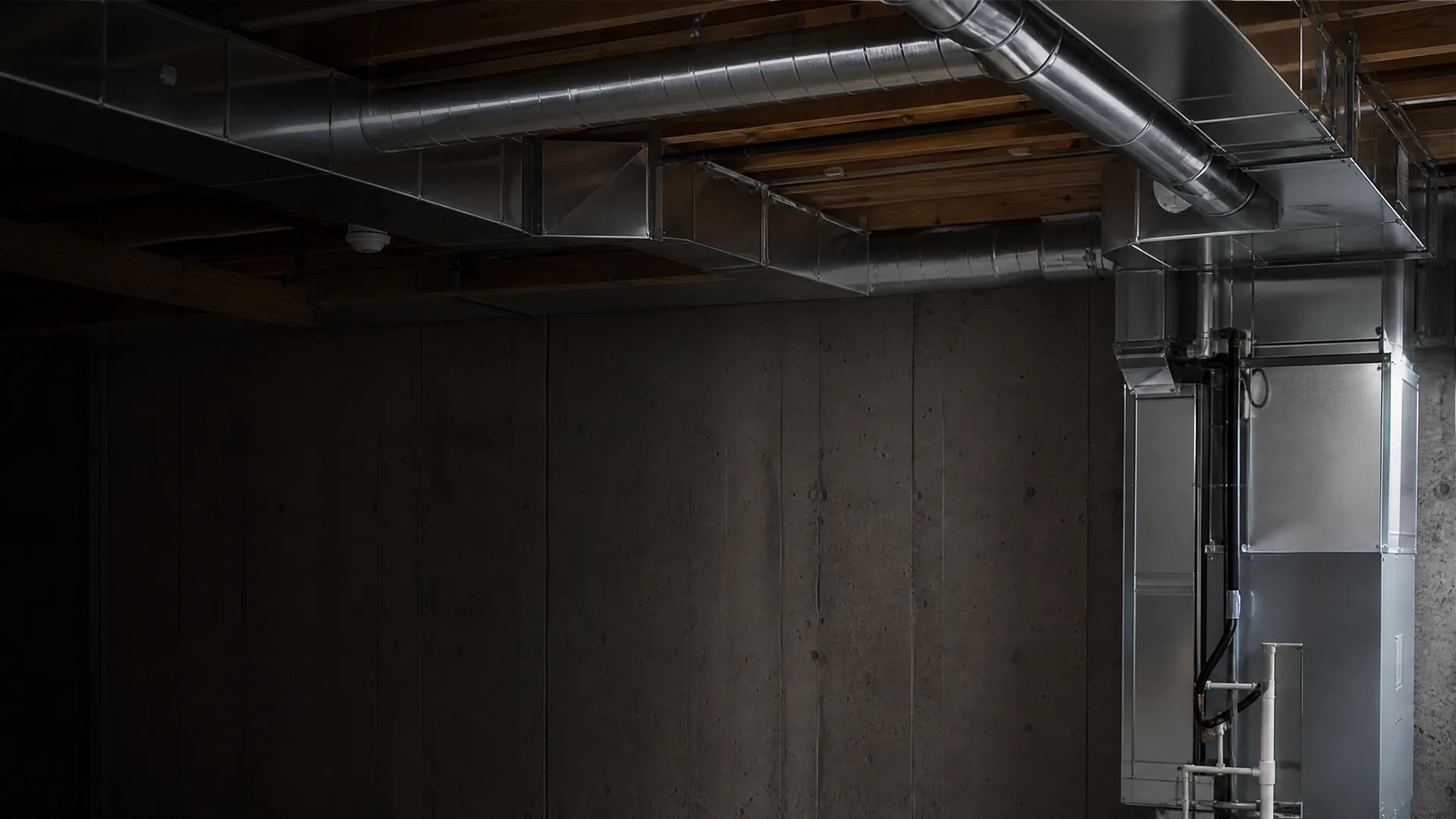
Unfinished basement with poured concrete walls, exposed wooden joists, and galvanized sheet-metal supply ducts and round pipes running along the ceiling to a furnace unit at right.

Find a duct system cleaning pro in Laramie County

A licensed pro who works in Laramie County gets your request.

Duct and vent cleaningDucts or ventsLaramie County, WY
Step 1 of 2

What ZIP code is the job in?