Profile view of a bearded man wearing a dark baseball cap and a dark gray T-shirt against a plain off-white background.

Signs your dryer vent is clogged in Wyoming

Duct and vent cleaningWyoming
Step 1 of 3

What kind of equipment?

A clogged dryer vent shows up as clothes that take two or three cycles to dry, a dryer that runs hot to the touch, or a burnt smell when it's running. Lint builds up inside the vent duct over time, and the drier air here in Wyoming makes that lint finer and quicker to pack tight, so the vent can choke down faster than it would somewhere humid. You might also notice the outside vent flap barely moves when the dryer's on, or almost no warm air coming out of it at all. Check the flap with your hand next time you run a load. A clogged vent isn't just a slow dryer. It's lint sitting in a duct next to a heat source, and that's a fire risk, not an inconvenience to put off.

A white hooded dryer vent cover mounted on beige horizontal vinyl siding above a concrete foundation wall with gravel at the base.
The hood sits flush against the siding and swings open with barely a push, letting the full force of the exhaust out.
A square plastic dryer vent hood mounted on light-colored horizontal lap siding above a concrete foundation, with gray lint clogging its screened opening.
Lint has packed the screen solid, and the flap can't open all the way, so the air has nowhere to go.

How a Clogged Vent Shows Itself

  • The flapper on your outside hood should open wide and stay open while the dryer runs.
  • A weak push of air at the hood, or one you can barely feel with your hand, means the duct is restricted.
  • Drying times that stretch past a normal cycle point to airflow loss somewhere between the drum and the hood.
  • A musty smell when the dryer starts often means moisture is sitting in the duct instead of venting out.
  • Lint collecting around the hood opening or on the ground below it means it's escaping where it shouldn't, inside the duct.
  • A dryer that shuts off before clothes are dry can mean the high limit thermostat is tripping from trapped heat.

Your dryer pushes hot, wet air through the duct and out the hood on the outside wall. When lint packs that duct, the air has to fight its way through, and every sign of a clog traces back to that lost airflow. Open the hood while the dryer runs. The flapper should swing wide and stay open the whole cycle. If it barely lifts, or closes partway, something downstream is blocking the path. Hold your hand near the opening. You should feel a steady push of warm air, not a faint puff. A weak flow means lint has narrowed the duct somewhere between the drum and the hood, and it gets worse the longer it sits, since dry air here in Wyoming turns that lint fine enough to pack tight instead of clearing out on its own. Inside the house, watch the cycle itself. Clothes that need a second or third round to dry are telling you the hot air isn't escaping fast enough to carry the moisture out. A musty smell when the dryer kicks on means some of that moisture never left the duct and is sitting there from the last load. The high limit thermostat is built to shut the dryer off if it senses too much trapped heat, so a dryer that quits mid-cycle may be protecting itself from exactly that. And if lint shows up around the hood opening or scattered on the ground below it, the duct is shedding what it should be carrying all the way outside.

A white plastic dryer vent hood mounted on horizontal lap siding, clogged with gray lint at its lower opening, above a concrete foundation and walkway.
Before you get your dryer vent cleaning
A white plastic hooded dryer vent with a screened opening mounted on gray horizontal lap siding above a concrete foundation and gravel bed.
After you get your dryer vent cleaning

Why lint builds up faster here

Wyoming's dry air pulls moisture out of lint before it ever settles, so what collects inside the duct is finer and drier than in a humid climate. That fine lint packs together tighter along the duct walls instead of falling loose, and it catches on every bend the duct makes. A straight run clears itself out more easily than one with turns, so a vent with two or three bends built into it will trap lint sooner than a short, straight shot to the outside wall.


What a blocked vent does to the dryer

A dryer is built to push hot, damp air out through the duct with every cycle. When lint narrows that path, the air has nowhere to go, so heat backs up inside the drum and the machine runs hotter than it should. The motor also works harder pushing air against the blockage, and that strain shows up as longer run times and a burnt smell from lint sitting against the heating element. Left alone, the heat has only one place to go, which is back into the dryer itself.

A smiling man in a dark green sweater sits at a wooden table with a light gray mug in a kitchen with white tile backsplash, pendant lights, and an adjoining living room visible.
A smiling man in a dark gray sweater stands indoors looking to the side, with a kitchen counter holding a ceramic mug and open wooden shelves behind him and a living area in the background.
A smiling man in a dark blue button-up shirt stands at a white kitchen island, with open shelving, a gas range, a potted plant and a window in the background.
A smiling man with dark wavy hair and a beard, wearing a dark green knit sweater, sits in an open-plan living room and kitchen with a brown sofa, large windows, and a counter holding a mug and a wooden bowl.
  1. Lint sheds off wet clothes with every cycle you run.

  2. Loose lint rides the airflow toward the exhaust duct.

  3. Fine lint catches on duct walls instead of blowing through.

  4. Layers build up and narrow the path air can take.

A bearded man in a dark blue T-shirt sits on a gray couch, smiling and looking down to his left, with a bookshelf and a bright window behind him.
A bearded man in a plaid flannel shirt looks out a window at snow-covered conifer trees, with a steaming ceramic mug on the sill and wooden shelves holding dishes and a plant behind him.

Stop chasing a dryer vent pro

You've already noticed the signs, maybe the long dry times, maybe the hot dryer, maybe that burnt smell you can't place. The next step is finding someone to come clear the duct, and that usually means searching for a contractor who does this work, calling a few, describing the same problem each time, then weighing quotes that aren't quite comparable. A packed vent duct doesn't loosen on its own, and with Wyoming's dry air feeding fine lint into it all year, the buildup only gets denser while you wait. Send the request and that search is over. You stop being the one tracking down who's available and who knows the job. The clothes still need to dry, the dryer still needs to breathe right, but finding the person to fix that is no longer something sitting on your list.

A white hooded exterior vent cover with a screened lower opening, screwed to beige horizontal lap siding above a concrete foundation.

The vent cap doing its job

This one sits flat against the siding with a clear, open hood. The louvers swing on their hinge without resistance. Air from the dryer pushes straight out past the foundation line, and nothing is holding it back.

A hooded dryer vent mounted on beige lap siding, with gray lint buildup packed in and hanging from its louvered opening.

The vent cap choked with lint

Here the louvers are packed with gray lint, matted into the grille itself. The flap can't lift off its screws worth of buildup. Wyoming's dry air made this lint fine enough to wedge in tight, and now almost nothing gets past it.

Power costs 13.37 cents per kilowatt-hour statewide

Power here runs 13.37 cents a kilowatt-hour, so a dryer pushing hard against a clogged vent is still cheap to run compared to most of the country. That's no reason to let the clog sit. A restricted vent means more cycles to get clothes dry, and more wear on the dryer itself.

EIA-861 2025 statewide residential average

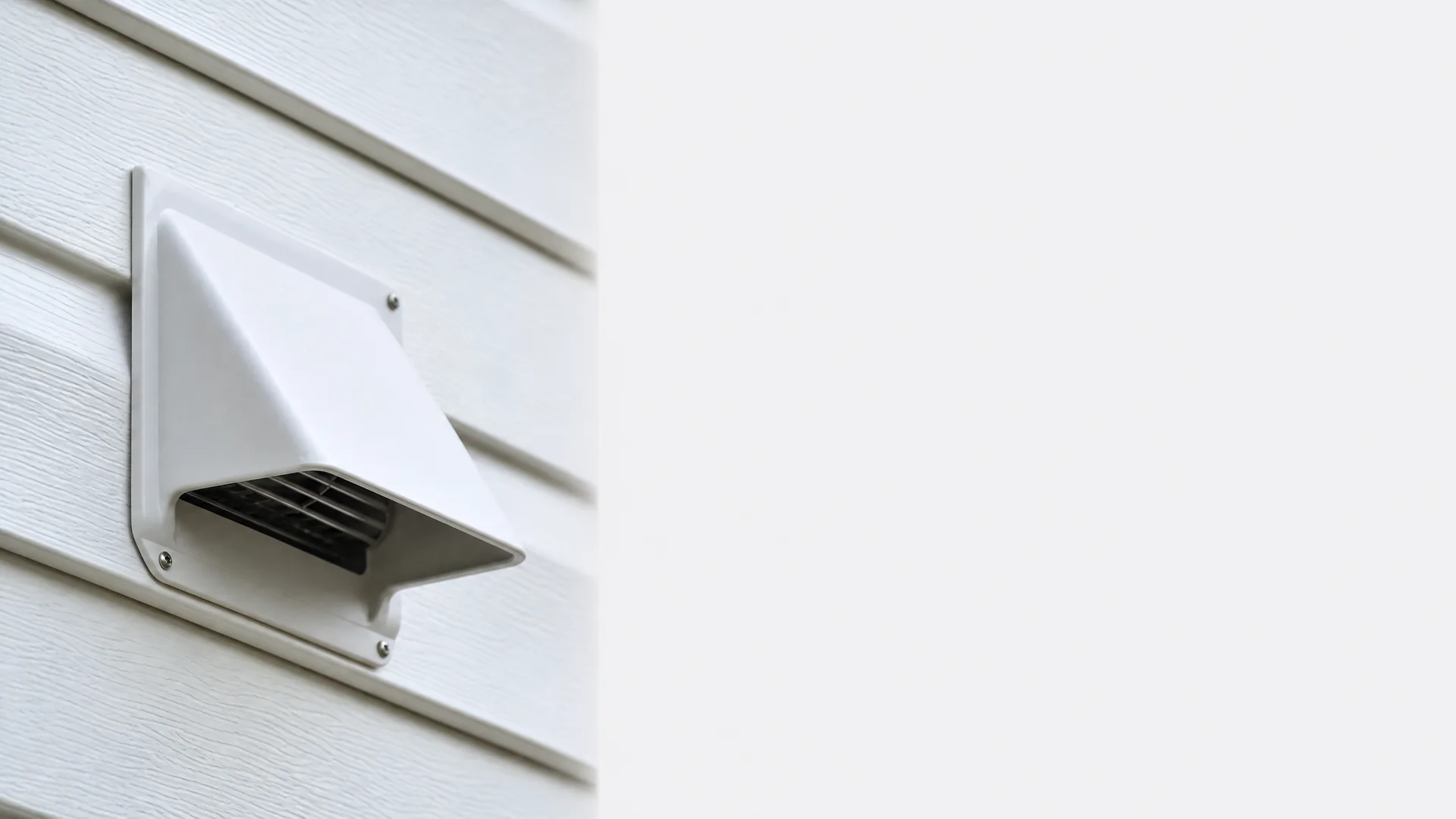
A white hooded exhaust vent with a louvered opening mounted on white horizontal lap siding, with blank white space at right.

What it does to your clothes and dryer

Clothes come out hot to the touch instead of just warm, because the heat has nowhere to go but back into the drum. Towels and jeans stay damp at the seams even after a full cycle. The dryer itself works harder to push air through a narrowing duct, and that strain falls on the motor and the heating element. Run it that way long enough and you're looking at a repair instead of a cleaning.

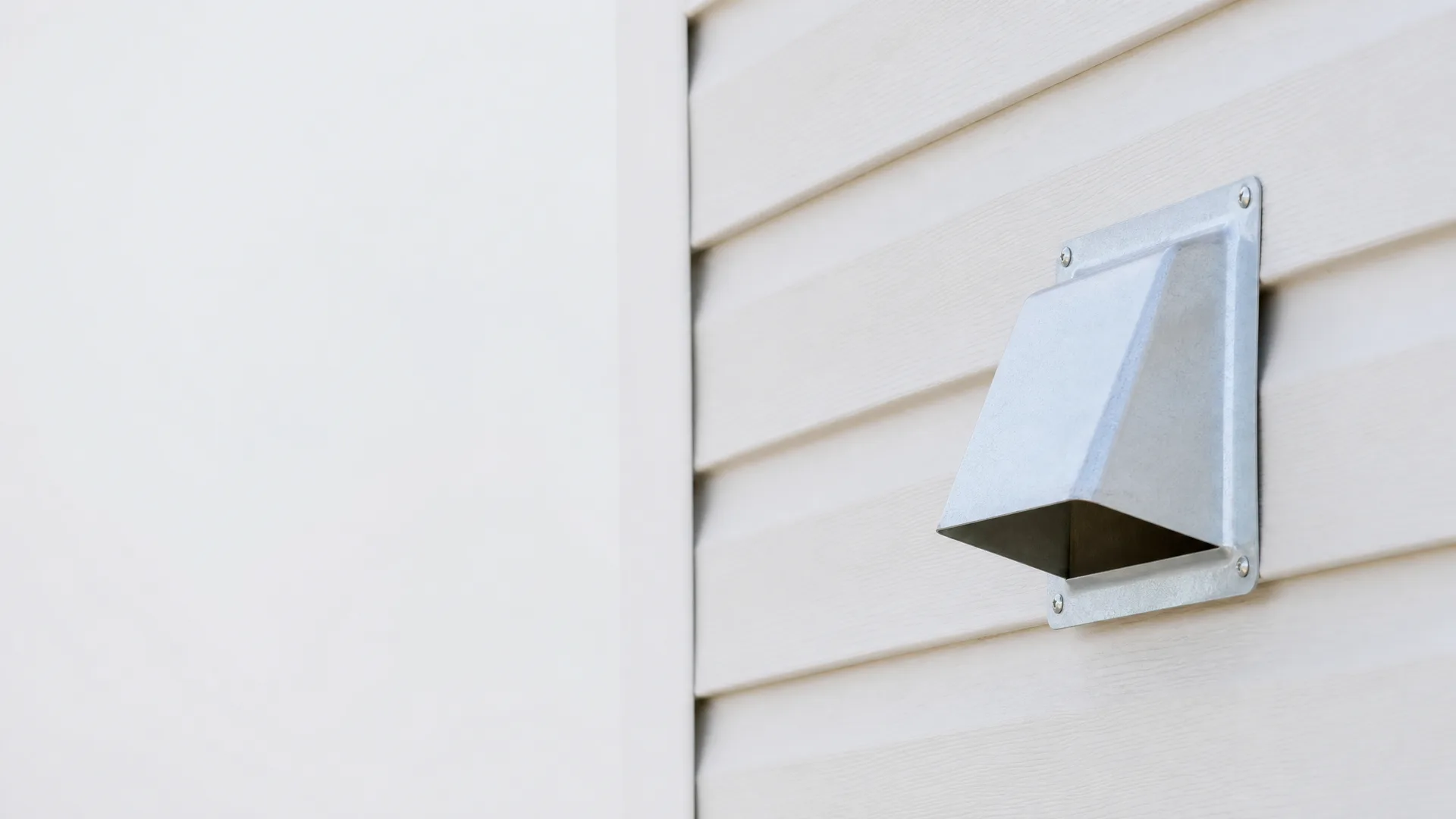
A metal hooded exterior vent cover screwed to beige horizontal lap siding, next to a plain white wall corner.

What it means for your house

A clogged vent doesn't just slow your laundry down. Lint trapped inside a duct that's running hot is fuel sitting next to a heat source, and that's how dryer fires start. Moist air that should be going outside instead backs up into the laundry room or the wall cavity around the duct. In a dry climate like Wyoming's, you won't see mildew from it the way someone in a humid state might, but the fire risk doesn't care how dry the air is.

A closed silver laptop and a white cup of coffee on a saucer sit on a wooden table in front of a wooden chair, a plain beige wall, a potted leafy plant and a window with greenery outside.

A clogged vent doesn't clear itself

The signs all point the same direction. Long dry times, a hot dryer, a weak flap at the hood, a burnt smell. If you've noticed more than one of these, lint has built up enough to hold back the airflow your dryer needs. In Wyoming's dry air, that lint packs in tighter than it would elsewhere, and it doesn't loosen on its own.

Clearing it means getting someone out to open the duct and pull what's built up along the walls. You could start calling around, asking if a contractor does dryer vent work, explaining the same symptoms to each one, then weighing their quotes against each other. Or you could send the form on this page and let that part be someone else's job. Either way the duct needs to be cleared. One way, you're not the one doing the legwork to find who clears it.

A large weathered ceramic vase and a shallow wooden bowl sit on a rustic wooden table beside a window with linen curtains, with a blurred sofa with cushions and a hanging fabric panel in the background.
A dark wood cabinet with a paneled door and a ceramic pot of green foliage on top stands in a beige-walled room with white baseboard, a window at left, hardwood floor, and a patterned area rug.
A dark wood glass-front cabinet holding folded towels, woven baskets and a ceramic vase stands in a bathroom corner beside a window, with a potted fern and stacked towels on top and a freestanding tub partly visible at left.
A woven basket holding a green cushion and a cream fringed knit throw sits on a wood floor in a room corner beside a window and a dark wooden cabinet.
Corner of a room with a dark wood cabinet topped by a round vase, a linen curtain at a window, white baseboard, oak plank flooring with sunlight patches, and a woven jute rug in the foreground.
A dark wood sideboard against a pale wall holds a shallow stone bowl and a round ceramic vase with leafy branches, with sunlight from a curtained window falling across the wall, wood floor and woven rug.

Send one request and you're done looking

Answer a few questions about the dryer vent cleaning and skip the search.

Send my request

No fee to send it, and nothing to sign.